
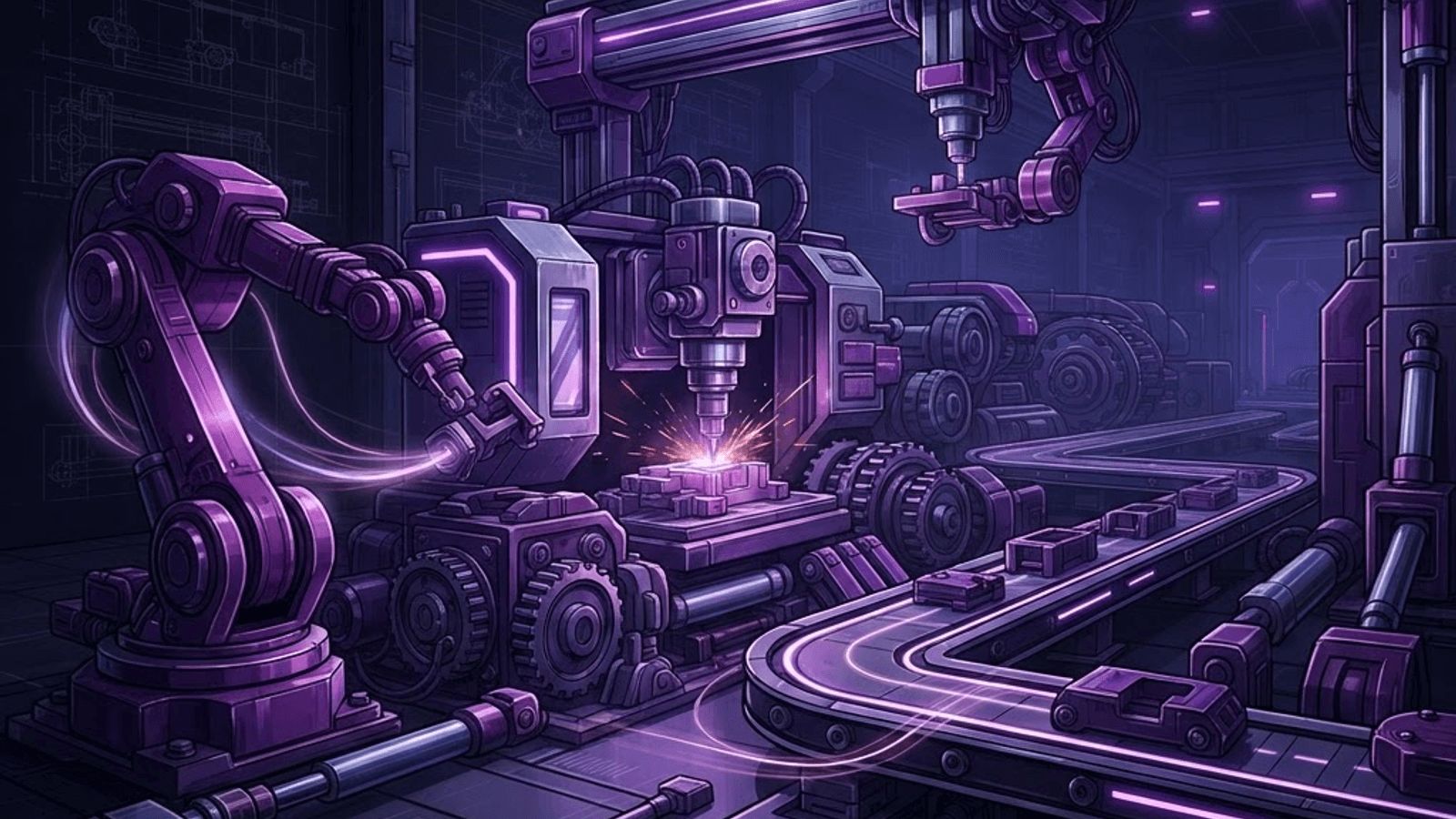
Machinery Building on Long Island
Machinery manufacturing is one of the quieter strengths of the Babylon area economy. Behind unremarkable industrial buildings in Deer Park, West Babylon, and neighboring corridors sit machine shops and integrators that design and build the equipment other companies use to make things. Their customers include food processors, pharmaceutical packagers, aerospace suppliers, marine operators, and municipal utilities, most of whom need equipment that does not exist as a catalog product.
Custom machinery is fundamentally an engineering business. Each project begins with a process problem, moves through mechanical and controls design, and ends with a machine that must run reliably in a production environment for years. That work requires mechanical designers, controls engineers, machinists, fabricators, and field service technicians working in coordination, which is why capable builders are relatively rare and highly valued.
Types of Machinery Produced Locally
Custom automation is the broadest category, encompassing assembly cells, part feeding systems, robotic work cells, pick and place equipment, and inspection stations. These systems typically combine servo motion, pneumatics, vision, and programmable logic controllers into a single integrated machine.
Material handling equipment includes conveyors, lift tables, transfer systems, and palletizing solutions. Packaging machinery covers filling, capping, labeling, sealing, and cartoning. Marine and dock equipment serves the region's boating industry with hoists, lifts, winches, and davits engineered for saltwater service.
Machine shops supporting these builders provide precision turning, milling, grinding, gear cutting, and fabrication, along with reverse engineering of obsolete parts for equipment that predates modern documentation.
The Leading Machinery Manufacturers Serving Babylon
1. South Shore Industrial Automation designs and builds custom automation cells integrating robotics, vision inspection, and motion control, delivering complete systems with documentation and operator training.
2. Deer Park Precision Machine Works operates a full CNC shop producing tight-tolerance components, prototypes, and replacement parts, including reverse engineering of legacy equipment.
3. Babylon Conveyor and Material Handling manufactures belt, roller, and modular conveyor systems along with lift tables and transfer units for warehouses and production floors.
4. Great South Bay Marine Machinery builds boat lifts, davits, hoists, and dock equipment engineered with corrosion-resistant materials for continuous saltwater exposure.
5. Lindenhurst Packaging Systems produces filling, capping, labeling, and sealing machinery for food, beverage, and personal care producers, with changeover tooling for multiple container formats.
6. Copiague Hydraulic and Pneumatic Equipment designs power units, presses, and actuation systems, providing both new equipment and rebuild services for aging hydraulic machinery.
7. Amityville Controls Engineering Group specializes in the electrical and software side of machinery, delivering control panels, programmable logic controller programming, human machine interfaces, and remote monitoring.
8. Babylon Village Custom Tooling and Fixtures manufactures jigs, fixtures, dies, and gauges that allow manufacturers to hold tolerances repeatably in production.
9. West Islip Machinery Rebuild Services restores and retrofits existing machines with modern drives, controls, and safety systems, extending useful life at a fraction of replacement cost.
10. Long Island Machine Safety and Compliance performs risk assessments, designs guarding and interlock systems, and brings older equipment into current safety standard compliance.
Trends in Machinery Manufacturing
Labor availability drives much of the current demand. Manufacturers who cannot hire enough skilled operators invest in automation to maintain output, which sustains a strong order book for local builders. Projects that once required a payback analysis are now justified by simple staffing reality.
Connectivity is now expected. Modern machines log production data, report downtime causes, and support remote diagnostics, which shortens service response and enables predictive maintenance. Builders who deliver clean data interfaces make their equipment substantially more valuable to operations teams.
Retrofit work has grown alongside new builds. Replacing obsolete controls on a mechanically sound machine often delivers most of the benefit of new equipment for far less capital, and it avoids long lead times for complete systems.
Safety standards continue to tighten, particularly around collaborative robotics and guarding. Documentation, risk assessment, and validated safety circuits are no longer optional additions but core deliverables.
How to Select a Machinery Builder
Begin with a clear specification of the process, throughput requirement, part variability, footprint constraints, and utilities available. Ambiguity at this stage is the leading cause of project disputes and cost overruns.
Evaluate engineering depth by asking who performs mechanical design, who writes controls software, and whether either function is subcontracted. Request references for machines that have been running at least two years, and ask those references about service responsiveness rather than just delivery.
Clarify acceptance testing. A well-structured project defines factory acceptance criteria and site acceptance criteria before build begins, so both parties know what completion means. Confirm spare parts availability, documentation deliverables, training scope, and warranty terms, including whether coverage includes on-site labor.
Final Thoughts
Machinery manufacturers in the Babylon area combine engineering capability with the responsiveness that comes from being nearby when a production line stops. The companies profiled here cover automation, machining, conveyance, marine equipment, packaging, controls, tooling, rebuilds, and safety compliance. A carefully defined specification and a builder with proven depth in your process type is the foundation of equipment that earns its keep.