
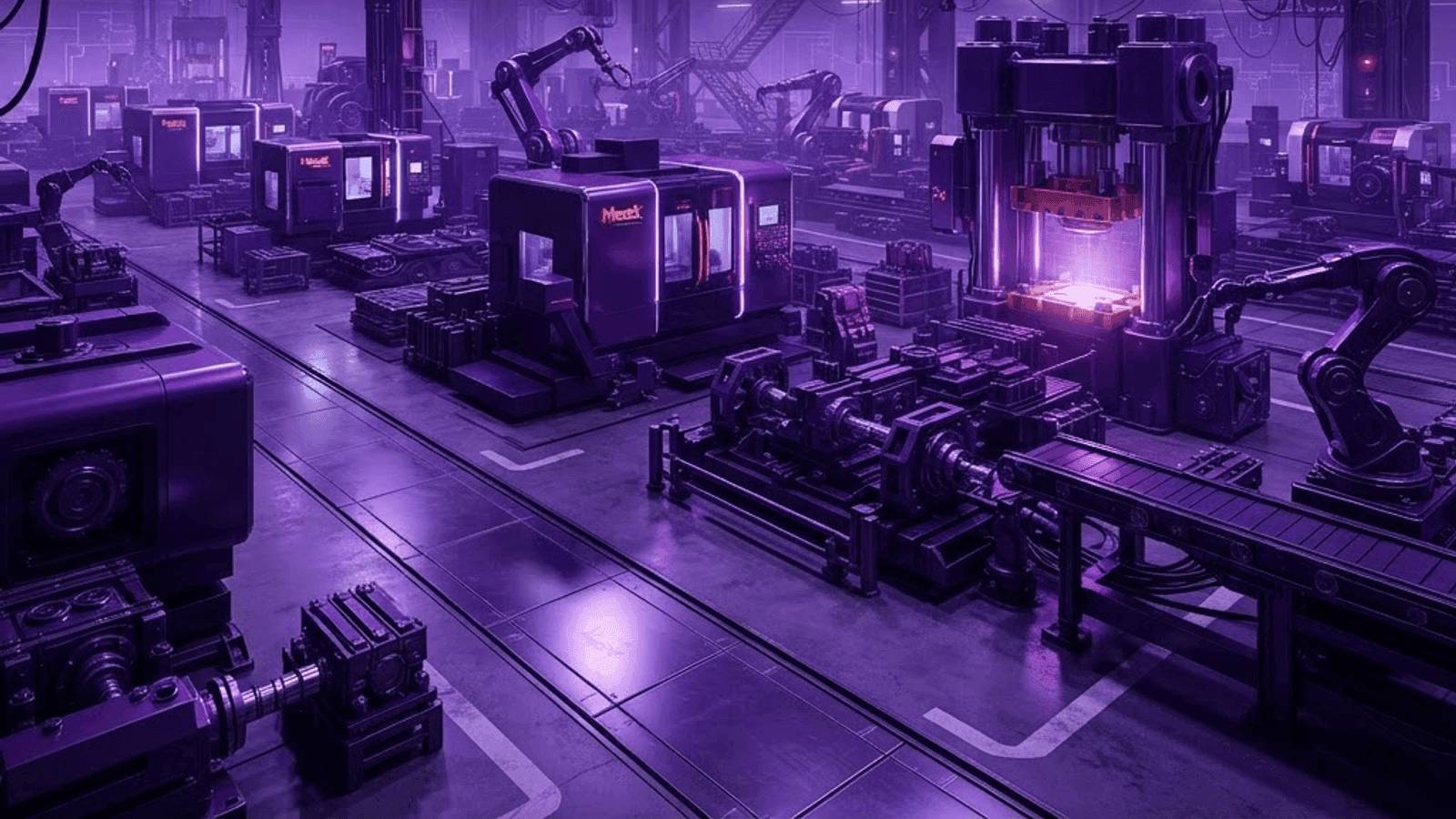
The Backbone of Industrial Alexandria
Machinery manufacturing rarely attracts public attention, yet it underpins nearly every other industry. When a food producer needs a filling line, a cement plant needs a conveyor system, or a textile mill needs a custom winding machine, the solution usually comes from a machinery builder. Alexandria hosts a substantial cluster of such firms, supported by the city's metalworking base, foundries and machining capacity.
The local industry has evolved from straightforward fabrication toward genuine engineering. Many Alexandria machinery builders now design equipment from first principles, integrate programmable control systems, and provide commissioning and training as part of the package. That shift has allowed them to compete with imported equipment on capability rather than price alone.
Types of Machinery Manufacturers
The sector divides usefully into three categories. Standard equipment producers build catalogue machines in series, offering proven designs at predictable prices and lead times. Custom machine builders engineer one-off or small-batch equipment for specific processes. System integrators combine machines, often from multiple sources, into complete production lines with unified controls.
Each model suits different needs. Standard equipment is faster and cheaper where the process is conventional. Custom builds are necessary where the process is unusual or where a bottleneck requires a purpose-designed solution. Integration expertise becomes essential when several machines must operate in synchronised sequence.
Ten Leading Machinery Manufacturers in Alexandria
1. Delta Engineering Works designs and builds custom process machinery for food, chemical and pharmaceutical producers. Its mechanical design team works alongside controls engineers from the concept stage, which produces machines that are easier to operate and maintain.
2. Mediterranean Packaging Machinery manufactures filling, capping, labelling and cartoning equipment. Its machines are widely used by beverage and food producers across the Delta, and its local spare parts stock keeps downtime short.
3. Alexandria Heavy Fabrication produces large structural and process equipment, including pressure vessels, storage tanks, silos and heat exchangers. Certified welding procedures and in-house non-destructive testing support work that must meet code requirements.
4. Pharos Conveying Systems specialises in material handling: belt conveyors, screw conveyors, bucket elevators and pneumatic transport. It serves grain terminals, cement producers and mining operations where bulk handling reliability determines throughput.
5. Nile Machine Tools manufactures and rebuilds machine tools, including lathes, milling machines and specialised production equipment. Its retrofit service, which fits modern computer numerical control to sound older machines, offers customers a cost-effective alternative to replacement.
6. Horus Agricultural Machinery builds equipment for the agricultural sector, including grading lines, irrigation pumping systems and post-harvest handling equipment tailored to Delta crops.
7. Amun Hydraulic Systems designs hydraulic power units, presses and cylinder assemblies. It also maintains and repairs hydraulic equipment, a service in constant demand across the region's heavy industry.
8. Coastal Marine Engineering produces deck machinery, winches and handling equipment for the maritime sector, drawing on Alexandria's long shipbuilding and repair tradition.
9. Ramses Precision Machining operates a machining facility producing precision components and spare parts to drawing, often reverse-engineering obsolete parts for imported machines that manufacturers no longer support.
10. Sidi Gaber Industrial Automation completes the list as a system integrator, combining machinery, robotics and control systems into complete automated lines with unified supervisory software.
Trends in Machinery Manufacturing
Automation and robotics have become accessible to mid-sized manufacturers as costs have fallen, and Alexandria's machine builders increasingly incorporate robotic handling into otherwise conventional equipment. That has expanded what local producers can offer without imported turnkey lines.
Condition monitoring is the second development. Machines now ship with sensors that track vibration, temperature and cycle counts, feeding maintenance systems that predict failures. Buyers should ask whether this capability is included, because retrofitting it later is considerably more expensive.
Import substitution is the third. Currency pressures have made imported machinery costly, and local builders capable of matching imported performance have gained ground. The strongest among them now export to regional markets.
How to Choose a Machinery Builder
Specify the process requirement rather than the machine. Describing the throughput, product characteristics and quality standards you need allows a competent builder to propose an appropriate solution, whereas specifying a machine type prematurely can lock you into the wrong approach.
Examine existing installations in service and speak to the operators, not only the managers. Operators reveal whether a machine is genuinely reliable, whether changeovers are practical and whether the builder responded well to problems.
Finally, negotiate the after-sales terms before signing. Spare parts availability, response time commitments, operator training and documentation quality determine the real cost of ownership far more than the purchase price does. In Alexandria's machinery sector, the builders with the strongest reputations are invariably those that support their equipment properly over its full working life.
The Value of Local Machinery Partnerships
One advantage of working with Alexandria machinery builders that buyers frequently underestimate is proximity. When a production line stops, the difference between an engineer arriving within hours and a service visit arranged weeks later from abroad is measured directly in lost output. Local builders also understand local operating conditions, including power supply characteristics, ambient temperatures, dust exposure and the skill profile of the operators who will run the equipment.
That familiarity shows in design decisions. Machines built for this market tend to favour robust, serviceable construction with accessible components and straightforward controls over highly integrated designs that require specialist intervention for routine maintenance.
Looking ahead, the sector's growth depends on continued investment in engineering talent and in modern machining and measurement capability. The Alexandria builders who have made that investment are already exporting to neighbouring markets, and they represent a genuine industrial asset for manufacturers across Egypt who need equipment tailored to their processes rather than adapted from a catalogue.