
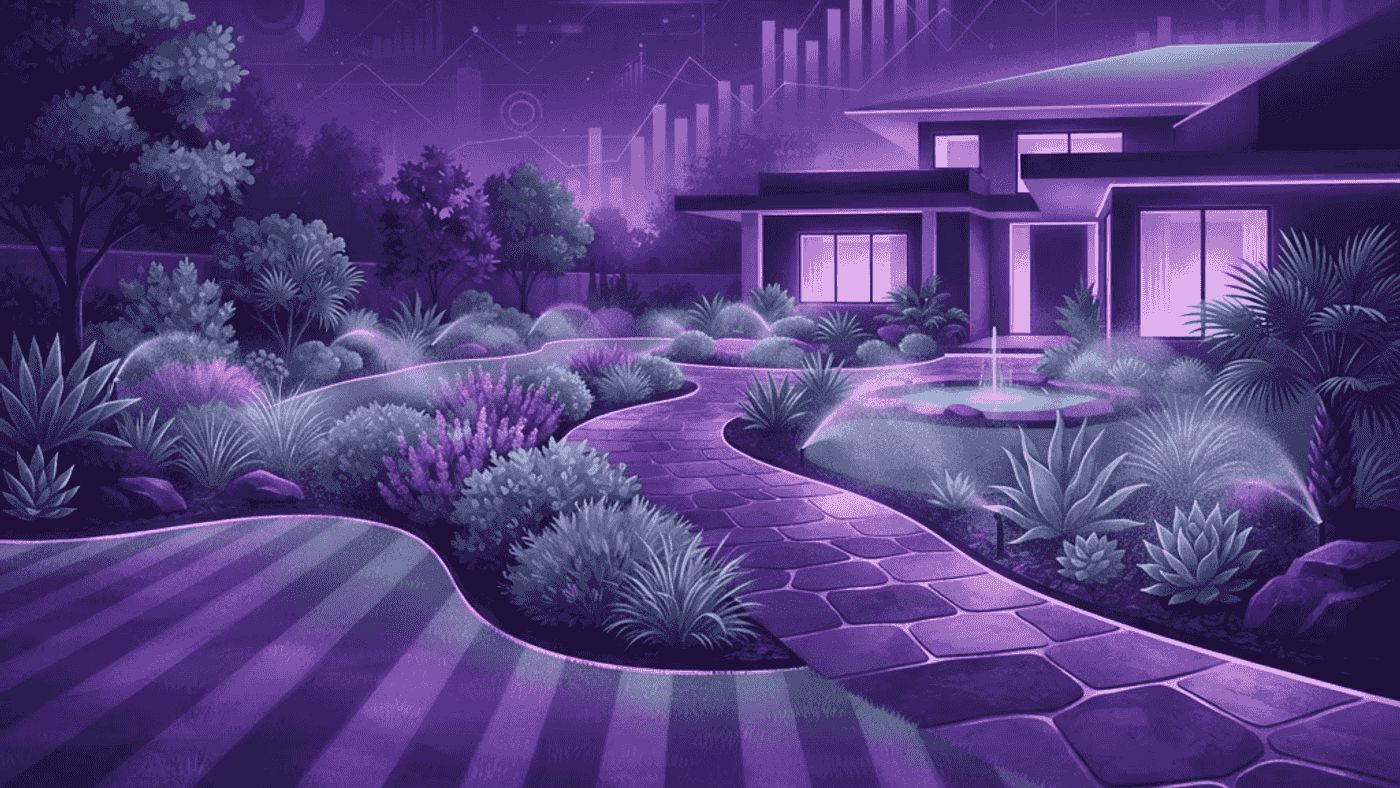
Designing for a Hot, Dry Summer and a Damp Winter
Landscaping in the Central Valley is an exercise in working with extremes. Summer brings months of intense heat and negligible rainfall, while winter delivers most of the annual precipitation along with periods of saturated, poorly draining clay. A landscape designed only for one season fails in the other, which is why plant selection, soil preparation, and drainage strategy matter as much as layout.
Water is the other defining constraint. California water policy and rising utility costs have pushed Stockton homeowners toward efficient irrigation and climate-appropriate planting. The encouraging reality is that low-water landscaping no longer means gravel and cactus. Mediterranean and California native palettes deliver year-round structure, seasonal bloom, and shade while using a fraction of what turf demands.
The Ten Landscaping Companies Stockton Recommends
1. Valley Roots Landscape Design
A design-build firm producing full planting plans, grading, irrigation, and hardscape under one contract. Their designs lean on drought-adapted plant palettes and layered canopy for shade, which reduces cooling load on adjacent walls.
2. Delta Green Irrigation Systems
Irrigation specialists installing and retrofitting drip systems, smart controllers, pressure regulation, and zone corrections. Retrofitting overhead spray to drip is one of the highest-return landscape investments available locally.
3. Port City Hardscape and Paver Works
Focused on patios, walkways, retaining walls, and outdoor kitchens using pavers, flagstone, and poured concrete. Proper base compaction is their emphasis, which is what determines whether a patio stays level in expansive clay.
4. Central Valley Tree Care
Certified arborist services covering structural pruning, disease diagnosis, root management, and removals. Mature shade trees are among the most valuable assets on a Stockton property, and correct pruning extends their life significantly.
5. Northside Lawn and Grounds Maintenance
Recurring maintenance for residential and commercial properties, including mowing, edging, seasonal cleanups, fertilization, and irrigation monitoring. Consistency and route reliability are their strengths.
6. Heritage Native Plant Landscapes
Specialists in California native and Mediterranean planting design, habitat gardens, and pollinator-friendly installations. They emphasize soil biology and mulch depth rather than heavy fertilizer regimes.
7. Riverbend Outdoor Living
Builds shade structures, pergolas, fire features, and outdoor lighting to extend usable hours in a climate where evenings are the most pleasant part of a summer day. They coordinate closely with electrical and gas trades.
8. Sierra Turf and Synthetic Solutions
Installs both sod and synthetic turf, and is candid about the tradeoffs, including surface temperature of artificial turf in direct Valley sun and drainage requirements beneath it. Families with pets and play areas are typical clients.
9. Bright Yard Drainage and Grading
Solves standing water, negative grade toward foundations, and clay soil drainage using French drains, dry wells, catch basins, and regrading. Winter puddling complaints are their busiest service category.
10. Golden Acre Commercial Landscaping
Serves business parks, HOAs, and multi-family properties with contracted grounds management, seasonal color rotations, and water-use reporting. Their documentation supports property managers tracking budget and compliance.
How to Choose a Landscaping Partner
Start by defining the scope honestly. Design-build firms handle vision-to-completion projects. Maintenance companies keep an existing landscape healthy. Specialists solve specific problems such as drainage or tree health. Hiring a mowing crew to design a garden, or a designer to fix a grading failure, produces predictable disappointment.
Verify licensing for any work involving structures, irrigation systems, or significant grading, since California requires contractor licensing above modest project values. Confirm insurance, particularly for tree work, which carries genuine risk.
Review the plant list before installation. Ask about mature size, water needs, and sun tolerance on west-facing exposures. A plant that thrives in a nursery pot can scorch on a Stockton wall in July. Also ask about soil amendment and mulch, because clay soil benefits enormously from organic matter and a proper mulch layer.
Finally, request an irrigation plan with zones grouped by water need. Mixing thirsty and drought-tolerant plants on one valve guarantees that something will be either drowned or starved.
Cost and Water Considerations
Design fees are sometimes credited toward installation. Installation costs vary with hardscape percentage, since paving and walls are far more expensive per square foot than planting. Irrigation retrofits are typically priced by zone count. Maintenance contracts are monthly and scale with property size and service frequency.
Water savings are the counterweight to upfront cost. Converting large turf areas to drip-irrigated planting can substantially reduce outdoor consumption, which is where most residential water use goes in this climate. Smart controllers that adjust to weather data prevent the common waste of running full schedules after winter rain.
Trends in Local Landscape Design
Lawn reduction continues, but the aesthetic has matured. Homeowners now request smaller, purposeful turf areas for children and pets surrounded by structured drought-tolerant planting rather than eliminating green space entirely. Shade is being treated as infrastructure, with trees and pergolas positioned specifically to cool west elevations and outdoor living areas.
Edible landscaping is growing, fitting naturally in a region defined by agriculture, with citrus, stone fruit, and raised vegetable beds integrated into ornamental designs. Permeable paving is gaining ground as a way to manage winter runoff, and low-voltage LED lighting has become standard for extending outdoor use into summer evenings.
Final Thoughts
The best landscaping companies in Stockton design for both halves of the year, prepare soil properly, and treat irrigation efficiency as a core deliverable rather than an afterthought. Clarify whether you need design, construction, problem-solving, or maintenance, then choose accordingly. A landscape built around this climate rather than against it will look better, cost less to run, and last far longer.