
Landscaping in a Mediterranean Climate
Sacramento sits in USDA hardiness zone 9b with a classic Mediterranean climate pattern: hot, rainless summers and cool, wet winters. Nearly all annual precipitation falls between November and March, which means any planting scheme has to survive five or six consecutive months with essentially no natural rainfall. Summer highs routinely exceed 95 degrees and frequently reach 105 or more during heat waves.
The soil adds another layer of difficulty. Much of the region sits on heavy clay or clay loam that compacts easily, drains slowly in winter, and cracks in summer. Some areas closer to the American and Sacramento rivers have sandier alluvial deposits. A landscaper who understands the difference will amend and grade accordingly rather than applying a one-size-fits-all approach.
Water policy also shapes design. California's Model Water Efficient Landscape Ordinance sets limits on turf area and irrigation efficiency for many new and renovated landscapes, and regional water agencies have offered rebate programs encouraging turf conversion. The result is a strong local shift toward drought-tolerant and native planting, permeable hardscape, and high-efficiency drip irrigation.
Design Approaches That Work Locally
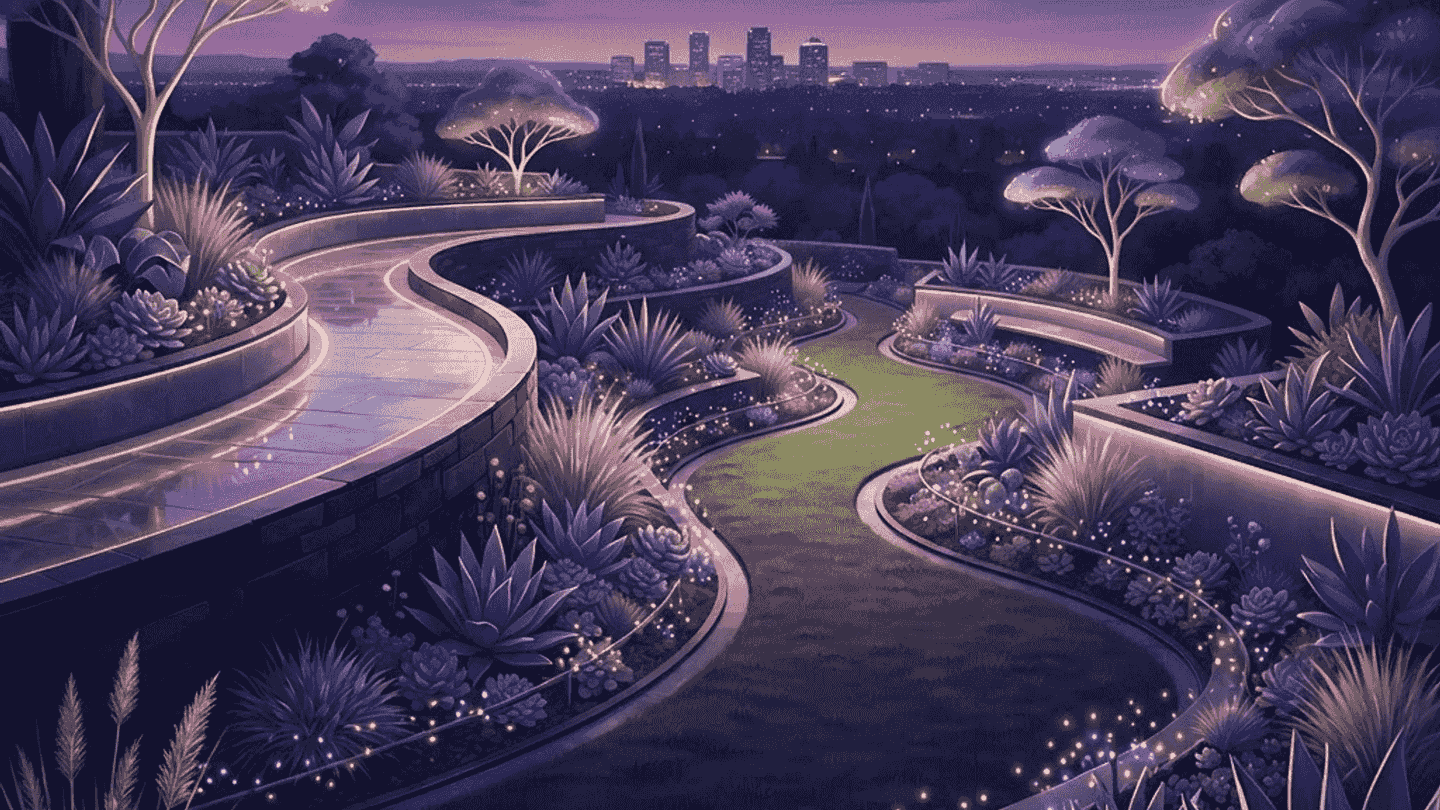
The most successful Sacramento landscapes reduce or eliminate thirsty lawn in favor of layered planting. California natives such as ceanothus, manzanita, toyon, coffeeberry, western redbud, and deergrass thrive with minimal summer water once established. Mediterranean companions including lavender, rosemary, salvia, olive, and germander perform equally well. Ornamental grasses provide movement and texture with almost no irrigation demand.
Shade is not decorative in Sacramento, it is functional. Well-placed deciduous trees on the west and south sides of a home can measurably reduce cooling costs while allowing winter sun through. The region's long-running commitment to urban tree canopy reflects this, and knowledgeable landscapers plan tree placement around both solar orientation and mature root spread.
Hardscape choices matter too. Permeable pavers, decomposed granite pathways, dry creek beds for winter drainage, and shaded pergolas or louvered patio covers extend usable outdoor time. Outdoor kitchens, fire features, and low-voltage landscape lighting have become standard requests as homeowners treat the backyard as a genuine living space.
The Ten Best Landscaping Companies in Sacramento
1. Gardenworks. A well-regarded design-build firm serving the Sacramento area, Gardenworks handles full outdoor transformations from concept drawings through installation. They are particularly strong on drought-tolerant garden design, integrated hardscape, and custom water features, and their portfolios show a consistent sensitivity to how a landscape relates to the architecture of the house.
2. FiveSTAR Landscape. FiveSTAR serves both residential and commercial clients across the region and is known for reliable maintenance programs alongside installation work. Their commercial property management experience translates into disciplined scheduling, consistent crews, and thorough irrigation system auditing.
3. Capital Landscape. With a long presence in the Sacramento market, Capital Landscape offers full-service design, installation, and ongoing care. They have built a reputation for complex hardscape projects including retaining walls, outdoor kitchens, and multi-level patios, along with pool-adjacent landscaping that has to withstand splash and chlorine exposure.
4. Yardworks Landscape. Yardworks focuses on complete backyard renovations with an emphasis on synthetic turf, paver installation, and low-water planting. They are a frequent choice for families who want durable, low-maintenance outdoor space that can absorb heavy use from children and pets during long Sacramento summers.
5. Green Acres Nursery and Supply. While primarily a nursery, Green Acres is a foundational resource for anyone landscaping in the region. Their staff expertise on plant selection for local conditions, along with design consultation services and an inventory heavily weighted toward climate-appropriate species, makes them influential well beyond retail.
6. Serrano Landscaping. A locally owned operation with strong word-of-mouth reputation, Serrano handles installation, irrigation repair, sod and synthetic turf, and seasonal cleanup. They are often praised for fair pricing and for completing mid-sized residential projects on schedule without subcontracting the work out.
7. Bayscape Landscape Management. Bayscape brings a strong horticultural and arborist orientation to its work, serving homeowners associations, commercial properties, and residential clients. Their tree care and canopy management capability is a differentiator in a city where mature trees are both an asset and a liability if neglected.
8. New Image Landscape Company. New Image is well established in commercial and multifamily landscape maintenance across Northern California, with a growing residential presence. They emphasize water management technology including smart controllers, flow sensors, and centralized irrigation monitoring that reduces waste and catches leaks early.
9. Rock and Rose Landscape Design. A boutique design-focused practice, Rock and Rose specializes in garden design with strong plant palettes and thoughtful seasonal interest. They appeal to homeowners who want a curated, horticulturally rich garden rather than a purely hardscape-driven yard.
10. Sac Valley Landscaping. Serving the greater Sacramento region, Sac Valley Landscaping covers installation, maintenance, drainage correction, and irrigation retrofits. Their drainage work is notable given how many local properties struggle with winter standing water on heavy clay soils.
Irrigation Is the Real Test
In a climate like Sacramento's, the irrigation system determines whether a landscape survives. Overhead spray on planting beds wastes enormous volumes of water to evaporation during summer afternoons and encourages shallow rooting. Properly designed drip systems with pressure-compensating emitters, appropriate hydrozoning that groups plants by water need, and weather-based smart controllers that adjust for evapotranspiration can cut consumption dramatically while producing healthier plants.
Ask any prospective landscaper how they hydrozone a design, what controller they specify, and whether they perform a distribution uniformity test after installation. Companies that treat irrigation as an engineering discipline rather than an afterthought produce landscapes that still look good in year five.
Planning Your Project
Fall is the best planting season in Sacramento. Installing in October or November gives roots the entire cool, wet winter to establish before facing summer heat, which reduces both plant loss and first-year irrigation demand. Design and permitting work is best done over summer so installation can begin as temperatures drop.
Request a written scope that itemizes demolition, grading, drainage, irrigation, hardscape, planting, and lighting separately. Confirm the contractor holds a C-27 Landscaping Contractor license, carries insurance, and will pull permits for any structures, electrical work, or retaining walls above the height requiring approval. Ask about plant warranty terms and about the maintenance expectations during the establishment period, since even drought-tolerant plants need regular water for the first year or two.
Sacramento's landscape professionals have adapted impressively to climate and water realities. With the right partner, a Central Valley yard can be lush, shaded, water-efficient, and genuinely comfortable even in the hottest weeks of the year.