
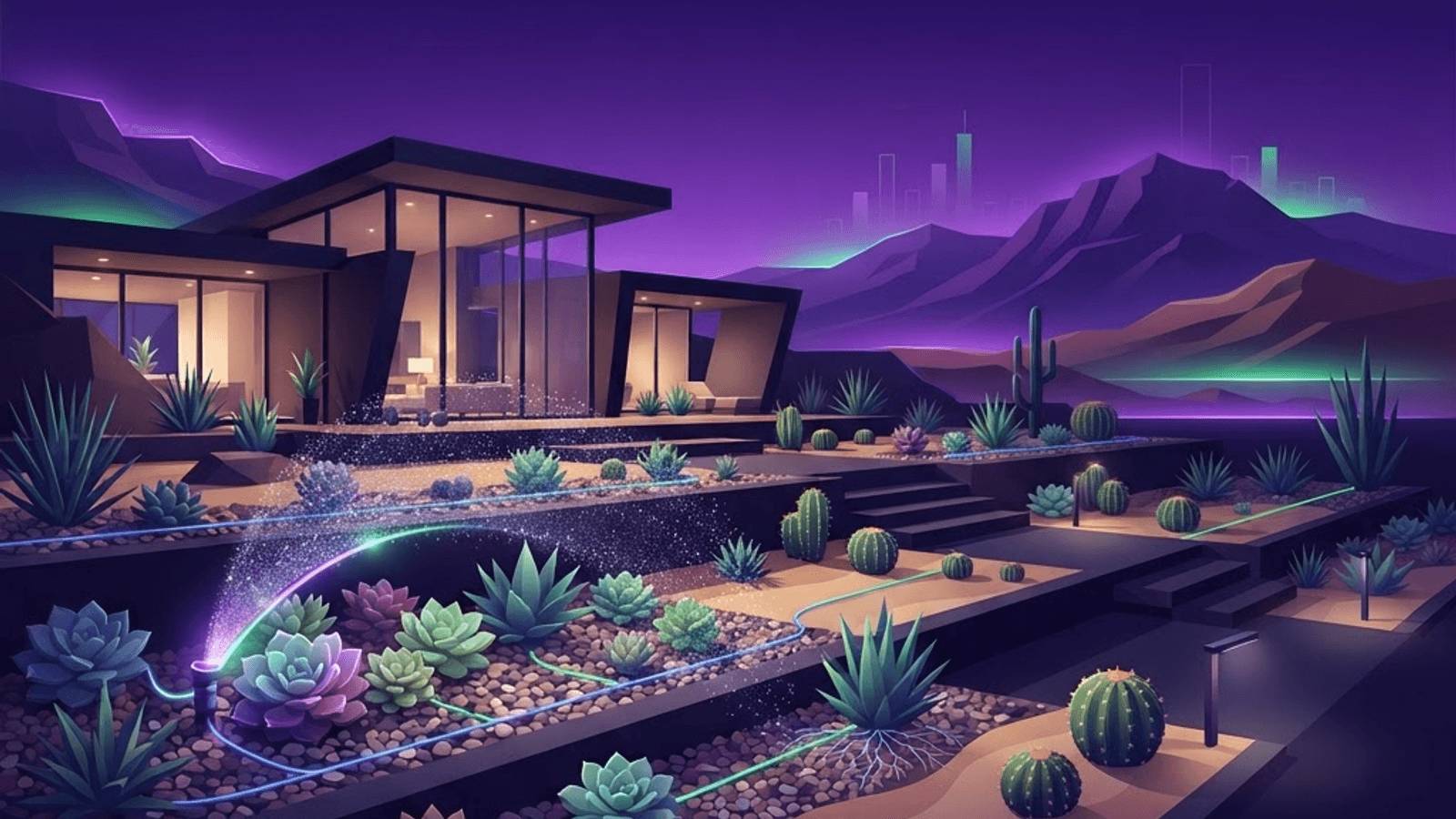
Landscaping for a High-Desert Climate
Palmdale landscaping succeeds or fails on one question: does the design respect the climate? The Antelope Valley receives modest annual rainfall, endures intense summer heat, experiences genuine winter frost, and sits in a wind corridor that strips moisture from soil and foliage. A landscape borrowed from a coastal or Midwestern template will struggle here no matter how much water is poured into it.
The companies that do excellent work locally start from plant palettes proven in the high desert and build outward. Native and adapted species, decomposed granite and gravel groundcover, strategic shade structures, wind-tolerant screening, and efficient irrigation form the backbone of durable design. Turf has not disappeared, but it has been repositioned as a functional element placed where people actually use it rather than as default groundcover across an entire lot.
Xeriscape Is Not Rock and Cactus
One persistent misconception is that water-wise landscaping means a barren gravel field. In practice, well-executed xeriscape in Palmdale can be lush, colorful, and layered. Desert willow, Texas ranger, red yucca, agave, salvia, lantana, rosemary, ornamental grasses, and California natives such as manzanita and buckwheat create texture and seasonal color while requiring a fraction of the water a lawn demands.
The design principles are straightforward: group plants with similar water needs into hydrozones, improve soil so it holds moisture where roots can reach it, mulch generously to reduce evaporation, and deliver water through drip emitters rather than spray heads that lose volume to wind and sun. A landscape built this way looks better in its third year than in its first, which is the opposite of what happens to an over-watered, poorly zoned yard.
The Top 10 Landscaping Companies in Palmdale
1. Antelope Valley Landscape Design is the most complete design-build firm in the area. They produce full planting plans, handle grading and drainage, install irrigation, and build hardscape, which means one accountable party for the entire project rather than three subcontractors blaming each other.
2. Desert Bloom Xeriscape focuses exclusively on water-wise conversion. Turf removal, hydrozone planning, drip retrofits, and native plant installation are their core service, and they guide clients through rebate documentation where programs are available.
3. High Desert Hardscapes specializes in the built elements: pavers, retaining walls, seat walls, fire features, outdoor kitchens, and shade structures. Their work holds up to freeze-thaw cycles because base preparation is taken seriously.
4. Joshua Green Landscaping is a maintenance-first company serving residential clients on recurring schedules. Seasonal pruning, irrigation auditing, fertilization timed to the local calendar, and weed suppression are handled systematically rather than reactively.
5. Sierra Irrigation Systems concentrates on water delivery. Smart controllers, pressure regulation, drip conversion, leak detection, and distribution uniformity testing make them the specialist to call when a water bill looks wrong.
6. Poppy Field Gardens brings a horticultural emphasis, working with homeowners who want pollinator gardens, edible landscaping, fruit trees suited to local chill hours, and raised bed vegetable systems that survive desert summers.
7. Palmdale Commercial Grounds serves HOAs, business parks, and multi-family properties. Contract maintenance, common area renovation, and large-scale irrigation management are their focus, with reporting that property managers can act on.
8. Quartz Hill Tree Care handles the arboriculture side: structural pruning, storm damage response, root management near foundations and hardscape, and species selection for wind exposure and limited water.
9. Golden State Outdoor Living builds full backyard environments, integrating patios, pergolas, lighting, sound, and planting into a single cohesive plan for clients renovating an entire rear yard.
10. Littlerock Land & Grade covers larger rural parcels, addressing erosion control, driveway grading, windbreak planting, and drainage across acreage where suburban techniques do not scale.
Irrigation: Where Most Money Is Won or Lost
Irrigation is the single highest-leverage element of a desert landscape. Spray heads lose a substantial share of output to wind drift and evaporation during Palmdale summers, and misaligned heads water sidewalks with impressive consistency. Converting shrub and planting beds to drip, installing pressure-regulating components, and using a weather-based controller that adjusts run times to actual conditions can reduce landscape water use dramatically without any loss in plant health.
Equally important is scheduling. Deep, infrequent watering in the early morning encourages roots to grow downward where soil stays cooler and moister. Light, frequent watering does the opposite, producing shallow roots that cannot survive a heat wave. A good contractor will set a seasonal schedule and revisit it rather than leaving a controller on a single program year-round.
Choosing the Right Landscaping Partner
For anything structural, verify licensing and insurance, particularly for retaining walls, grading, and electrical work tied to landscape lighting. Ask to see completed projects at least three years old, because desert landscaping reveals its quality with time. Request a written plan that names specific plant species and quantities rather than vague categories, and confirm who is responsible for plant replacement if something fails during establishment.
Clarify maintenance expectations before installation. A design that requires weekly attention will disappoint a homeowner expecting a low-effort yard. The best firms ask how much time you want to spend outdoors with a pruner in hand and design accordingly.
Trends in Antelope Valley Landscaping
Turf conversion continues to accelerate as water costs rise and drought awareness deepens. Shade has become a design priority rather than an afterthought, with pergolas, sail structures, and fast-establishing canopy trees positioned to make outdoor space usable in summer. Permeable paving is gaining ground for stormwater management. Low-voltage LED lighting has made evening use of yards practical and affordable. And pollinator-friendly planting is moving from niche interest to standard request as homeowners take an interest in local ecology.
Final Thoughts
The best landscaping companies in Palmdale do not fight the desert; they design with it. Whether you need a complete water-wise conversion, a hardscape build, precision irrigation work, or dependable ongoing maintenance, the ten firms above cover the range. Prioritize contractors who lead with soil, water, and plant selection, because those decisions determine whether a landscape thrives or merely survives.