
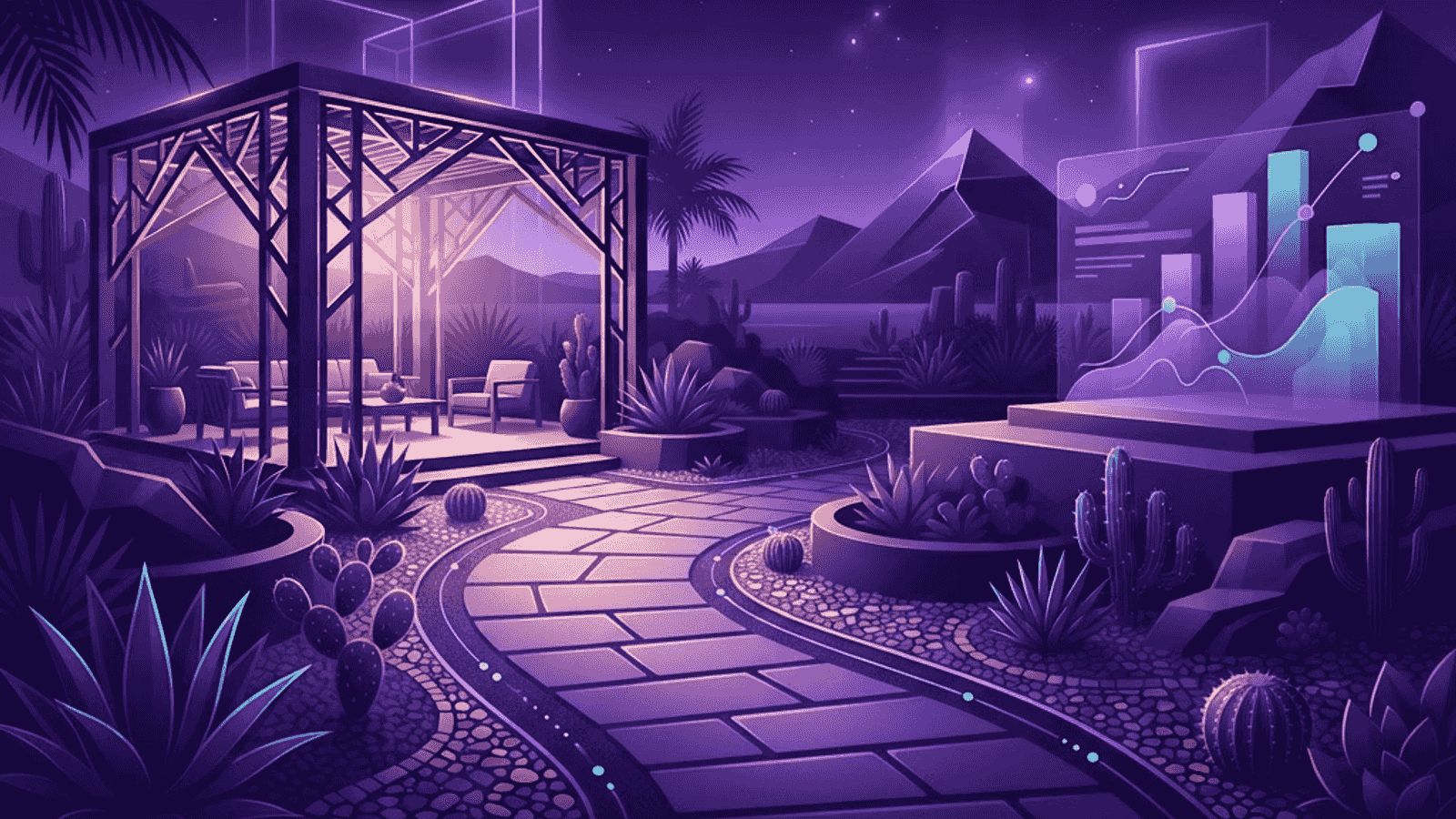
Landscaping in an Era of Water Conservation
Landscaping in North Las Vegas has changed fundamentally over the past two decades. Southern Nevada operates under some of the most stringent water conservation policies in the United States, driven by long-term Colorado River supply constraints. Restrictions on nonfunctional turf, watering day schedules and incentives for grass removal have moved the entire industry toward desert-appropriate design.
This shift has produced better landscapes rather than worse ones. Well-executed xeriscape design is visually richer than expanses of struggling lawn, requires less maintenance, tolerates heat far better and costs substantially less to irrigate. The companies thriving in this market are those that treat water efficiency as a design opportunity rather than a limitation.
What Modern Desert Landscaping Involves
Xeriscaping is the foundation, combining drought-adapted plants, efficient irrigation, appropriate soil preparation, mulching and thoughtful zoning of water use. Hardscape plays a larger role than in temperate climates, with pavers, decorative concrete, flagstone, seat walls, boulders and decorative rock providing structure and reducing irrigated area.
Shade is the other defining element. In a climate where summer afternoons are genuinely inhospitable, pergolas, shade sails, ramadas, covered patios and strategically placed trees determine whether outdoor space is usable. Outdoor living features including kitchens, fire elements, water features and lighting extend usability into evenings, which is when most outdoor time actually occurs locally.
The Top 10 Landscaping Companies in North Las Vegas
1. Desert Bloom Landscape Design
Desert Bloom specializes in full xeriscape design and installation, producing planting plans that maintain visual interest across seasons while minimizing water demand.
2. Silver State Irrigation Systems
Silver State focuses on irrigation design, drip conversion, smart controller installation and system auditing to eliminate leaks and overwatering.
3. Apex Hardscape and Paver Works
Apex installs pavers, retaining walls, seat walls, steps and decorative concrete, with attention to base preparation that prevents settlement in local soils.
4. Northgate Turf Removal Specialists
Northgate concentrates on grass removal and conversion projects, managing the process from demolition through replanting and rebate documentation support.
5. Sunstone Shade Structures
Sunstone designs and builds pergolas, ramadas, shade sails and covered patios engineered for high ultraviolet exposure and monsoon wind loading.
6. Cheyenne Tree Care and Arboriculture
Cheyenne provides tree planting, structural pruning, deep root watering and health assessment for desert-adapted and ornamental species.
7. Lone Mountain Outdoor Living
Lone Mountain builds outdoor kitchens, fire pits, fireplaces, built-in seating and entertainment areas integrated with surrounding landscape design.
8. Craig Road Commercial Landscape Maintenance
Craig Road serves commercial properties and homeowner associations with scheduled maintenance, seasonal color rotation and irrigation management.
9. Valley Vista Landscape Lighting
Valley Vista designs and installs low-voltage landscape lighting, path lighting and architectural uplighting that makes evening outdoor use practical.
10. Aliante Residential Landscaping
Aliante Residential Landscaping serves the northern communities with front and back yard installations, planter refresh work and ongoing maintenance programs.
Plant Selection That Survives and Thrives
Successful desert planting relies on species genuinely adapted to the conditions rather than merely tolerant of them. Agaves, yuccas, barrel cactus, ocotillo and prickly pear provide sculptural form. Shrubs such as Texas ranger, desert sage, brittlebush and creosote deliver seasonal bloom with minimal water. Ornamental grasses add movement. Desert trees including mesquite, palo verde, acacia and desert willow provide the shade that makes everything beneath them viable.
Placement matters as much as selection. Grouping plants by water requirement, called hydrozoning, prevents the common error of irrigating a low-water plant on the same schedule as a thirstier neighbor. Southern and western exposures demand the toughest species. Reflected heat from walls and paving creates microclimates significantly hotter than ambient conditions, and plants placed there need to be chosen accordingly.
Irrigation Efficiency Is Where Savings Live
Drip irrigation delivers water directly to root zones with minimal evaporation loss, making it far more efficient than spray heads for planted areas. Emitters must be sized to plant needs and repositioned as plants mature, since roots expand outward and emitters left at the original planting location eventually water empty soil.
Smart controllers that adjust schedules based on weather data and seasonal evapotranspiration prevent the most common waste, which is watering on a fixed schedule year-round. Pressure regulation and filtration protect drip components from the mineral content in local water. Regular system audits catch broken emitters, cut lines and clogged filters, all of which are invisible until plants begin declining.
Maintenance Expectations
Desert landscapes require less maintenance than turf but are not maintenance-free. Decorative rock needs periodic weed control and occasional refreshing as it settles and discolors. Plants require structural pruning at appropriate times, since improper timing removes flower buds or stimulates growth vulnerable to summer stress. Irrigation systems need seasonal adjustment and inspection. Trees benefit from deep watering that encourages downward root growth rather than shallow spreading.
Selecting a Landscaping Company
Verify Nevada contractor licensing for work involving irrigation, hardscape, structures or grading, along with insurance coverage. Ask for a written plan showing plant species, quantities, sizes, hardscape materials, irrigation layout and lighting locations rather than a verbal description. Confirm plant establishment warranty terms and what maintenance is required to keep them valid.
Visit completed projects that are at least two years old, since desert landscapes only reveal their design quality once plants have matured and filled in. A company whose older installations still look intentional and healthy has demonstrated the plant knowledge and irrigation competence that photographs of new installations cannot show.