
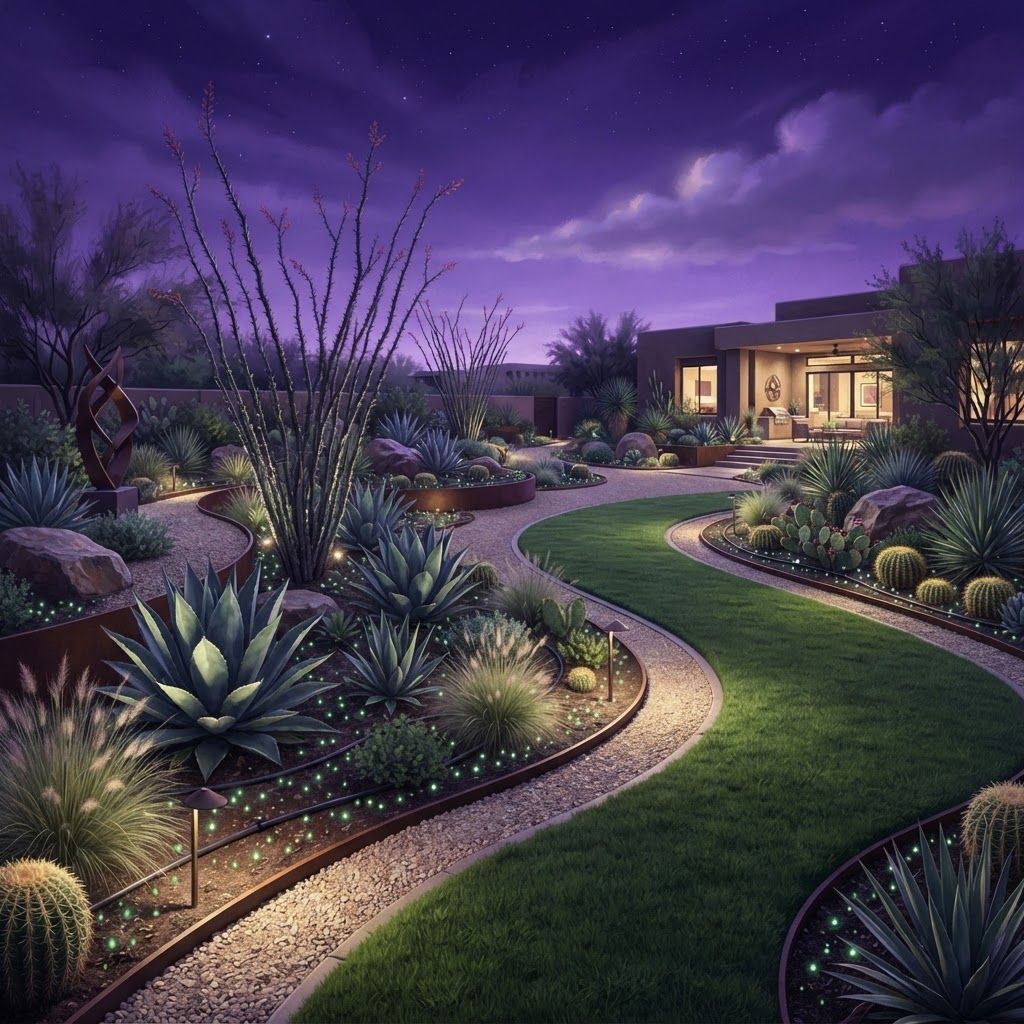
Designing Landscapes for Heat, Sun, and Limited Water
Landscaping in Laredo is an exercise in working with the climate rather than against it. Summer temperatures, intense solar exposure, low annual rainfall, alkaline soils, and periodic drought restrictions mean that a design copied from a wetter region will either die or consume an unsustainable amount of water. The landscapes that thrive here are built on plants adapted to these conditions, soil preparation that improves water retention, and irrigation engineered for efficiency rather than volume.
This constraint has produced genuinely attractive regional design. Native and adapted species such as agave, yucca, sotol, esperanza, lantana, salvia, Texas sage, mountain laurel, and ornamental grasses provide structure, texture, and long bloom periods with minimal input. Decorative gravel, permeable paving, boulders, and dry creek beds handle drainage while reducing irrigated area. Shade structures and strategically placed trees lower surrounding temperatures enough to make outdoor space usable during much of the year.
What to Look For in a Landscaping Company
Strong landscaping companies begin with a site assessment rather than a plant list. They evaluate sun exposure by elevation, drainage patterns, soil condition, and how the client actually intends to use the space. They produce a plan showing plant placement at mature size instead of installing dense arrangements that require removal in three years. They specify soil amendment and mulch depth, both of which have more effect on plant survival here than the species chosen.
Irrigation competence is equally important. A licensed irrigator will design zones by water requirement and sun exposure, use drip or micro-spray for beds instead of overhead spray, install a controller with rain and moisture sensing, and provide a schedule adjusted seasonally. Companies that install a single zone covering both turf and shrub beds guarantee that something will be either drowned or starved. Finally, look for firms that offer maintenance, because installation quality only matters if pruning, fertilization, and irrigation adjustment continue afterward.
The Top 10 Landscaping Companies in Laredo
1. Rio Grande Landscape Design. A design-build firm producing detailed plans before installation, with particular strength in drought-adapted planting schemes and hardscape integration. Their plans show mature plant dimensions, which prevents the overcrowding common in quick installations.
2. Gateway Xeriscape and Irrigation. Specialists in low-water landscaping paired with licensed irrigation design, they convert thirsty turf areas into planted beds and decorative gravel while retaining usable lawn where it matters. Their water-use projections are documented rather than estimated informally.
3. Casa Verde Lawn and Landscape. A maintenance-focused company serving residential and commercial properties with mowing, edging, pruning, fertilization, and seasonal color rotation. Their consistency and reliable scheduling are the reasons property managers retain them long term.
4. Border Hardscapes and Outdoor Living. Concentrating on patios, retaining walls, walkways, fire features, and outdoor kitchens, they handle the structural side of landscaping including proper base preparation and drainage, which determines whether paving stays level over time.
5. Del Mar Tree Service and Arboriculture. Certified arborists handling pruning, removal, cabling, and plant health care. Their diagnostic approach to declining trees, evaluating irrigation, soil, and root conditions before recommending removal, sets them apart from cut-and-clear operators.
6. Unity Commercial Grounds Management. Serving office parks, retail centers, schools, and industrial properties, they manage large acreage with scheduled programs covering turf, beds, irrigation audits, and litter control, backed by reporting that supports facility budgets.
7. Santa Rita Native Plant Nursery and Design. Combining a growing operation with design services, they supply and install regionally appropriate species acclimated to local conditions, which improves establishment rates compared to plants trucked in from wetter climates.
8. Independence Hills Irrigation Specialists. Licensed irrigators focused on system installation, repair, and efficiency retrofits including controller upgrades, drip conversion, pressure regulation, and leak detection. Their audits frequently identify substantial water savings on existing systems.
9. Zapata Road Landscape Contractors. Serving larger and rural properties, they handle brush management, acreage mowing, erosion control, driveway grading, and perimeter planting where scale changes the equipment and approach required.
10. Santo Tomas Garden and Grounds. A smaller residential operation known for detailed hand work, careful pruning, container arrangements, and seasonal refreshes on established gardens where heavy equipment would do more harm than good.
Trends Shaping Local Landscaping
Water efficiency dominates. Turf reduction, drip conversion, smart controllers that adjust to weather data, and rainwater harvesting are all moving from novelty to standard practice. Permeable hardscape is gaining favor for managing the intense but infrequent rainfall events characteristic of the region.
Shade and outdoor livability form the second major trend. Pergolas, shade sails, and canopy trees planted specifically to shield west-facing walls serve a dual purpose, extending usable outdoor hours while reducing cooling load on the building. Pollinator planting is also increasingly requested, and it happens to align well with native species selection.
Practical Guidance for Property Owners
Ask for a written plan and plant list with mature sizes, and confirm what warranty applies to installed plant material, typically a defined establishment period contingent on the client following the watering schedule. Verify irrigation licensing for anyone modifying a sprinkler system, and request the zone map and schedule at completion.
Plan installation timing thoughtfully. Fall and early spring planting give root systems time to establish before summer stress, whereas mid-summer installation demands intensive watering and still yields higher losses. Budget for maintenance from the start, since a well-designed landscape neglected for a single season can take years to recover in this climate.