
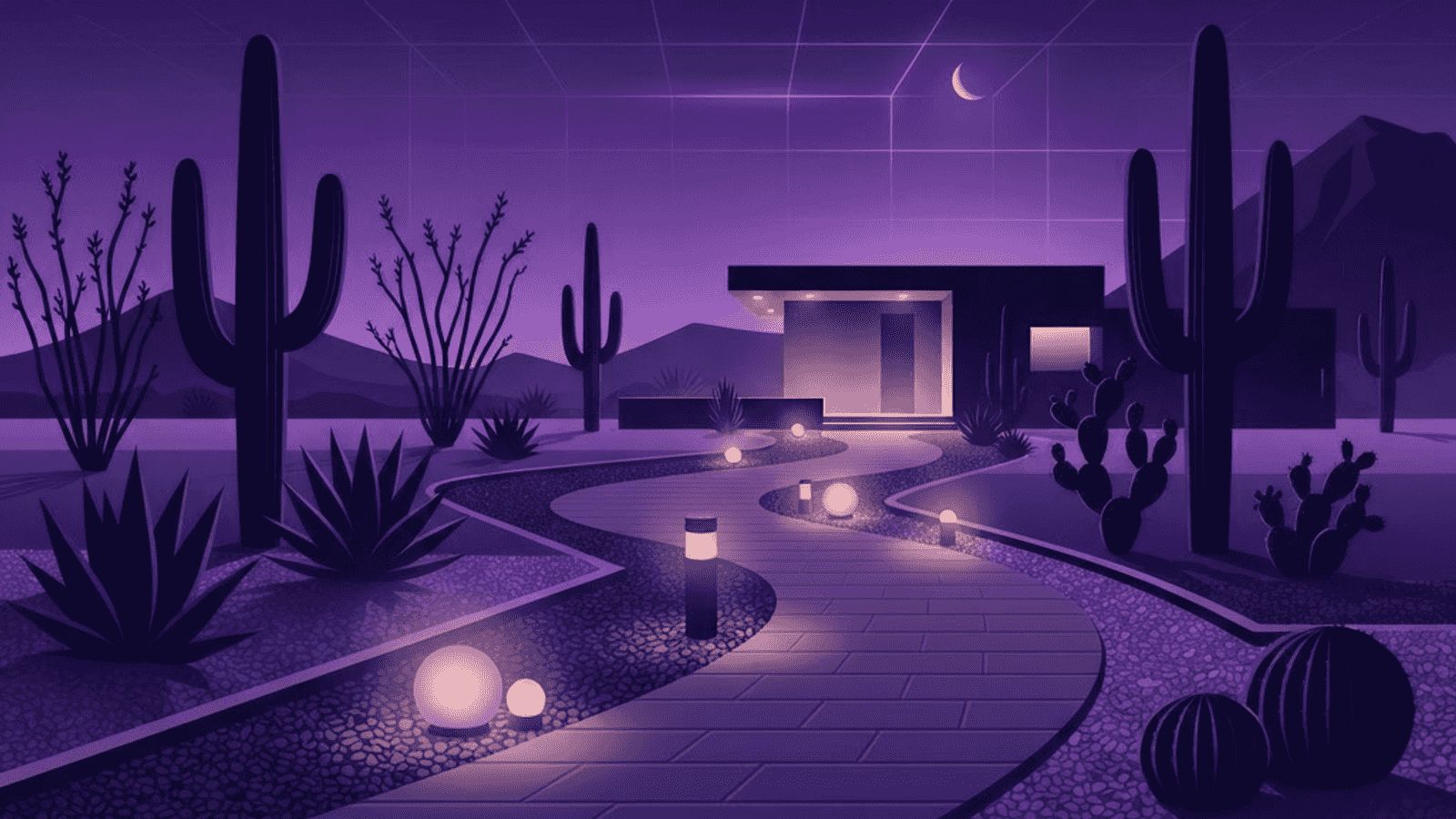
Landscaping in a Desert Is a Design Problem
Gilbert sits in the Sonoran Desert, and landscaping here has evolved from imported lawn aesthetics toward something far more intelligent. The transition to xeriscape and desert-adapted design is not simply about using gravel instead of grass; it is about designing outdoor space that functions in a climate with intense sun, minimal rainfall, and a summer that makes unshaded areas unusable for months.
Well-executed desert landscaping accomplishes several things simultaneously. It reduces irrigation demand substantially, which matters both for household costs and regional water management. It creates shade through strategic tree placement, which lowers surrounding surface temperatures and reduces cooling load on the house. And it produces genuine visual interest through texture, form, and seasonal bloom rather than uniform green.
What Separates Great Landscaping Companies
Design capability is the first differentiator. Many companies install; fewer design. A strong designer considers sun angles across seasons, mature plant sizes rather than nursery sizes, drainage during monsoon downpours, sight lines from indoor living spaces, and how the space will actually be used at different times of year.
Irrigation expertise is the second. Drip systems are standard, but quality varies enormously in emitter selection, zone grouping by water need, pressure regulation, filtration, and controller programming. A poorly zoned system either drowns low-water plants or starves higher-water ones. Smart controllers that adjust for weather and seasonal evapotranspiration are now common among quality installers.
Hardscape craftsmanship is third: pavers set on properly compacted base, correct edge restraint, functional drainage slope, and block work with adequate footings. The ten companies below were evaluated on design depth, irrigation quality, hardscape construction standards, plant knowledge, and maintenance follow-through.
The Top 10 Landscaping Companies in Gilbert
1. Sonoran Landscape Design — A design-build firm producing full plans with plant schedules and irrigation layouts before installation. Their strength is designing for mature size, so yards look intentional in year five rather than crowded.
2. Gilbert Desert Gardens — Xeriscape specialists with deep knowledge of native and desert-adapted plants: agave, hesperaloe, palo verde, desert willow, and ornamental grasses used in layered compositions.
3. Copper Basin Hardscapes — Focused on pavers, travertine patios, seat walls, outdoor kitchens, and fire features, with proper base preparation that prevents the settling and shifting common in rushed installations.
4. Higley Irrigation Systems — Irrigation specialists handling design, installation, repair, and controller programming, including conversions from spray to drip and smart controller retrofits.
5. Val Vista Shade & Tree — Tree specialists offering selection, planting, structural pruning, and maintenance. Correct pruning matters enormously here, since improperly thinned trees blow over during monsoon storms.
6. Agritopia Outdoor Living — Builds complete outdoor rooms combining ramadas, misting systems, lighting, and seating, designed to make backyards usable across more of the year.
7. Morrison Ranch Landscape Maintenance — Recurring maintenance specialists with consistent crews, seasonal fertilization schedules, and irrigation checks included rather than billed separately.
8. Cooley Station Turf & Green — Handles both natural turf and high-quality artificial turf installation, with honest guidance on where each makes sense given water cost and usage patterns.
9. Lindsay Lane Landscape Lighting — Low-voltage lighting designers who create depth with uplighting, path lighting, and silhouette effects rather than simply flooding the yard.
10. Queen Creek Corridor Landscapes — Strong on large-lot and acreage properties, including grading, drainage management, and decomposed granite work at scale.
Trends in Desert Landscaping
Water-conscious design has moved from optional to expected, accelerated by regional water policy discussions and rising utility costs. Turf reduction programs and low-water plant palettes are now mainstream rather than niche. Artificial turf has improved substantially in appearance and heat behavior, though quality varies widely and infill choice matters.
Shade has become a design priority in its own right. Tree canopy, shade sails, ramadas, and pergolas are being planned as core infrastructure rather than accessories. Pollinator-friendly and habitat-supporting plant selections are also gaining popularity, with homeowners intentionally choosing species that support native bees, hummingbirds, and butterflies.
On the technology side, weather-based smart irrigation controllers and flow monitoring have reduced waste and made leak detection far faster, since an unnoticed drip line break in summer can waste enormous volumes of water.
Planning Your Project Wisely
Start with a plan even if you install in phases. Phased installation is entirely reasonable, but doing it without a master plan usually produces disconnected results and duplicated irrigation work. Prioritize infrastructure first: grading, drainage, irrigation mains, and hardscape, since retrofitting those under finished landscape is expensive.
Plant in the right season. Fall is the ideal planting window in Gilbert because roots establish through mild winter months before facing summer stress. Summer planting is possible but requires much more water and carries higher loss risk. Ask any company for their establishment watering schedule and warranty terms on plant material.
Maintenance Reality
Desert landscaping is low water, not no maintenance. Granite needs occasional refreshing, drip emitters clog and need checking, plants require correct seasonal pruning rather than indiscriminate shearing, and irrigation controllers need seasonal adjustment. Companies that shear everything into balls are damaging plants and creating more work; skilled maintenance preserves natural form.
Final Thoughts
Landscaping is the first thing anyone sees and one of the few home investments that improves with time when done correctly. In Gilbert, that means designing for heat, water efficiency, and shade rather than importing a template from another climate. The companies above stand out because they plan before they plant, build hardscape that stays level, and install irrigation that delivers the right water to the right plant, which is the foundation everything else depends on.