
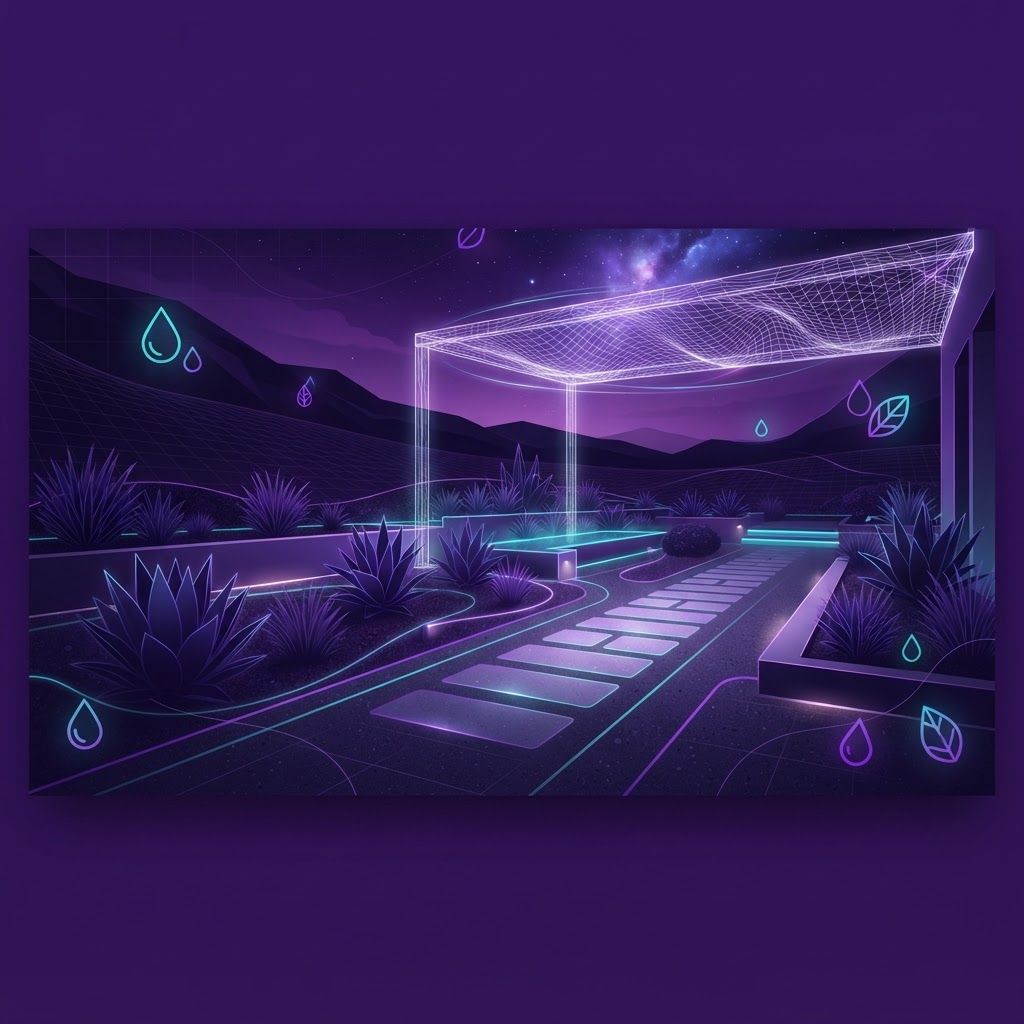
Designing Landscapes for an Inland Climate
Landscaping in Fontana operates under real constraints. Summer heat is prolonged and intense, water is a regulated and increasingly expensive resource, soils in parts of the city are sandy and fast-draining, and reflected heat from walls and hardscape raises effective temperatures further. A landscape designed for a coastal climate will struggle here, and one designed for the Inland Empire specifically will thrive with less water and less maintenance.
The best landscaping companies treat these conditions as design inputs rather than obstacles. Plant selection favors species adapted to heat and drought, hardscape provides shade and reduces irrigated area, and irrigation is engineered for efficiency rather than coverage alone.
Services Landscaping Companies Provide
Full-service companies typically handle landscape design, installation of planting and irrigation, hardscape construction including patios, walkways, retaining walls, and driveways, outdoor living features such as pergolas, fire features, and outdoor kitchens, lighting design and installation, artificial and natural turf installation, drainage solutions, and ongoing maintenance.
Many also offer specific services in high local demand: lawn replacement with drought-tolerant designs, irrigation system retrofits with smart controllers, tree planting for shade, and slope stabilization for properties in the northern foothill areas.
Water-Wise Design and Plant Selection
California water regulations and pricing have made efficient landscaping a practical necessity rather than an environmental preference. Water-wise design does not mean gravel and cactus alone. Mediterranean, California native, and desert-adapted palettes offer substantial color, texture, and seasonal interest.
Successful plantings in Fontana often include species such as lavender, rosemary, salvia, agave, yucca, ornamental grasses, bougainvillea, oleander, lantana, and native shrubs like toyon and manzanita. Shade trees adapted to the climate, including certain oaks, desert willow, and palo verde, deliver long-term cooling value that reduces both landscape stress and home energy consumption.
Hydrozoning is a critical technique, grouping plants with similar water needs on the same irrigation circuit so nothing is overwatered to satisfy a thirstier neighbor. Mulching planting beds generously conserves soil moisture, moderates root temperature, and suppresses weeds.
Irrigation Efficiency
Irrigation is where the largest water savings and the most common failures occur. Older spray systems lose substantial water to evaporation and overspray onto hardscape. Converting planting beds to drip irrigation delivers water directly to root zones with dramatically less loss.
Smart controllers that adjust schedules using weather data, soil moisture sensors, pressure regulation, matched-precipitation-rate nozzles, and check valves preventing low-head drainage all improve performance. Regular auditing matters too, since a single broken head or clogged emitter can waste water for weeks unnoticed.
Quality landscaping companies design irrigation as an engineered system, calculating precipitation rates and zone hydraulics rather than simply installing heads at intervals.
Hardscape, Shade, and Outdoor Living
Hardscape serves both function and climate response. Patios, walkways, and seating areas reduce irrigated turf while creating usable space. Material choice affects comfort significantly, since dark pavers absorb and radiate substantial heat. Lighter-colored concrete, permeable pavers, and shaded surfaces remain far more comfortable.
Shade structures are arguably the highest-value investment for Fontana outdoor spaces. Pergolas with adjustable louvers, solid patio covers, shade sails, and strategically planted trees convert unusable summer afternoons into functional living space. Outdoor kitchens, fire features for cooler evenings, and misting systems extend usability further.
Retaining walls and slope work require proper engineering, drainage provisions, and in some cases permits, particularly for taller walls. Companies that address drainage behind walls prevent the failures that plague poorly built installations.
Turf Options and Lawn Alternatives
Natural turf still has a place, particularly for households with children and pets, though water-efficient varieties and reduced lawn footprints are now standard practice. Warm-season grasses tolerate heat with less water than cool-season varieties.
Artificial turf has improved substantially in appearance and drainage and is widely installed locally. It eliminates irrigation and mowing but requires proper base preparation to drain correctly, and surface temperatures on unshaded synthetic turf can become uncomfortably high, making shade planning important.
Drainage and Storm Water
Fontana receives concentrated rainfall in winter, and properties without adequate drainage experience pooling, foundation moisture, and soil erosion. Landscaping companies address this with proper grading away from structures, French drains, area drains connected to appropriate outlets, dry creek beds that manage flow decoratively, and permeable surfaces that allow infiltration.
Correcting drainage during landscape installation is far less expensive than retrofitting after damage occurs.
Maintenance Programs
Landscapes require ongoing care regardless of design. Maintenance services typically include mowing and edging, pruning, fertilization, weed management, seasonal color rotation, irrigation inspection and adjustment, and tree care. Quality maintenance emphasizes correct pruning technique, since improper cuts on shrubs and trees cause long-term damage that takes years to correct.
Irrigation adjustment across seasons is one of the most valuable maintenance functions, as watering schedules appropriate for July waste substantial water in December.
Licensing and Selection
California landscape contractors hold a C-27 license, and work involving structural walls, electrical, or plumbing may require additional classifications or subcontractors. Homeowners should verify licensure, liability insurance, and workers compensation coverage.
Evaluate companies on design capability, portfolio relevance to your property type, irrigation expertise, plant knowledge specific to the inland climate, and willingness to provide a detailed plan with plant schedule and irrigation layout. Ask to see installations completed several years earlier, since a landscape's true quality reveals itself as plants mature.
In a climate as demanding as Fontana's, the best landscaping companies design for the conditions rather than against them, producing outdoor spaces that look better each year while consuming less water.