
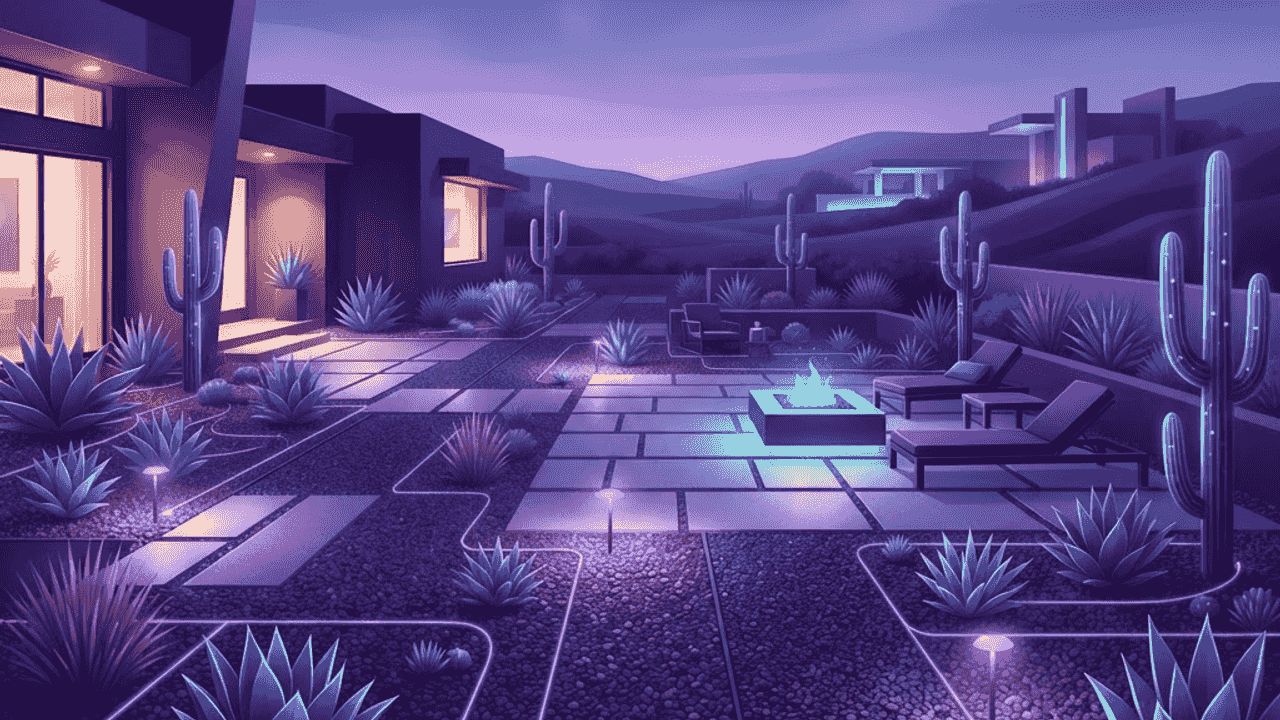
Rethinking the Yard in a Desert City
Landscaping in Chandler has shifted decisively over the past two decades. Broad expanses of thirsty lawn, once the default expression of a well-kept property, have given way to xeriscape and desert-adapted designs that use a fraction of the water and look appropriate to their setting. That change is driven by water economics, by summer heat that punishes non-adapted species, and by a maturing regional design language that treats gravel, stone, structural plants and shade as deliberate compositional elements rather than compromises.
Done poorly, desert landscaping becomes a flat gravel field with three shrubs and no character. Done well, it produces genuine outdoor rooms: shaded seating under a ramada or mature mesquite, layered planting with real seasonal interest, warm evening lighting, and hardscape that extends the living space of the house. The difference is almost entirely design competence and correct plant selection.
Design Principles That Work Locally
Start with shade, because in Chandler shade determines whether an outdoor space is usable. Trees, structures, pergolas and orientation matter more than plant variety. Place seating where afternoon sun will not reach it, and remember that western exposure is the harshest. Reflected heat from walls and paving is a real design factor, so light-coloured hardscape and planting buffers against walls both help.
Group plants by water requirement, a practice known as hydrozoning, so irrigation can be scheduled efficiently instead of overwatering drought-adapted species to satisfy thirstier neighbours. Use structural, sculptural plants such as agave, yucca, ocotillo, barrel cactus and sotol as anchors, then soften with flowering shrubs and perennials like Texas ranger, brittlebush, damianita, lantana and desert milkweed. Trees suited to the climate include palo verde, desert willow, mesquite, ironwood and acacia, all of which provide filtered shade without excessive water demand.
The Top 10 Landscaping Companies in Chandler
1. Chandler Landscape Design Group
A design-and-build firm producing full plans before construction, including grading, drainage, planting layouts, irrigation schematics and lighting. Suited to complete yard renovations where coordination across trades matters.
2. Desert Xeriscape Solutions
Specialists in turf removal and conversion to low-water desert landscaping, including rebate documentation where programmes apply. Their focus is on genuinely attractive xeriscape rather than minimal gravel treatments.
3. Ocotillo Outdoor Living
Concentrates on hardscape and structures: paver patios, travertine decking, seat walls, outdoor kitchens, fire features, ramadas and shade structures. Frequently engaged for backyard entertainment spaces around existing pools.
4. Sun Valley Irrigation Systems
Dedicated to drip irrigation design, installation, repair and smart controller programming. Given that irrigation efficiency determines both plant health and water bills, this specialisation resolves problems many general crews leave unaddressed.
5. Arizona Tree Care & Arborists
Certified arborists handling structural pruning, monsoon-season risk reduction, deep root fertilisation, disease diagnosis and removals. Correct pruning of desert trees is a skill routinely done badly, and this firm is known for restraint and technique.
6. Copper Sky Landscape Maintenance
Provides recurring maintenance: seasonal pruning, granite refresh, weed management, irrigation checks and cleanups. Reliable scheduling and consistent crews are the differentiators in a category where both are often lacking.
7. Price Corridor Commercial Grounds
Serves office parks, retail centres and homeowner associations with large-scale maintenance, irrigation management, seasonal colour rotations and enhancement projects on contract schedules.
8. Gilbert Road Landscaping
A mid-sized residential contractor handling planting, gravel, borders, small hardscape and repairs at accessible pricing. A practical choice for incremental improvements rather than whole-yard redesign.
9. Chandler Landscape Lighting
Focused on low-voltage outdoor lighting design and installation, including path, uplighting on specimen plants, wall washing and integrated hardscape lighting. Transforms desert yards after dark, which is when they are most used in summer.
10. Heritage Garden & Grounds
Works with clients wanting productive and ornamental gardens adapted to the desert, including citrus care, raised vegetable beds, composting systems and pollinator planting alongside conventional landscaping.
Irrigation: Where Most Yards Succeed or Fail
Nearly every struggling desert landscape traces back to irrigation. Emitters clog with mineral deposits, tubing degrades under ultraviolet exposure, plants outgrow their original emitter capacity, and controllers keep running a schedule set years ago for a completely different planting. Regular inspection is not optional maintenance; it is the core of keeping a landscape alive.
Best practice is deep, infrequent watering that drives roots downward, adjusted seasonally rather than left static. Smart controllers using local weather data handle those adjustments automatically and typically pay for themselves. Mulch, whether organic or decorative rock over appropriate ground preparation, reduces evaporation substantially. Ask any prospective landscaper how they will handle emitter sizing as plants mature, since that single question separates thoughtful firms from those who install and walk away.
Planning a Yard Renovation
Expect a full renovation to move through stages: design, demolition and turf removal, grading and drainage correction, irrigation rough-in, hardscape construction, planting, granite or mulch placement, and lighting. Drainage deserves particular attention. Monsoon downpours arrive fast, and a yard that channels water toward the foundation causes far more expensive problems than any plant loss.
Get written scope with plant sizes and quantities specified, hardscape materials named, irrigation components listed and a schedule with sequencing. Confirm licensing and insurance, and clarify warranty terms on plant material, which typically ranges from thirty days to a full year and often depends on the homeowner following watering instructions.
Maintenance Expectations
Desert landscaping is lower maintenance than lawn, not no maintenance. Plan for seasonal pruning at the right times, since cutting many desert species in the wrong season removes flowering wood or exposes bark to sunburn. Refresh decorative granite periodically as it settles and fades. Stay ahead of weeds after rain events, when germination is rapid. Have irrigation audited at least annually.
Avoid the most common local mistake: shearing desert shrubs into tight balls. It stresses the plant, removes flowers and creates dense outer growth with dead interiors. Selective, natural pruning takes more skill and produces far better long-term results.
Final Thoughts
The best Chandler landscaping outcomes come from designing for shade, selecting genuinely adapted plants, installing irrigation that can be maintained, and committing to seasonal care. The ten companies above cover design-build, xeriscape conversion, hardscape, irrigation, arboriculture, lighting, commercial grounds and ongoing maintenance. Match the firm to the phase of work you are in, insist on detailed scope, and the yard will look better and cost less to run than any imported alternative.