
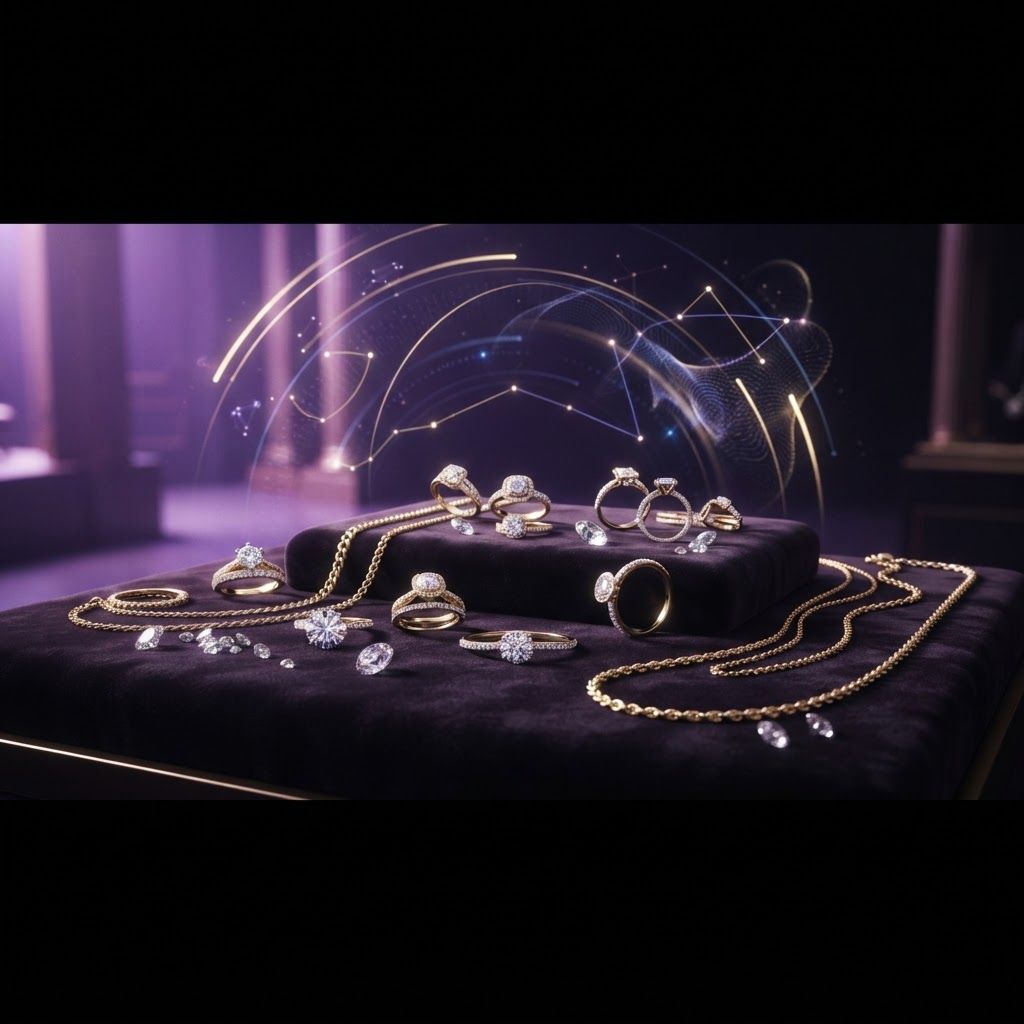
The Wholesale Jewelry Landscape in the Inland Empire
Jewelry retailing in San Bernardino spans an unusually wide spectrum. The city and its surrounding communities support traditional family-owned jewelers, mall chain locations, quinceañera and bridal specialists, custom bench jewelers, pawn and estate buyers, swap-meet vendors and a rapidly growing cohort of online sellers shipping from home studios. Each of those business models buys differently, and the wholesale market has evolved to serve all of them.
Geography helps considerably. San Bernardino is roughly an hour from the Los Angeles jewelry district, one of the largest concentrations of jewelry wholesalers, casting houses, gem dealers and findings suppliers in the world. That proximity means Inland Empire retailers can visit suppliers in person, inspect goods, negotiate memo terms and take delivery the same day, while still operating with the lower overhead of an inland storefront.
Leading Jewelry Wholesalers and Supply Sources
1. Stuller. Stuller is arguably the most important single supplier to independent American jewelers. Its catalog covers finished jewelry, semi-mounts, loose diamonds and gemstones, findings, chain, tools, packaging and bench supplies, all available in small quantities with rapid shipping. For a San Bernardino retailer, Stuller effectively functions as a complete back office — a customer can order a single setting for a custom job in the morning and have it on the bench within a day or two.
2. Rio Grande. Long established as a supplier to studio jewelers and bench professionals, Rio Grande specializes in metals, findings, gemstones, tools and equipment. It is particularly valued for educational content and technical support, which makes it a natural fit for custom shops, repair-focused jewelers and the growing number of independent designers producing handmade pieces in the region.
3. Quality Gold. Quality Gold is a major wholesale distributor of gold, silver and fashion jewelry to retailers. Its strength is breadth of finished inventory at multiple price points, which suits retailers who need to fill cases quickly across bridal, fashion, religious, children's and men's categories without committing to custom manufacturing.
4. Samuel B. and similar designer wholesale lines. Designer wholesale brands occupy a valuable niche for independent stores competing against national chains. By carrying distinctive designer collections with recognizable aesthetics, a local jeweler can offer merchandise that customers cannot simply price-shop at a mall. These programs typically include display support, marketing assets and reorder guarantees on core styles.
5. Certified diamond wholesalers and virtual inventory networks. Modern diamond buying rarely involves holding large physical stock. Instead, retailers access networked inventories of certified stones, quoting from live availability and ordering only after a customer commits. This dramatically reduces capital tied up in inventory and has become standard practice for engagement-ring sales in mid-sized markets like San Bernardino.
6. Lab-grown diamond suppliers. The rise of laboratory-grown diamonds has been the single most disruptive development in the industry in a generation. Dedicated wholesalers now supply certified lab-grown stones at a fraction of natural-diamond pricing, enabling retailers to offer larger center stones within a customer's budget. Inland Empire jewelers report strong reception among younger bridal buyers, and most successful stores now present both natural and lab-grown options transparently.
7. Colored gemstone dealers. Sapphire, ruby, emerald, tourmaline, opal and semiprecious specialists supply both calibrated commercial goods and one-of-a-kind stones. For custom jewelers, relationships with gem dealers are a creative asset as much as a commercial one, because access to unusual material differentiates finished work.
8. Findings, chain and casting suppliers. Behind every finished piece is a supply chain of settings, clasps, earring components, chain by the foot and casting services. Los Angeles district casting houses serving the Inland Empire can turn a wax or CAD file into a finished casting in days, which underpins the custom-design business that many independent jewelers depend on for margin.
9. Fashion and costume jewelry importers. A large volume segment of the market involves plated brass, stainless steel, cubic zirconia and resin jewelry imported in bulk. Importers supply boutiques, gift shops, salon retail displays, swap-meet vendors and online sellers. Margins per piece are small but turnover is fast, and the category is highly trend-sensitive.
10. Estate, scrap and refining dealers. Finally, the secondary market is a genuine wholesale channel. Estate buyers and refiners both supply pre-owned inventory and provide an outlet for scrap gold, which many San Bernardino jewelers use to fund new purchases. Given the region's active pawn and buy-gold sector, retailers who understand estate valuation can acquire distinctive inventory at attractive cost.
Industry Trends Worth Understanding
Three trends dominate current conversations. First, transparency and disclosure expectations have risen sharply. Customers ask about origin, treatment, conflict-free sourcing and whether a stone is natural or lab-grown, and regulators expect accurate representation. Wholesalers that provide clear certification and disclosure documentation reduce a retailer's compliance risk.
Second, precious-metal price volatility affects everything from case pricing to repair quoting. Retailers increasingly quote labor separately from metal weight and revisit price lists frequently rather than annually.
Third, custom and personalized jewelry continues to grow. Computer-aided design, three-dimensional printing of waxes and fast regional casting have made bespoke work economically viable at moderate price points. This favors wholesalers that supply components, CAD services and casting rather than only finished goods.
How to Choose a Wholesale Partner
Verify credentials first. Established wholesalers should be willing to provide references, membership in recognized industry bodies, and laboratory certification for significant stones. Insist on written disclosure of treatments and origin. Second, examine terms carefully: memo consignment, buyback and exchange policies materially affect your inventory risk, particularly on bridal semi-mounts and slow-moving styles.
Third, match assortment to your actual customer base. A store serving a strong quinceañera and communion market needs very different inventory from one focused on bridal or men's fashion. Fourth, evaluate turnaround on repairs, sizing and special orders, since service speed drives customer satisfaction as much as product selection. Finally, consider security and insurance practices in shipping and handling — a supplier with disciplined logistics protects both parties.
Final Thoughts
San Bernardino jewelers benefit from a rare combination: proximity to a world-class wholesale district plus the operating economics of an inland market. Retailers who cultivate a balanced supplier portfolio — a full-line supplier for everyday needs, a designer line for differentiation, a virtual diamond network for bridal, and a local casting relationship for custom work — can compete effectively against far larger chains. The fundamentals remain unchanged: buy honestly, disclose fully, know your customer, and treat supplier relationships as long-term partnerships rather than transactions.