
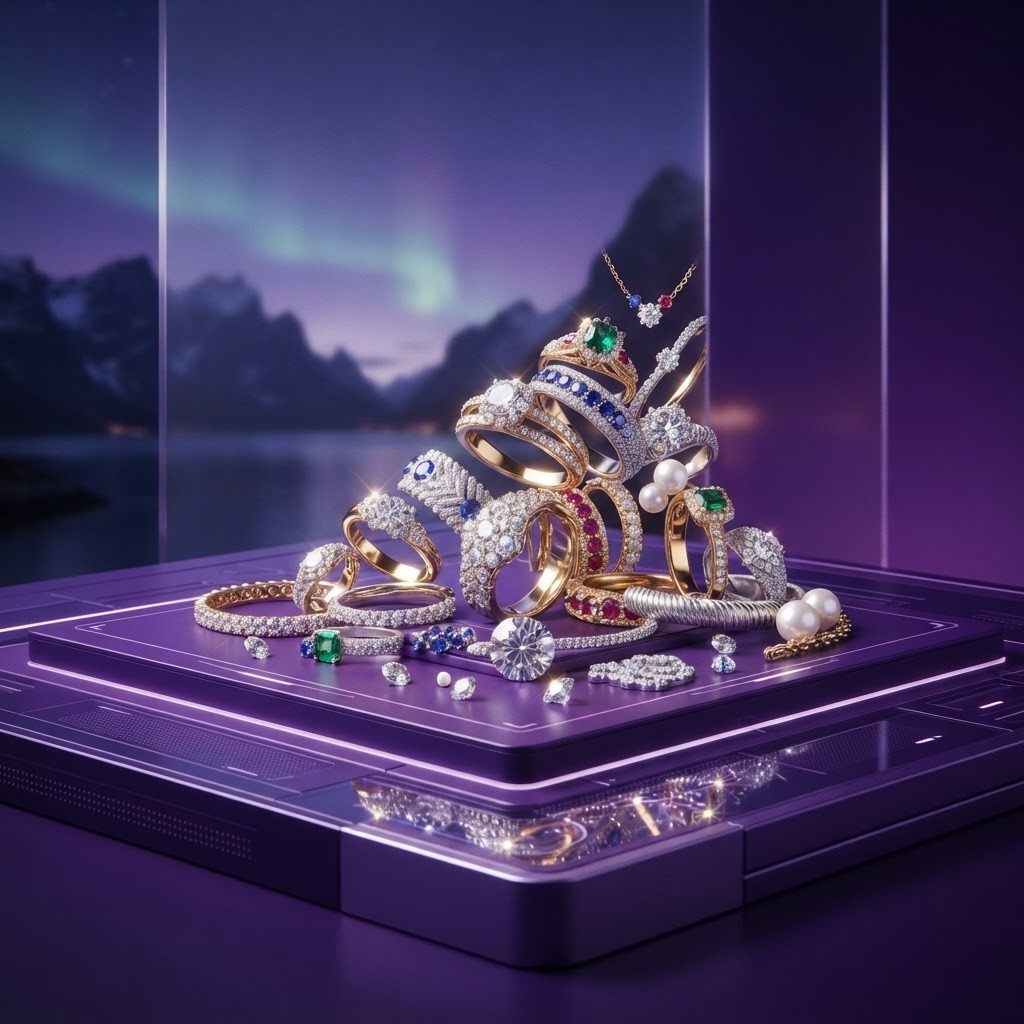
The Norwegian Jewelry Wholesale Landscape
Norway has long been associated with refined, minimalist design, and this sensibility extends deeply into its jewelry industry. Wholesale jewelry suppliers form the backbone of the country's retail ecosystem, providing everything from precious metals and gemstones to finished pieces that populate the display cases of independent boutiques and national chains. The Norwegian market places a strong emphasis on quality, transparency, and ethical sourcing, which shapes how wholesalers operate and compete.
Because Norwegian consumers value durability and understated elegance over ostentation, wholesalers in the country tend to focus on timeless collections crafted from responsibly sourced silver, gold, and platinum. Many suppliers also work closely with local designers, giving retailers access to distinctive Scandinavian pieces that stand out in an increasingly global marketplace.
What Sets Norwegian Wholesalers Apart
Several factors distinguish the leading jewelry wholesalers in Norway. First, sustainability is not a marketing afterthought but a core operating principle. Suppliers increasingly document the origins of their metals and stones, embracing recycled gold and conflict-free diamonds. Second, the emphasis on craftsmanship means that even mass-distributed pieces reflect careful attention to finish and detail. Finally, strong logistics networks allow wholesalers to serve retailers across Norway's challenging geography, from Oslo's urban centers to remote coastal towns.
Leading Jewelry Wholesalers
Bjørklund stands as one of the most recognized names in Norwegian jewelry, operating both retail and distribution arms. Its wholesale relationships supply a broad range of watches, rings, and fine jewelry, backed by decades of trusted reputation and consistent quality control.
David-Andersen carries a storied legacy in Norwegian silversmithing and enamel work. As a heritage brand, it supplies retailers seeking pieces that embody classic Scandinavian artistry, particularly its celebrated enamel jewelry that remains popular among collectors.
Gullsmed Aas serves as a respected supplier known for goldsmithing excellence and bespoke craftsmanship, catering to retailers who want high-end, artisanal collections rather than mass-produced items.
Juvelen has built a reputation for accessible, contemporary designs, offering wholesale partners fashionable collections that appeal to younger demographics without sacrificing quality.
Thune combines a long history with modern distribution capabilities, supplying watches and jewelry to a network of retail partners while maintaining rigorous standards.
Gullfunn focuses on competitively priced collections, helping smaller boutiques stock diverse inventory without large capital commitments.
Norsk Gullvarefabrik represents the manufacturing side of the industry, producing gold and silver items at scale for distribution to retailers throughout the country.
Opro is known for its jewelry manufacturing heritage and consistent supply of quality goods to Norwegian retailers.
Frisenberg offers a curated selection of fine jewelry, appealing to partners who prioritize distinctive, design-forward pieces.
Urmaker Bjerke, while widely recognized for timepieces, also plays a role in supplying premium jewelry and watches through established trade relationships.
Industry Trends Shaping the Market
The Norwegian jewelry wholesale market is being reshaped by several trends. Sustainable and recycled materials are becoming standard rather than premium options, driven by both consumer demand and regulatory pressure. Digital cataloging and online ordering platforms are streamlining how retailers browse and purchase inventory, reducing the friction of traditional wholesale relationships. Additionally, personalization and small-batch production are gaining traction, allowing retailers to differentiate themselves with exclusive collections.
Choosing the Right Wholesale Partner
Retailers evaluating Norwegian jewelry wholesalers should consider several criteria: the breadth and quality of the product range, transparency around sourcing and materials, reliability of delivery across Norway's dispersed geography, and flexibility in order quantities. Strong wholesalers also provide marketing support, product training, and responsive customer service, which can be decisive factors for smaller retailers.
Conclusion
Norway's jewelry wholesale industry reflects the nation's broader values of quality, sustainability, and understated design. The companies highlighted here represent a spectrum of offerings, from heritage silversmiths to modern manufacturers and distributors. For retailers and designers seeking dependable partners, this sector offers a rich blend of tradition and innovation, ensuring that Norwegian jewelry continues to command respect both domestically and internationally.