
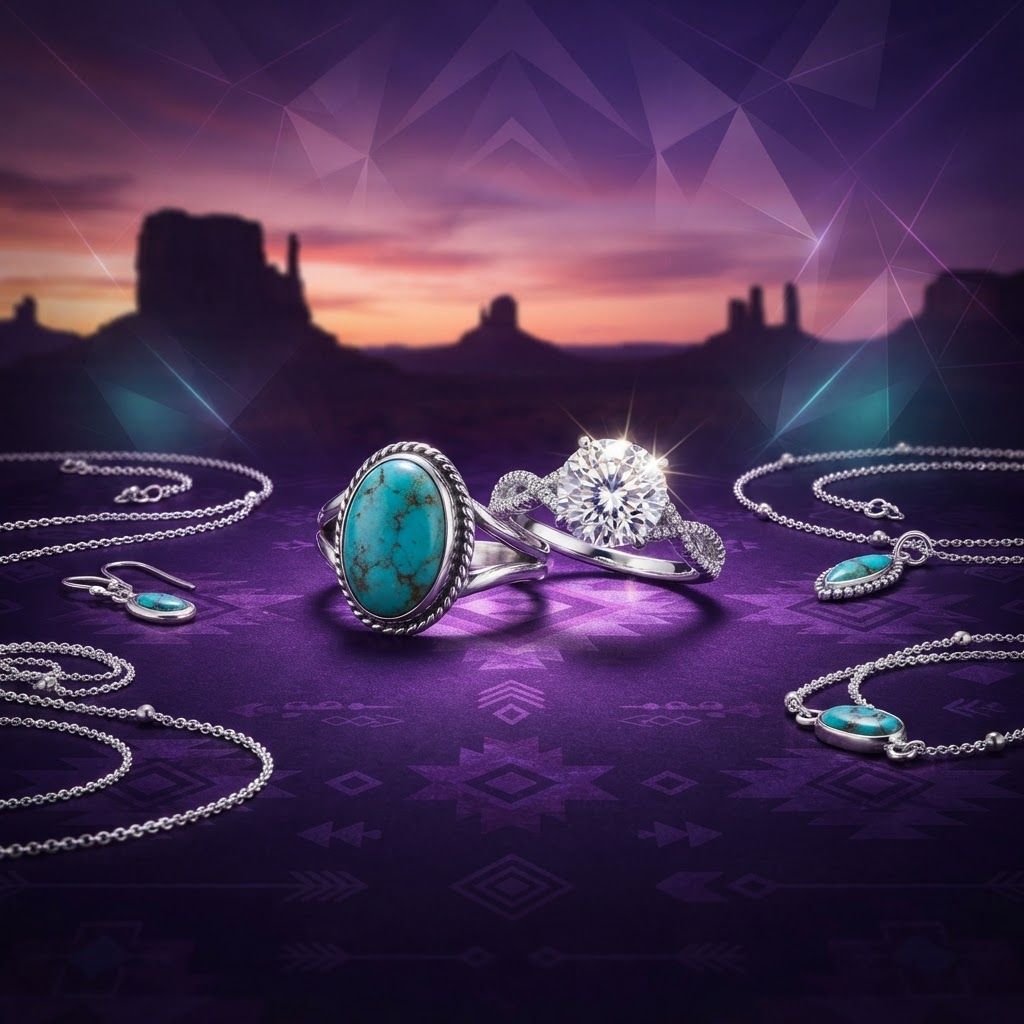
Jewelry Culture in the West Valley
Jewelry buying in Surprise reflects two distinct influences. The first is the broader Southwestern tradition, where turquoise, silver, and Native American design heritage carry genuine cultural weight and aesthetic appeal. The second is mainstream national retail, serving bridal, gift, and fine jewelry needs the same way it does anywhere.
The city's demographics shape demand further. A substantial active adult population buys anniversary and milestone pieces, while younger families drive engagement and wedding purchases. Seasonal visitors and spring training tourism add gift and souvenir demand, particularly for distinctly regional pieces.
What to Know Before Buying Jewelry
Metal quality is the first checkpoint. Karat stamps on gold, sterling markings on silver, and clear disclosure of plating versus solid construction should be present and verifiable. Plated pieces are legitimate at their price point but should never be sold ambiguously.
Stone disclosure is the second. Whether a diamond is mined or lab-grown, whether a gemstone has been treated, and whether turquoise is natural, stabilized, or reconstituted all substantially affect value. Reputable sellers disclose this without being asked.
Craftsmanship shows in details: how securely stones are set, whether prongs are even, how clasps operate, and how well finishing is executed on the back of a piece where nobody looks. Return policies, warranty terms, and available repair service round out the evaluation.
The Top 10 Jewelry Brands in Surprise
1. Tiffany & Co. The benchmark for fine jewelry presentation, quality control, and resale recognition. Their engagement and silver lines are widely sought for milestone occasions where brand assurance matters to the recipient.
2. Pandora. Charm bracelets and modular jewelry with broad accessibility and strong gift appeal. The collectible format sustains repeat purchasing and makes gifting straightforward across a wide age range.
3. Kay Jewelers. Mainstream fine jewelry with accessible financing, extensive bridal selection, and service plans. Their prevalence in West Valley retail centers makes them a practical first stop for many buyers.
4. Zales. A long-established diamond retailer offering broad selection across price points with trade-in and upgrade programs that appeal to buyers planning future purchases.
5. Native American Southwestern Silverwork. Authentic turquoise and silver pieces produced by Navajo, Hopi, and Zuni artisans represent the region's most distinctive jewelry tradition. Authenticity documentation and artist attribution matter enormously and support the craftspeople directly.
6. David Yurman. Distinctive cable designs in silver and gold with strong recognition and durable construction. Their pieces work well as everyday luxury rather than occasion-only jewelry.
7. Brilliant Earth. Focused on ethically sourced and lab-grown diamonds with detailed origin traceability. Their transparency around sourcing appeals strongly to buyers who want documentation rather than assurances.
8. James Avery. Handcrafted sterling and gold pieces with a devoted following, known for meaningful symbolic designs and lifetime repair support that keeps pieces in service for decades.
9. Swarovski. Crystal jewelry offering considerable visual impact at accessible prices. Well suited to fashion and occasion wear where precious materials are not the objective.
10. Independent West Valley Jewelers. Local independent shops offering custom design, repair, appraisal, and estate pieces. For custom commissions and ongoing service relationships, an independent jeweler often delivers value and attention that chains cannot match.
Trends Shaping Jewelry Buying
Lab-grown diamonds have fundamentally changed bridal buying. Price compression has allowed buyers to choose significantly larger or higher-quality stones within the same budget, and acceptance has broadened rapidly. Buyers should understand that resale values differ from mined stones and buy for enjoyment rather than investment.
Ethical sourcing and traceability have become mainstream expectations. Chain of custody documentation for both metals and stones is increasingly available, and sellers who cannot speak to sourcing are losing ground with informed buyers.
Personalization continues growing. Custom engraving, birthstone integration, and bespoke design commissions have expanded as consumers seek pieces with specific meaning rather than catalog selections. Local independent jewelers are the primary beneficiaries of this shift.
Practical Buying Advice
Set a budget before shopping and treat financing offers cautiously, since interest costs can substantially exceed the apparent savings from a promotion. Buy the best craftsmanship you can afford rather than the largest stone, because setting quality determines whether a piece survives daily wear.
For turquoise specifically, learn the difference between natural, stabilized, and reconstituted material, and ask directly. Authentic Native American work should come with artist information, and paying for authenticity supports the tradition that gives the piece its meaning.
Insure valuable pieces and keep appraisals current. Desert heat and dry air are hard on some materials, so periodic professional cleaning and prong inspection protect against stone loss, which is the most common and most preventable jewelry failure.
Final Thoughts
Jewelry shopping in Surprise offers unusual range, from nationally recognized fine jewelry houses to authentic Southwestern silverwork with deep regional roots. The right choice depends on occasion, budget, and what the piece is meant to communicate. Verify materials, insist on disclosure, prioritize construction quality, and consider building a relationship with a local jeweler who can service what you buy for years to come.