
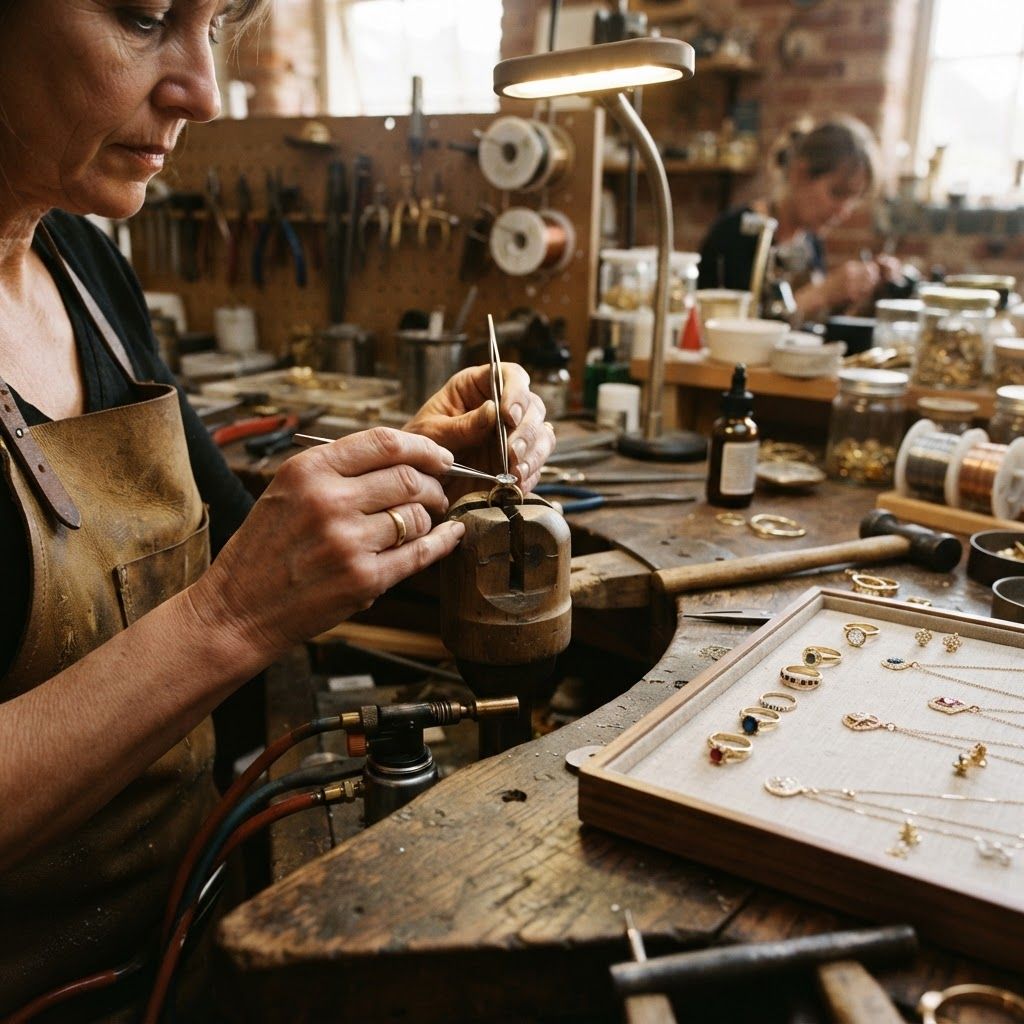
Jewelry purchasing carries emotional weight that distorts judgment. Engagement rings, anniversary gifts and heirloom pieces are bought under time pressure and social expectation, which is precisely when buyers are least equipped to evaluate quality and value. St. Louis is a good market in which to navigate that, largely because its jewelry trade is dominated by long-established businesses whose reputations depend on repeat family relationships rather than transaction volume.
The St. Louis Jewelry Scene
Several factors define the local market. Multi-generation family jewelers remain prominent and genuinely influential, which raises the standard for service and honesty. There is also a notable studio jewelry community, with independent metalsmiths producing original work sold through galleries and direct channels. And the region's substantial antique and estate trade means vintage and period jewelry is more available here than in comparably sized markets.
Custom design has become a particular local strength. Access to bench jewelers with real fabrication skill, combined with computer-aided design capability, means having something made is often competitive with buying a comparable finished piece.
The Top 10 Jewelry Brands in St. Louis
1. Gateway Diamond and Bridal
A bridal-focused jeweler working with independently certified natural and laboratory-grown diamonds. Educational approach to the consultation, walking clients through grading factors and tradeoffs, produces better-informed purchases than a pure sales process.
2. Mound City Goldsmiths
A studio operation producing hand-fabricated pieces in gold and platinum, including custom commissions. Fabrication rather than casting gives the work density and detail that mass production cannot replicate.
3. Cherokee Street Silver Studio
Focuses on sterling silver and mixed-metal contemporary designs at accessible price points. Bold, sculptural work sold through local galleries and direct, appealing to buyers seeking artistic rather than traditional jewelry.
4. Central West End Estate Jewelry
Deals in evaluated antique and estate pieces spanning Victorian through mid-century periods. Careful authentication and condition assessment matter enormously in this category, and their documentation practices are notably rigorous.
5. Forest Park Custom Design Atelier
Specializes in custom commissions using computer-aided design, wax models and client review at each stage. Particularly strong at redesigning inherited jewelry into wearable contemporary pieces while preserving sentimental stones.
6. Soulard Colored Gemstone Jewelers
Concentrates on sapphires, spinels, garnets, tourmalines and unusual collector stones set in original designs. Clear disclosure of treatments and origin supports the growing interest in alternatives to traditional diamond engagement rings.
7. Tower Grove Fine Watches
Deals in mechanical timepieces, both new and pre-owned, with in-house servicing capability. Watchmaker on site is the real differentiator, since mechanical watches require periodic service and shipping them away is inconvenient and risky.
8. Grand Center Modern Jewelry
Produces minimal, architectural designs in recycled gold and alternative metals. Appeals to buyers who want understated everyday pieces and value transparent material sourcing.
9. Lafayette Square Heirloom Restoration
Specializes in repairing, restoring and resetting family jewelry, including retipping worn prongs, rebuilding shanks and replacing lost stones. Restoration is often more valuable to families than any new purchase.
10. Delmar Loop Artisan Jewelry Collective
A shared retail space representing multiple independent local makers across styles and price ranges. The variety and direct connection to the person who made a piece create an experience conventional retail cannot match.
How to Buy Jewelry Confidently
Insist on independent certification for significant stones. Diamonds should carry reports from recognized laboratories, and laboratory-grown stones must be identified clearly. In-house appraisals are not equivalent to independent grading. For colored gemstones, ask specifically about treatments, since heating, filling and dyeing all affect value and durability.
Understand what drives price. In diamonds, cut quality affects appearance more than carat weight or minor clarity differences, meaning a well-cut smaller stone frequently outperforms a larger poorly cut one visually. Learning that single fact saves buyers meaningful money.
Approach custom design with realistic expectations. It typically requires several weeks, involves design revisions, and pricing depends on metal weight, stone cost and labor hours. Ask for a written scope, a rendering before fabrication, and clarity about what changes are included versus billable. Well-executed custom work usually delivers better value than comparable retail because you are not paying for inventory carrying cost.
Get appraisals for insurance separately from the purchase, verify return and warranty terms in writing, and ask about ongoing maintenance. Prong inspection and professional cleaning every six to twelve months prevents the stone loss that causes most jewelry heartbreak.
Trends in Fine Jewelry
Laboratory-grown diamonds have permanently changed price expectations and enabled larger stones at accessible budgets, though resale characteristics differ from natural stones. Recycled and traceable precious metals have moved into standard practice. Colored gemstone engagement rings continue gaining share as buyers seek distinctiveness. Vintage and estate jewelry has strong momentum as both a sustainable and characterful choice. Custom and personalized design keeps expanding, and everyday-wearable fine jewelry has broadened the market well beyond milestone occasions.
Final Thoughts
St. Louis rewards jewelry buyers who take a little time. Work with established jewelers who explain rather than pressure, require independent certification on significant stones, prioritize cut quality over size, and consider custom design or estate pieces as genuinely competitive alternatives to conventional retail. Then maintain what you buy, because a professional inspection twice a year costs very little and prevents the loss of something irreplaceable.