
What Interior Fitout Actually Means
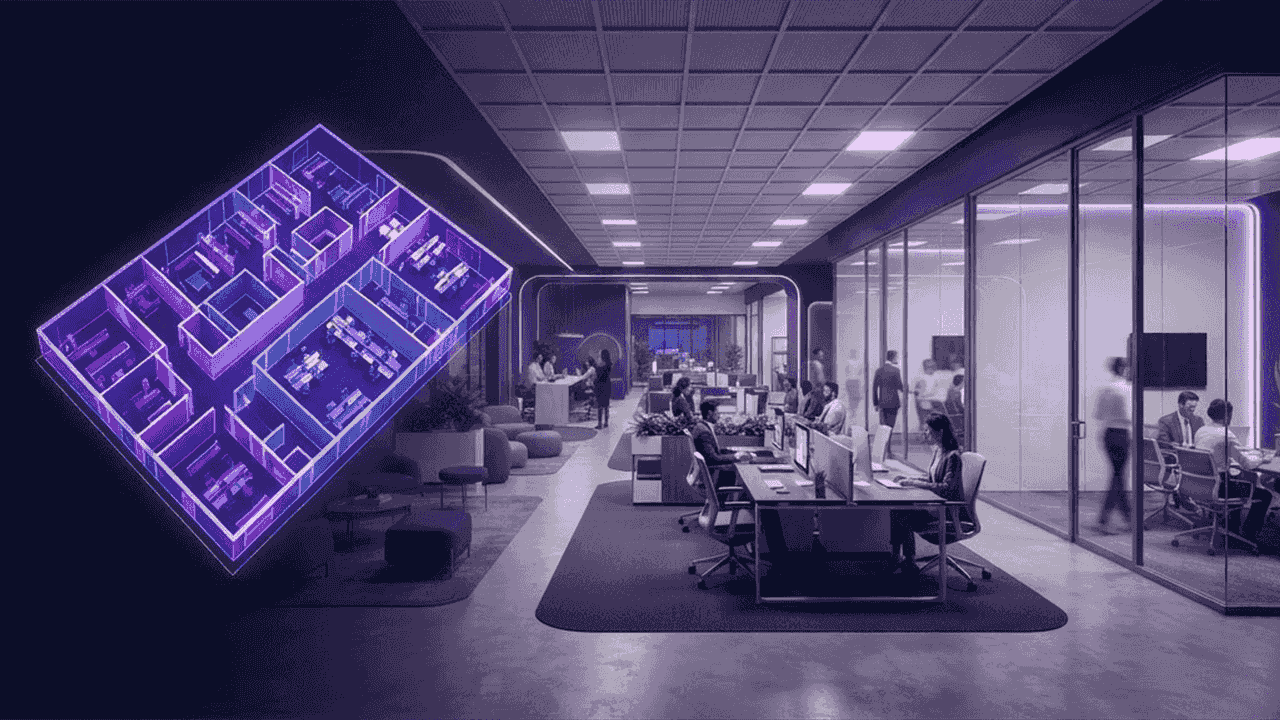
Interior fitout is the discipline of converting a building's interior into a usable, code-compliant, brand-appropriate environment. In commercial real estate the work is commonly split into categories. A shell and core delivery gives a tenant structure, envelope, and base utilities. A first fitout, often called Category A, adds raised floors or ceilings, basic mechanical distribution, lighting, and finished surfaces so the space is leasable. A tenant-specific fitout, Category B, delivers the partitions, joinery, branding, specialty lighting, technology, and furniture that make the space belong to one occupant.
Brookhaven's commercial inventory includes office suites along its main corridors, medical and dental practices, restaurants, salons, fitness studios, and neighborhood retail. Each of these has distinct fitout demands. A dental practice requires plumbing and vacuum lines at every operatory plus lead-lined imaging rooms. A restaurant demands grease interceptors, hood systems, makeup air, and health department coordination. A fitness studio needs sound isolation and floor loading review. Fitout firms that understand the sector-specific requirements save tenants from expensive rework.
The Fitout Delivery Process
A well-run fitout follows a clear sequence. It begins with space assessment and test fitting, where the firm confirms whether the intended headcount, room program, and equipment actually fit within the leased area and its column grid. Many tenants sign leases before this step and later discover the space cannot accommodate their program without compromise.
Design development follows, producing layouts, reflected ceiling plans, finish schedules, millwork details, and mechanical, electrical, and plumbing coordination. Permitting comes next, with drawings sealed by the appropriate design professionals and submitted for review. Long-lead procurement should begin during permitting rather than after, since custom joinery, specialty glazing, lighting packages, and mechanical equipment often carry extended lead times that dictate the overall schedule.
Construction then proceeds through demolition, framing, overhead rough-ins, inspections, drywall and ceilings, finishes, joinery installation, technology commissioning, furniture placement, and finally punch list and closeout with certificate of occupancy. The firms that consistently hit dates are the ones that treat procurement and inspection scheduling as primary drivers rather than afterthoughts.
What Distinguishes the Leading Fitout Companies
The strongest fitout contractors in the Brookhaven market share several operational characteristics. The first is design and build integration. When design and construction sit under one accountable contract, coordination gaps close and value engineering happens before drawings are finalized rather than during construction when changes are costly.
The second is landlord and building management fluency. Commercial fitouts happen inside operating buildings with rules about work hours, freight elevator access, tie-ins to base building systems, fire alarm shutdowns, and insurance requirements. Contractors with existing relationships in local buildings navigate these constraints without burning schedule.
Third is joinery and millwork capability. The visible quality of a finished office or clinic is largely determined by cabinetry, reception desks, wall paneling, and integrated technology housings. Firms with in-house or dedicated shop partners maintain tighter tolerances and better schedule control than those bidding millwork out late.
Fourth is systems literacy. Modern fitouts integrate structured cabling, access control, audiovisual systems, sensor-based lighting controls, and building management interfaces. A contractor who coordinates these early avoids the familiar failure of a beautiful space where the conference room technology never worked properly.
Trends in Commercial Interiors
Workplace fitout priorities have shifted meaningfully. Density has decreased while collaboration and meeting space has expanded, reflecting hybrid work patterns where in-office days are used for interaction rather than solo focus. That has driven demand for acoustically treated meeting rooms, phone booths, and flexible zones with movable partitions.
Wellness and indoor environmental quality are now specified rather than assumed. Tenants ask about ventilation rates, filtration levels, daylight access, low-emission finishes, and biophilic elements. These requirements affect mechanical design and finish selection, so fitout firms must be comfortable discussing them substantively.
Sustainability is another current. Reuse of existing partitions and ceilings, salvage of serviceable lighting, selection of recycled content materials, and diversion of construction waste all appear in tenant requirements. Some tenants pursue formal certification while others simply want defensible choices. Either way, contractors who track material data and waste diversion have an advantage.
Finally, speed to occupancy has become a competitive factor. Every month a tenant pays rent on an unoccupied space is pure loss. Firms that offer prefabricated partition systems, modular electrical distribution, and demountable glass fronts can compress schedules substantially while preserving flexibility for future reconfiguration.
Budgeting a Fitout
Fitout costs vary widely by use type and finish level. Straightforward office space with standard finishes sits at the low end. Medical, dental, laboratory, and food service spaces cost substantially more because of equipment, specialized mechanical systems, and regulatory requirements. Tenants should budget for categories that are often forgotten: technology and cabling, furniture, signage, security systems, permit and design fees, construction management, moving costs, and a contingency for concealed conditions in existing buildings.
Tenant improvement allowances from landlords rarely cover a full custom fitout. Understanding exactly what the allowance includes, when it is disbursed, and what documentation is required to draw it against is essential. Experienced fitout firms help tenants structure the work to maximize allowance recovery, which is a genuine financial service beyond construction.
Evaluating and Selecting a Firm
Ask each candidate for completed projects in your specific use category, then visit at least one. Look at the details: alignment of ceiling grids with partitions, consistency of reveal lines, quality of joinery edges, and whether technology is integrated or surface mounted as an afterthought. Those details reveal the firm's standards more reliably than renderings.
Review their proposed schedule critically. A credible schedule identifies permit duration, inspection points, and long-lead item delivery dates. A schedule that shows only broad phases without procurement milestones has not been thought through. Ask who will be on site daily and how many other active projects that superintendent is carrying.
Confirm licensure, insurance limits appropriate for commercial work, bonding capacity if required by the landlord, and safety record. Then read the contract for change order authority, liquidated damages, warranty duration, and closeout deliverables including as-built drawings, operations manuals, and warranty documentation.
Getting the Outcome You Want
The most successful fitouts in Brookhaven begin with an honest conversation about priorities. If schedule is paramount, the design must accommodate available materials. If budget is fixed, the program must be scoped to fit. If brand expression is critical, the budget must allow for custom work. Firms that force this conversation early are protecting you, even when it feels like resistance.
A well-executed interior fitout does more than look good on opening day. It supports how a team works, how customers experience a brand, and how efficiently a building operates for years afterward. Selecting a firm with real sector experience, disciplined procurement, and genuine systems coordination is the difference between a space that performs and one that merely photographs well.