
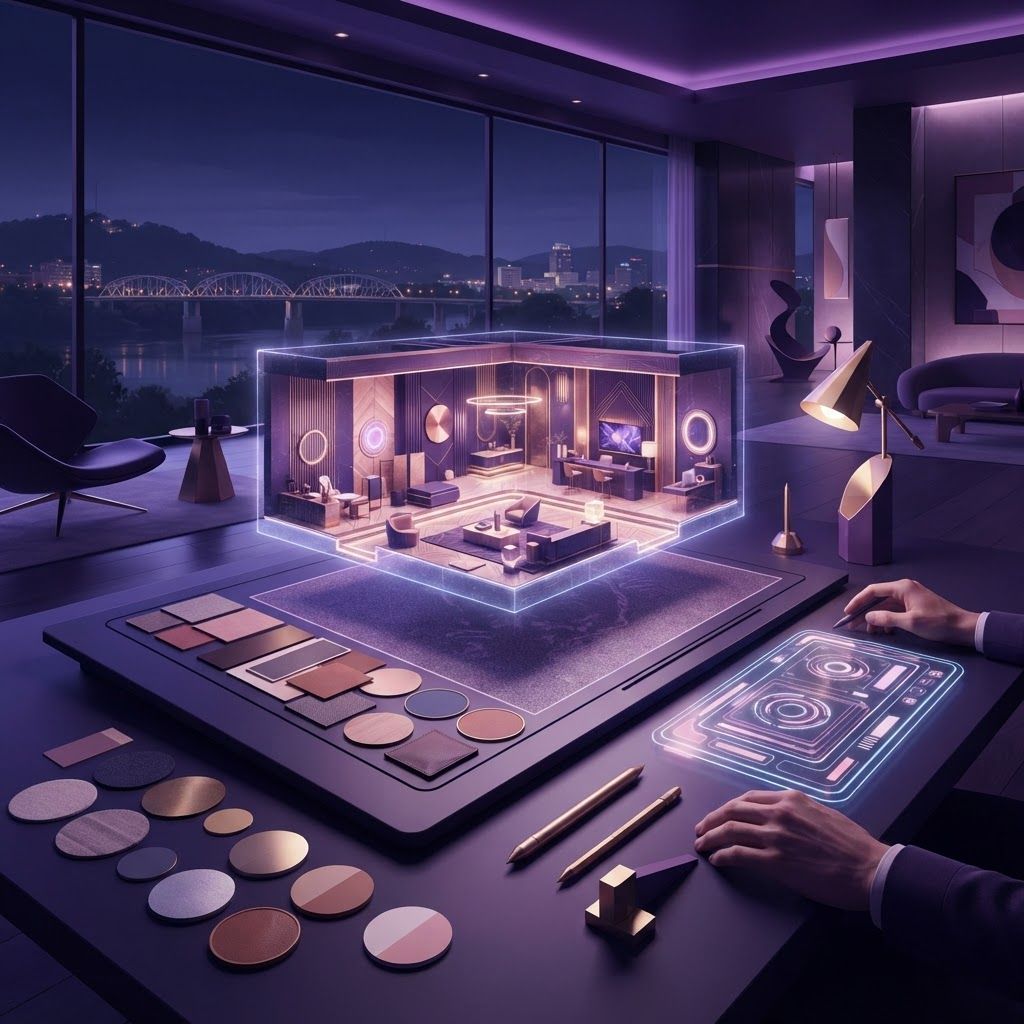
Design in a City With Layered Architecture
Chattanooga presents interior designers with an unusually varied built environment. Victorian and Craftsman homes fill the older neighborhoods around Fort Wood and Highland Park. Mid-century ranch houses spread across the suburban corridors built during the post-war decades. Converted industrial buildings in the Southside offer raw volumes with concrete, brick, and steel. New construction rises continually in the eastern growth areas. Mountain homes on Lookout and Signal engage with views and terrain in ways that flat-site houses never do.
Each of these contexts demands different design thinking, and the city's design community has specialized accordingly. Finding the right firm depends less on identifying the best designer in the abstract and more on matching a designer's sensibility and technical experience to your specific property and ambitions.
Understanding What Designers Provide
Full-service interior design covers space planning, material and finish selection, custom furniture specification, lighting design, procurement, project management, and installation. This is the most comprehensive and most expensive engagement, appropriate for whole-house projects and significant renovations.
Design consultation provides guidance without procurement, suiting clients who want professional direction but intend to source and manage execution themselves. E-design delivers plans, mood boards, and shopping lists remotely at lower cost, workable for single rooms and straightforward projects.
Commercial interior design is a distinct discipline involving code compliance, accessibility requirements, durability specifications, and coordination with architects and contractors at a level residential work rarely requires.
Fee structures vary widely, including hourly rates, flat project fees, cost-plus markup on furnishings, or a percentage of project cost. Understanding which model a firm uses, and what it includes, prevents the most common source of client frustration.
1. Chattanooga Design Collective
Chattanooga Design Collective handles full-service residential design across styles, with particular strength in whole-home renovations that require close coordination with contractors. The firm's process emphasizes thorough programming at the outset, understanding how clients actually use their space before proposing solutions, which reduces expensive revisions later.
2. Southside Interiors Studio
Working primarily in Chattanooga's converted industrial buildings and contemporary properties, Southside Interiors Studio specializes in modern and industrial aesthetics. Designing for loft volumes with exposed structure requires balancing openness against acoustic comfort and defined zones, a problem the studio addresses consistently well.
3. Heritage Home Design
Heritage Home Design focuses on historic properties, integrating modern function into interiors that deserve preservation. Kitchen and bath updates in century-old houses involve constraints around structure, plumbing routing, and period-appropriate detailing, and the firm's familiarity with these challenges prevents the clumsy interventions that damage historic character.
4. Scenic City Interiors
Scenic City Interiors serves residential clients across the metro area with a transitional design approach that blends traditional and contemporary elements. The firm emphasizes livability, specifying materials and furnishings that withstand families, pets, and daily use rather than photographing well and failing in practice.
5. Lookout Mountain Design Group
Specializing in mountain and view properties, this group designs interiors that respond to dramatic exteriors. Managing sightlines, controlling glare and solar heat gain through appropriate window treatment, and selecting palettes that complement rather than compete with landscape views define the work.
6. River North Design Studio
River North Design Studio works across residential and light commercial projects, including boutique retail and hospitality interiors. The commercial experience brings discipline around durability and maintenance that benefits residential clients with active households.
7. Bluff View Interiors
Serving the luxury residential segment, Bluff View Interiors handles high-specification projects with custom millwork, bespoke furnishings, and integrated art consultation. Projects at this level involve extended timelines and close collaboration with architects and fabricators, and the firm manages that coordination directly.
8. Hamilton Commercial Interiors
Focused on office, medical, and hospitality environments, Hamilton Commercial Interiors addresses the functional requirements that distinguish commercial work: accessibility compliance, occupancy considerations, acoustic performance, and specification of materials rated for heavy use. Workplace design has grown more complex as hybrid work reshapes how offices are actually occupied.
9. Northshore Design Works
Northshore Design Works offers accessible design services including room-by-room consultation and e-design packages, serving clients who want professional input without a full-service commitment. The tiered model has made design guidance available to a considerably broader range of Chattanooga homeowners.
10. Valley Modern Interiors
Valley Modern Interiors concentrates on contemporary residential design in new construction, working with builders and buyers during the construction process. Involving a designer before framing is complete allows decisions about lighting, outlet placement, built-in storage, and material transitions that are costly or impossible to change afterward.
Trends Shaping Interior Design
Natural materials and warmer palettes have displaced the cool gray minimalism that dominated the previous decade. Wood, stone, plaster textures, and layered earth tones now define much residential work, reflecting a broader desire for spaces that feel grounded rather than sterile.
Multifunctional rooms have become essential as home offices, exercise space, and guest accommodation compete for square footage. Thoughtful storage design and furniture that serves multiple purposes carry more weight than they did before remote work reshaped domestic space.
Sustainability has moved from a niche request toward a common consideration, with clients asking about material sourcing, durability, and indoor air quality. Longevity has become part of the design brief rather than an afterthought.
Working With a Designer Successfully
Establish budget honestly at the first meeting. Designers cannot specify appropriately without knowing the range, and withholding it wastes everyone's time producing plans that cannot be built.
Collect visual references before the initial consultation. Images communicate preference far more reliably than adjectives, and disagreements about what contemporary or cozy means surface quickly when examples are on the table.
Clarify the fee structure, what procurement markup applies, and who manages contractors. Then allow the designer room to propose ideas outside your existing references. The value of professional design lies substantially in solutions clients would not have reached alone, and Chattanooga's design community has the range to deliver them across every architectural context the city contains.