
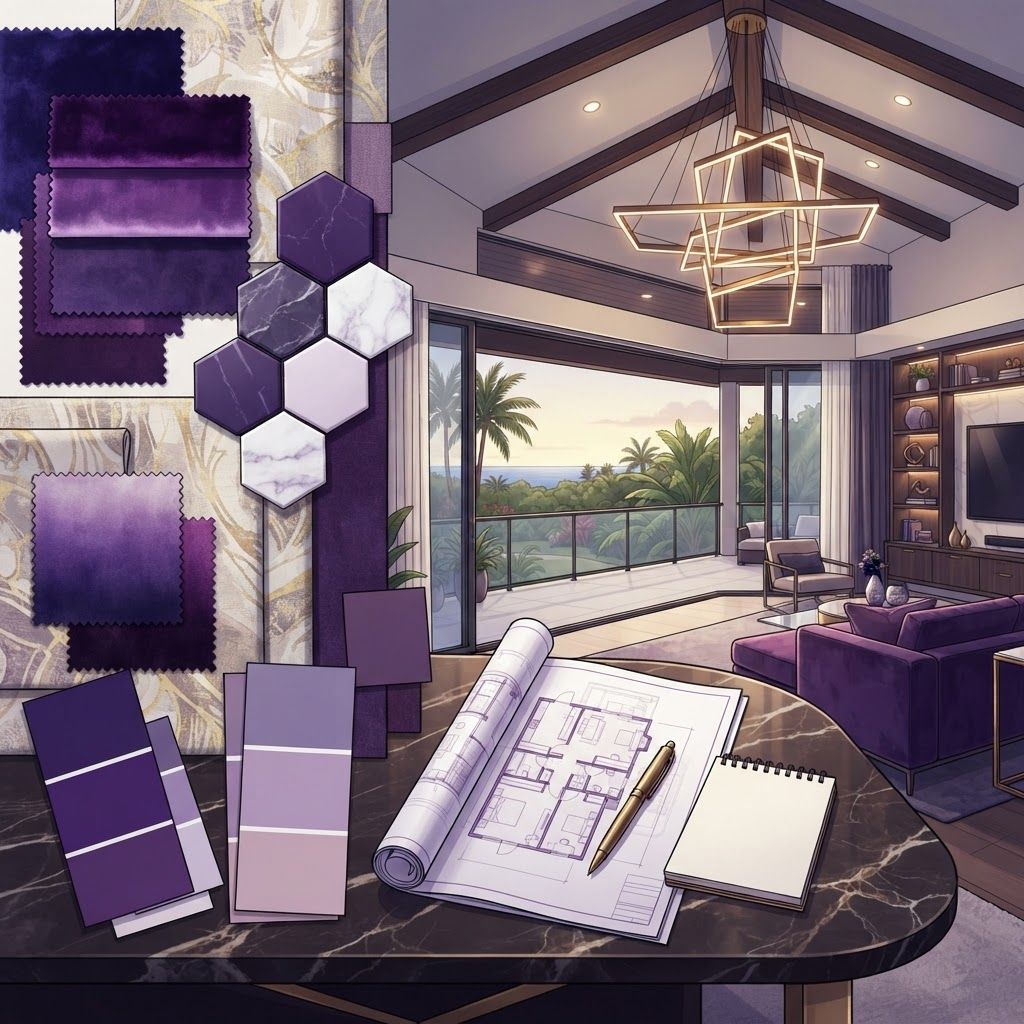
Designing for Southwest Florida Conditions
Interior design in Cape Coral is shaped by environment as much as by taste. Intense natural light floods rooms through large sliders and transom windows, washing out subtle colors and fading textiles that would hold up fine in a northern climate. Humidity influences everything from cabinetry substrates to upholstery fill. Salt air affects hardware and metal finishes on properties near open water. Sand and pool traffic move constantly between the lanai and the great room, putting real demands on flooring and fabrics.
Local homes also have a particular spatial logic. Open great rooms, split bedroom plans, screened lanais, and sightlines that terminate at a pool and canal define much of the housing stock. Successful design works with that geometry rather than against it, treating the outdoor living area as a genuine room and preserving the water view that motivated the purchase in the first place. Firms that understand these conditions produce interiors that still look correct after three seasons of use.
What to Expect From a Professional Engagement
A full-service design project generally moves through discovery, concept, documentation, procurement, and installation. Discovery establishes how the household actually lives, including whether the home serves as a primary residence, a seasonal retreat, or a rental. That distinction drives durability requirements substantially. Concept work delivers floor plans, elevations, finish palettes, and renderings. Documentation coordinates with contractors on lighting, electrical, plumbing, and millwork. Procurement manages orders, freight, and receiving, and installation completes the project.
Fee models vary and deserve direct discussion. Common structures include hourly billing, flat design fees, percentage of project cost, and cost-plus arrangements on furnishings. None is inherently better, but clarity is essential. Ask what the fee covers, how change orders are handled, who takes responsibility for freight damage and back-ordered items, and what the realistic lead times are on custom upholstery and cabinetry, which frequently run several months.
The Ten Standout Design Firms
1. Cape Coral Design House handles full-service residential work with particular strength in waterfront renovations. The firm is known for detailed documentation that reduces friction with general contractors and for material specifications chosen explicitly for humidity and ultraviolet performance.
2. Coastal Modern Interiors pursues a restrained contemporary aesthetic that suits newer construction. Clean millwork, integrated lighting design, and disciplined palettes have made it a frequent choice for owners of recently built Gulf-access homes.
3. Bimini Bay Interiors works largely on remodels of older Cape Coral properties, reworking dated layouts to open kitchens to living areas and improve flow toward the lanai. Structural coordination and permitting familiarity are central to its practice.
4. Palm Court Design Studio specializes in seasonal residences. Its packages are structured around compressed installation windows, allowing snowbird clients to arrive to a completed project, and emphasize low-maintenance materials for months when homes sit unoccupied.
5. Harbour Lane Interior Architecture focuses on kitchens and bathrooms, the two rooms with the highest return and the greatest technical complexity. Cabinetry detailing, ventilation planning, and lighting layers are recurring points of client praise.
6. Sandpiper Home Design serves the mid-market with efficient, budget-conscious engagements. Room-by-room plans, shoppable specifications, and phased implementation let homeowners spread work across multiple seasons.
7. Gulfview Design Collective takes a collaborative approach across designers, allowing the firm to staff larger projects and whole-home builds without extending timelines. Coordination with builders during construction is a stated strength.
8. Canal Street Interiors concentrates on rental and investment properties, balancing appealing presentation with commercial-grade durability. Performance fabrics, resilient flooring, and replaceable component strategies suit high-turnover use.
9. Coral Reef Design Group handles higher-end custom work, including built-in millwork, integrated audio-visual planning, and outdoor kitchen design. Projects typically involve close coordination with architects from the earliest phases.
10. Lanai Living Design has carved out a niche in outdoor living environments, treating screened lanais and pool decks as primary rooms with proper lighting, ceiling treatments, weather-rated furnishings, and shade strategy.
Material Choices That Hold Up Locally
Certain specifications repeat across successful Cape Coral projects. Porcelain tile and quality luxury vinyl plank outperform solid hardwood in humid, sand-heavy conditions. Solution-dyed acrylic and performance polyester fabrics resist fading and cleaning far better than natural fibers in sun-exposed rooms. Marine-grade or powder-coated hardware extends life near salt air. Plywood cabinet boxes tolerate humidity better than particleboard, and slab or shaker doors show less seasonal movement.
Window treatment strategy is critical. Solar shades and layered treatments control glare and heat gain without sacrificing the water views that define these homes. Lighting deserves equal attention, since large open rooms with high ceilings need layered ambient, task, and accent lighting rather than a few recessed cans. Designers who specify color temperature consistently across a project avoid the mismatched look common in incrementally updated homes.
How to Choose the Right Firm
Start by defining scope honestly. A furnishing refresh, a kitchen remodel, and a whole-home renovation require different capabilities, and firms specialize accordingly. Review portfolios for projects similar in scale and property type to yours, and ask specifically about work completed in Cape Coral rather than elsewhere in Florida. Request references from clients whose projects finished at least a year ago, since durability and post-installation service reveal themselves over time.
Confirm licensing where structural or permitted work is involved, and clarify how the designer coordinates with contractors. Finally, evaluate communication style during the proposal stage. Design projects involve hundreds of decisions and inevitable supply disruptions, and the firms that document clearly and respond promptly during the sales process almost always behave the same way during installation. Cape Coral's design community has grown substantially alongside the city, and homeowners who scope carefully will find firms genuinely equipped for Southwest Florida conditions.