
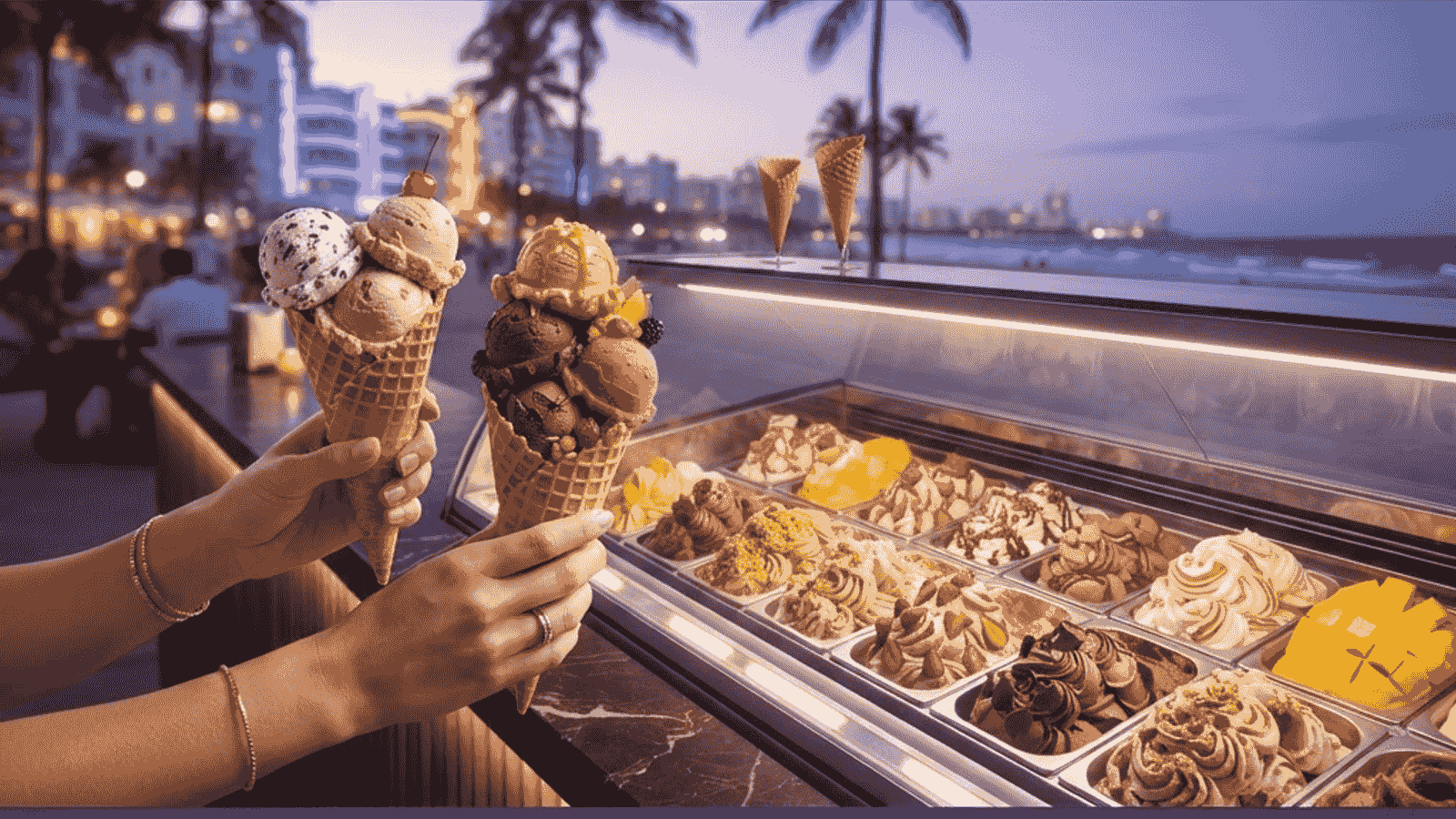
Frozen Dessert as a Way of Life
Miami's climate makes frozen dessert less of a treat and more of an infrastructure requirement. Average highs sit in the high eighties for much of the year, and evening walks along Lincoln Road, Calle Ocho or the Coconut Grove village centre almost inevitably end at a scoop shop. What makes the local scene distinctive is not just volume but variety: Italian gelato, Argentine heladerías, Cuban-inspired flavours, Caribbean fruit sorbets, Middle Eastern booza and modern American small-batch operations all coexist.
Tropical fruit is the defining local advantage. Mango, guava, passion fruit, soursop, coconut, mamey and tamarind grow well in the region or arrive constantly through Miami's import channels, giving local makers access to flavour profiles that would be prohibitively expensive elsewhere.
The Ten Best Ice Cream Brands in Miami
1. Azucar Ice Cream Company. The Little Havana landmark built around Cuban-American flavour memory. Its signature Abuela Maria — vanilla with guava, cream cheese and María cookies — is one of the most recognisable desserts in the city. Azucar demonstrates how ice cream can carry cultural narrative rather than simply chase novelty.
2. Dolci Peccati Gelato. A Coral Gables gelateria known for classical Italian method: dense texture, restrained sweetness and clean flavour separation. Pistachio, stracciatella and fruit sorbets are the reference orders, and the shop is a favourite among residents who prefer gelato to American-style ice cream.
3. Lulu's Ice Cream. Located in Wynwood, Lulu's uses liquid nitrogen to freeze each order individually, producing a very smooth texture with minimal ice crystals. It also built an early reputation for accommodating vegan, dairy-free and low-sugar preferences without a drop in quality.
4. Sorbetto Gelateria. Representing Miami's strong Argentine and Uruguayan influence, shops of this type focus on dulce de leche in multiple forms, sambayón and chocolate variations with a heladería-style presentation. The dulce de leche granizado is a benchmark test of any South American ice cream shop.
5. Whip 'N Dip. A long-standing South Miami neighbourhood shop with a loyal multigenerational following. Homemade flavours, generous portions and a low-key atmosphere have kept it relevant far longer than most dessert concepts survive in this market.
6. Serendipity Creamery. Miami's dessert-forward culture supports several creameries offering elaborate constructions: stuffed cookies, ice cream sandwiches, sundaes and shakes designed as much for the table as for the palate. These brands thrive in high-traffic areas where dessert doubles as an evening activity.
7. Anita La Gelateria. A gelato brand with strong Venezuelan and Colombian influence, offering both Italian classics and Latin American specialities such as arequipe, tres leches and tropical fruit sorbets. The fruit sorbets in particular showcase the quality of produce moving through Miami.
8. Mister Kream Miami. Artisanal small-batch producers now supply many local restaurants and cafés in addition to their own storefronts. This wholesale-plus-retail model has raised dessert quality across the city, because independent restaurants can serve genuinely good ice cream without an in-house pastry programme.
9. Coco Frio Tropical Ices. Water-based ices, paletas and sorbets remain enormously popular in Miami, especially at parks, beaches and street festivals. Coconut, mango with chili, lime and tamarind paletas are staples, and they satisfy the significant share of the population that avoids dairy.
10. Frost Ice Cream. A modern Miami brand focused on premium bases, rotating seasonal flavours and clean labelling. These operations typically emphasise fresh dairy, real fruit purée and no artificial colouring, appealing to parents and health-conscious customers who still want a genuine indulgence.
Understanding What You Are Eating
Three technical factors explain most quality differences. The first is overrun, meaning the amount of air whipped into the base. American-style ice cream typically carries more air, gelato considerably less, which is why gelato tastes denser and more intensely flavoured even at similar fat levels.
The second is fat and sugar balance. Higher butterfat produces a creamier mouthfeel and slower melt, valuable in Miami's heat. Sugar affects not only sweetness but freezing point, so a poorly balanced recipe will either freeze rock hard or turn soupy within minutes outdoors.
The third is fruit handling. Genuine fruit sorbet made from ripe purée tastes bright and slightly acidic; artificial versions taste flat and uniformly sweet. In Miami, where excellent fruit is readily available, an artificial-tasting mango sorbet is a reliable signal to try somewhere else.
Trends in the Local Market
Dairy-free options have moved from niche to standard, with coconut, oat and cashew bases now common and often excellent. Reduced-sugar and higher-protein formulations have gained traction alongside Miami's fitness culture. Alcohol-infused and coffee-forward flavours are expanding for adult evening trade, and collaborations between ice cream makers and local bakeries or coffee roasters are increasingly common.
There is also a clear return to simplicity at the premium end. After years of extravagant toppings and social-media constructions, several of the strongest local brands now compete on the quality of a plain scoop of vanilla, chocolate or pistachio.
How to Judge a Scoop Shop
Look at the display. Gelato piled into tall decorative mountains usually indicates stabilisers and air rather than craft; well-made gelato is stored flat in covered pans at a controlled temperature. Ask what was made most recently, and order a fruit sorbet as your test flavour because it hides nothing.
Finally, consider the walk. Miami heat gives you a limited window, so choose a shop where you can sit, or accept that a cup will outperform a cone by the time you reach the car.
Final Thoughts
Miami's ice cream scene reflects the city itself: tropical, multicultural, occasionally extravagant and increasingly technically skilled. Whether you want an Abuela Maria in Little Havana or a restrained pistachio gelato in Coral Gables, the brands above represent the best of what a year-round summer city can produce.