
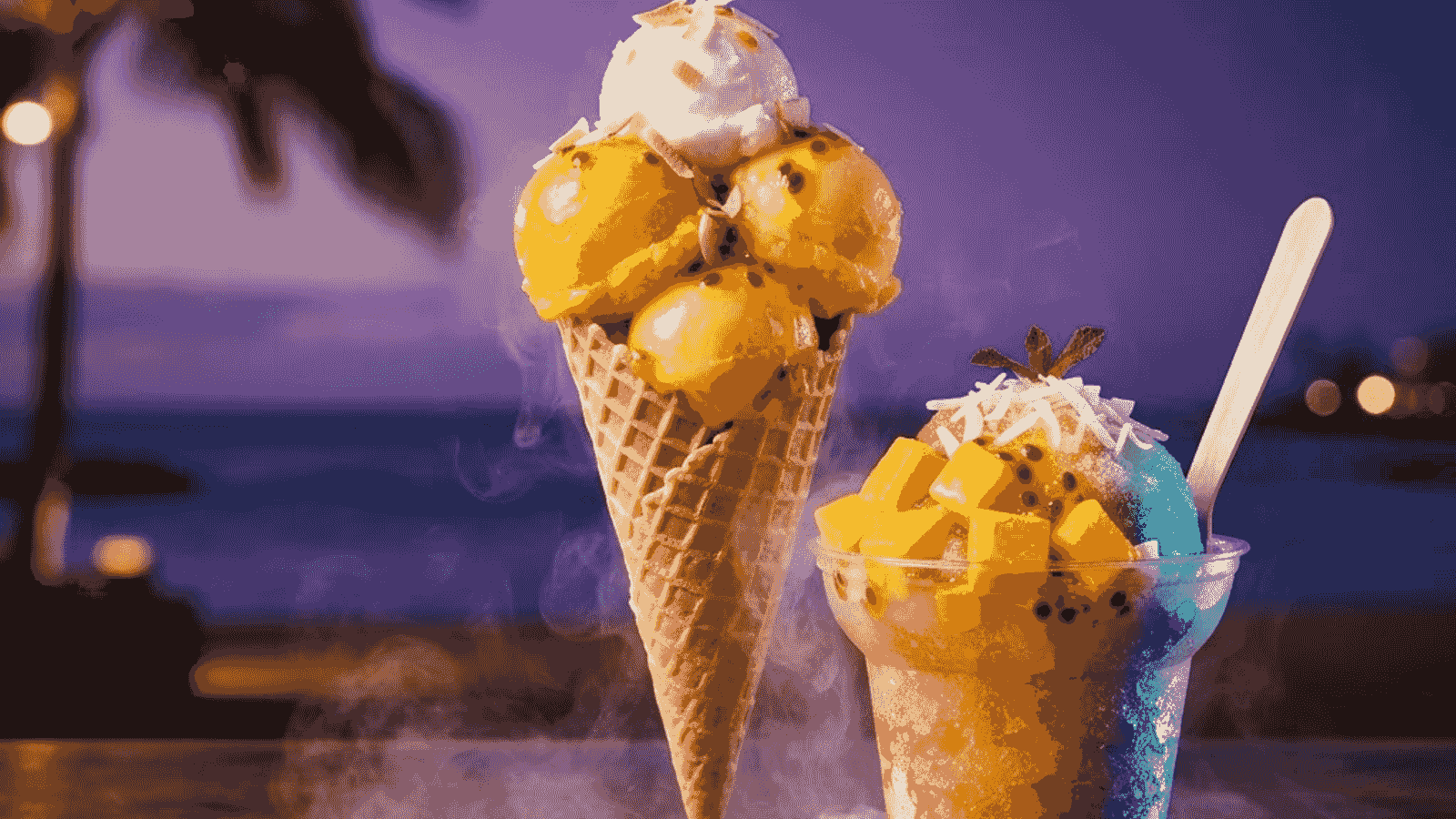
Frozen Dessert as a Hawaii Institution
In a city where the temperature rarely drops below comfortable, frozen desserts are not seasonal indulgences. They are part of daily life. Honolulu's frozen landscape reflects the same layered cultural history that shaped its food generally: Japanese immigrants brought shave ice traditions and mochi, American dairy operations established local ice cream production, Southeast Asian communities contributed pandan and ube flavors, and the islands' own agriculture supplied lilikoi, mango, guava, coconut, and macadamia nuts.
What distinguishes the local scene is ingredient access. A Honolulu ice cream maker can use passion fruit picked days earlier, Kona coffee roasted on the next island, and cacao grown on Oahu itself. That proximity produces flavors that mainland producers can only approximate with concentrates and extracts, and tasting them side by side makes the difference obvious.
The Top 10 Ice Cream Brands and Frozen Dessert Makers in Honolulu
1. Dave's Ice Cream. A homegrown Hawaii favorite with multiple Oahu locations, Dave's built its reputation on genuinely local flavors including haupia, lilikoi, ube, green tea, and macadamia nut. The differentiator is flavor breadth rooted in Hawaii's actual palate. This is what island residents grew up eating, and the recipes have not been sanded down for visitor expectations.
2. Bubbies Homemade Ice Cream and Desserts. Founded in Honolulu, Bubbies popularized mochi ice cream and grew into a nationally recognized brand while maintaining its local shop. The differentiator is the mochi technique itself, a thin, properly chewy rice dough wrapped around dense ice cream, executed with a consistency that many imitators miss.
3. Waiola Shave Ice. An institution for shave ice, Waiola is known for exceptionally fine ice texture that absorbs syrup rather than letting it run off. The differentiator is the shave itself. Truly fine ice eats like snow, and combined with options like azuki beans, mochi balls, condensed milk, and ice cream at the base, it defines the Honolulu version of the dessert.
4. Uncle Clay's House of Pure Aloha. This Aina Haina shop makes shave ice syrups from real fruit rather than artificial concentrate, which fundamentally changes the experience. The differentiator is ingredient integrity plus a genuine community ethos that has made it a neighborhood gathering place as much as a dessert shop.
5. Via Gelato. A Kaimuki gelateria producing small-batch gelato with Hawaii ingredients, including local honey, tropical fruit, and Hawaii-grown coffee and cacao. The differentiator is technique. Gelato's lower fat and reduced air content deliver more intense flavor, and this shop uses that to showcase island produce.
6. Lappert's Hawaii. Originating in the islands and known for rich, high-butterfat ice cream, Lappert's flavors lean into Hawaii signatures like Kauai Pie, coconut macadamia, and guava. Its strength is indulgent density, a deliberately old-fashioned style that stands apart from lighter contemporary offerings.
7. Meadow Gold Hawaii. The long-established local dairy brand has been part of Hawaii households for generations, producing ice cream and frozen novelties available across the islands. The differentiator is accessibility and nostalgia. It is the freezer aisle brand that Honolulu families reach for, and its local flavors carry genuine cultural weight.
8. Matsumoto Shave Ice. Based in Haleiwa on the North Shore and reachable as a day trip from Honolulu, Matsumoto is arguably the most famous shave ice operation in Hawaii, running since 1951. The differentiator is heritage and volume. The rainbow of syrups over fine ice with azuki beans and ice cream underneath is the canonical version many people picture.
9. Banan. A Honolulu-founded brand serving soft-serve made from frozen bananas with no dairy, sweetened by the fruit itself and topped with local honey, granola, and papaya. The differentiator is a genuinely healthful frozen dessert that does not taste like a compromise, plus a sourcing model built around Hawaii farms and reducing food waste.
10. Kokonut Cafe and local coconut dessert makers. A category of Oahu shops specializes in coconut-based ice creams, sorbets, and haupia desserts, often served in the shell. The differentiator is dairy-free richness. Coconut fat carries flavor beautifully, and Hawaii's affinity for haupia means these makers are working within a deeply familiar tradition rather than catering to a dietary trend.
How Hawaii's Climate Shapes Frozen Dessert Craft
Heat is the constant adversary. Ambient temperatures accelerate melting, which forces makers to pay unusual attention to formulation. Higher solids content, careful stabilizer use, and colder serving temperatures all help a scoop survive the walk from counter to table. Shave ice makers face the same challenge from a different angle, which is why ice temperature and shave fineness matter so much. Ice that is too cold shatters into gravel; ice that is too warm collapses into slush.
Local sourcing brings its own discipline. Tropical fruit is seasonal and variable, so a maker committed to real ingredients must adjust recipes as sugar content and acidity shift through the year. Many Honolulu producers treat this as a feature, rotating flavors with what farms deliver, and regular customers learn to ask what just came in.
Tasting Your Way Through Oahu
Try the same flavor across multiple makers to calibrate your preferences. Lilikoi is ideal for this, since its brightness reveals whether a shop uses real fruit. For shave ice, order it with ice cream at the bottom and azuki beans at least once, because the combination of textures is the point of the local version. Visit in the late afternoon when shops are busiest and product turnover is highest. And ask about ingredient origins. In Honolulu, the makers who source locally are usually delighted to tell you exactly which farm supplied the fruit, and that enthusiasm is a reliable indicator of quality.