
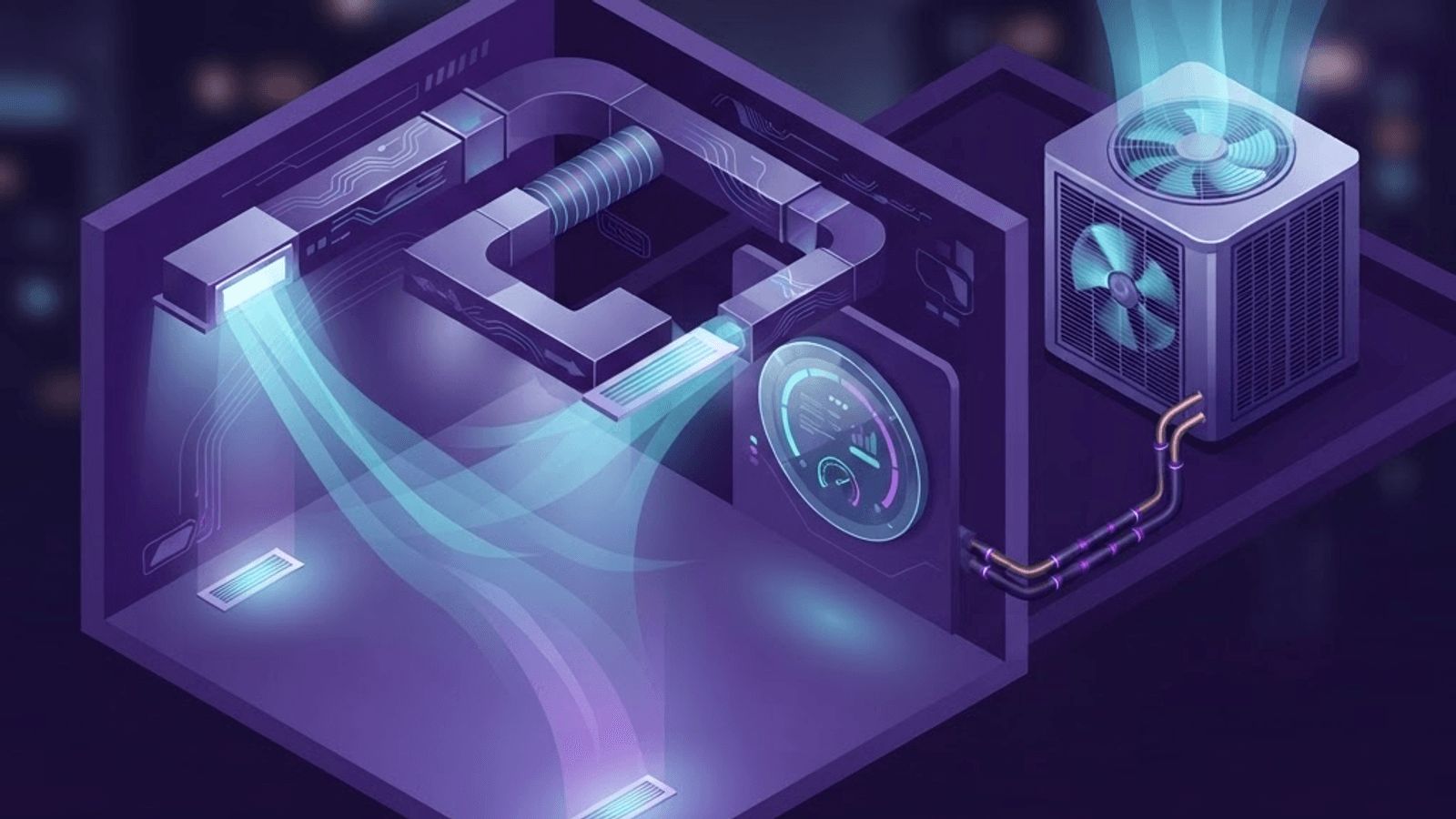
Why HVAC Installation Quality Determines Performance
Air conditioning systems are frequently blamed for poor performance when the real fault lies in installation. An oversized unit cycles on and off rapidly, failing to dehumidify and producing uneven temperatures. An undersized unit runs continuously without reaching setpoint. Leaking or uninsulated ductwork can waste a substantial proportion of conditioned air into roof spaces before it ever reaches a room.
In Roseville, where summer heat and cooler winter periods both place demands on climate systems, these inefficiencies translate directly into higher energy bills and reduced comfort. The companies that stand out locally are those who calculate loads properly, design duct layouts deliberately and commission systems with measurement rather than assumption.
System Types and Their Applications
Split systems serve individual rooms or zones efficiently and are straightforward to install, making them ideal for targeted cooling or for properties without roof space for ducting. Multi-split systems connect several indoor units to one outdoor unit, reducing external clutter while retaining room-by-room control.
Ducted systems condition the whole dwelling from a central unit, offering the most seamless appearance and, with zoning, good control over which areas are served. They require adequate roof or underfloor space and careful duct design to perform well.
Evaporative cooling suits drier conditions and uses considerably less electricity, though its effectiveness declines as humidity rises. Heat pump systems, increasingly popular, provide efficient heating as well as cooling and are central to the electrification trend across residential properties.
The Top 10 HVAC Companies in Roseville
1. Roseville Climate Solutions
A full-service provider covering design, installation, servicing and repair across residential and light commercial systems. Their load calculations are documented and shared with clients, which is unusual and genuinely valuable.
2. Apex Commercial Mechanical
Apex handles larger commercial installations including packaged units, chilled water systems and building management integration, along with the planned maintenance regimes commercial buildings require.
3. Summit Ducted Systems
Summit specialises in ducted air conditioning, with particular attention to duct sizing, insulation, static pressure and zoning strategy, which together determine whether a ducted system actually performs as intended.
4. Evergreen Heat Pump Specialists
Evergreen focuses on high-efficiency heat pump installation for heating, cooling and hot water, supporting clients moving away from gas appliances toward fully electric homes.
5. Northline Refrigeration Services
Northline services commercial refrigeration alongside air conditioning, supporting hospitality and retail clients with cool rooms, display cabinets and process cooling equipment.
6. Cascade Ventilation Engineering
Cascade designs mechanical ventilation and heat recovery systems, addressing indoor air quality and condensation control in tightly sealed modern buildings where natural ventilation is insufficient.
7. Guardian Maintenance Programs
Guardian concentrates on scheduled servicing, offering filter replacement, coil cleaning, refrigerant checks and performance testing that keep systems efficient and extend equipment life considerably.
8. Ironstone Industrial HVAC
Ironstone serves factories and warehouses with large-volume ventilation, evaporative cooling and spot cooling solutions designed for spaces that conventional systems cannot economically condition.
9. Bright Space Ducted Cleaning
Bright Space cleans and sanitises ductwork, removing accumulated dust and contaminants that reduce airflow and circulate through living spaces, particularly important in older installations.
10. Solstice Smart Climate Control
Solstice installs advanced controls including zoning, scheduling, occupancy sensing and remote management, reducing energy use by conditioning only the spaces actually in use.
Sizing and Design Fundamentals
Proper sizing requires a load calculation that accounts for floor area, ceiling height, window area and orientation, insulation levels, air leakage and occupancy. Rules of thumb based on floor area alone produce poor outcomes because they ignore the factors that dominate heat gain, particularly glazing.
Duct design matters just as much in ducted systems. Runs should be as short and direct as practical, adequately insulated, sealed at joints and sized to maintain appropriate airflow without excessive static pressure. Return air paths are frequently undersized, which starves the system and reduces capacity regardless of how large the outdoor unit is.
Outdoor unit placement affects both performance and neighbours. Units need clear airflow, protection from direct afternoon sun where possible, and consideration of noise transmission toward bedrooms and boundaries.
Maintenance That Pays for Itself
Clean or replace filters regularly, since restricted airflow is the most common cause of reduced capacity and increased energy consumption. Keep outdoor unit coils clear of leaves, dust and vegetation, allowing at least the manufacturer's recommended clearance around the unit.
Have systems professionally serviced annually. A technician will check refrigerant charge, electrical connections, drainage, coil condition and control operation. Low refrigerant indicates a leak that will worsen, and running a system undercharged damages the compressor over time.
Efficiency and Running Costs
Improving the building envelope often delivers better returns than upgrading equipment. Insulation, draught sealing and window shading reduce the load the system must meet, allowing smaller equipment and lower running costs permanently.
Zoning and scheduling produce substantial savings by conditioning only occupied areas at the times they are used. Setting realistic temperatures also matters, since each degree of additional cooling or heating increases consumption noticeably.
Industry Trends
Refrigerant regulation is driving a transition to lower global warming potential alternatives, affecting equipment selection and future serviceability of older systems. Electrification is accelerating as heat pumps displace gas heating, supported by improving cold-weather performance.
Indoor air quality has also gained prominence, with greater attention to filtration, fresh air provision and humidity control in both residential and commercial settings.
Final Thoughts
Choose an HVAC company that performs proper load calculations, explains their design decisions and commissions the system with measurements rather than assumptions. Ask about warranty terms, servicing requirements and expected running costs. In Roseville, the best operators treat installation as an engineering exercise, and the comfort difference in their work is immediately apparent.