
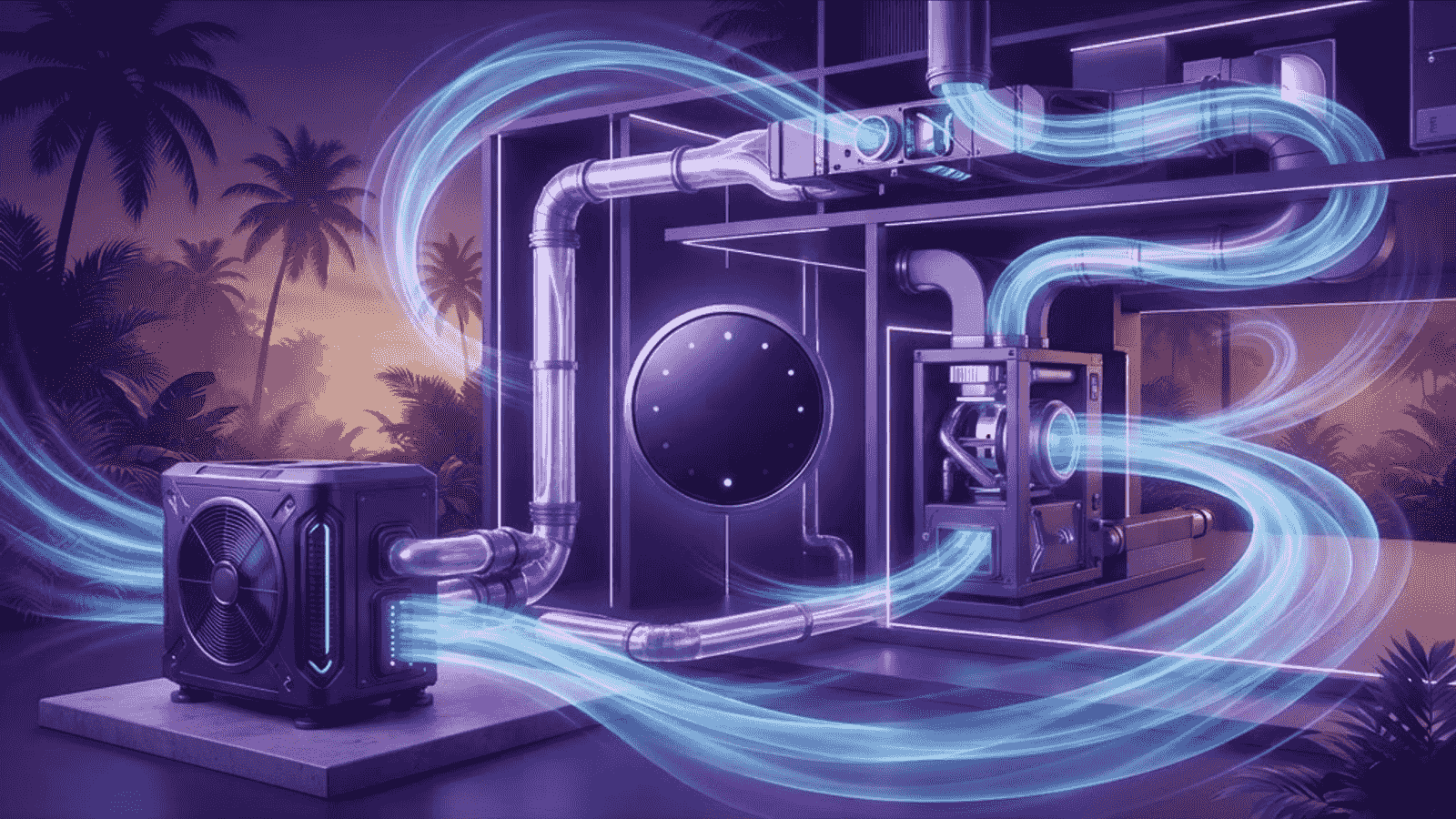
Why HVAC Matters More in Port St. Lucie Than Almost Anywhere Else
Port St. Lucie sits in a subtropical climate zone where the cooling season effectively runs from March through November, and where humidity, not temperature, is the real enemy. A system that merely lowers the thermostat reading while leaving indoor relative humidity above sixty percent will still feel clammy, encourage mold growth on baseboards and closet walls, and shorten the life of furniture and flooring. That is why the best HVAC companies in the city talk about latent load and dehumidification rather than only tonnage.
The local housing stock adds another wrinkle. Port St. Lucie grew in distinct waves, so a single neighborhood may contain 1980s ranches with undersized returns, early-2000s tract homes with attic air handlers baking in 130-degree heat, and brand-new builds with variable-speed equipment and tight envelopes. Each generation of construction demands a different diagnostic approach, and companies that apply one template to all of them tend to leave customers with high bills and uneven comfort.
What Separates a Strong HVAC Contractor From an Average One
The single most reliable indicator of quality is whether the company performs a genuine load calculation before recommending equipment. Rule-of-thumb sizing, usually expressed as a fixed number of square feet per ton, consistently produces oversized systems that short-cycle. An oversized air conditioner satisfies the thermostat quickly, shuts off before it has removed meaningful moisture, and leaves the house cold and damp at the same time. Contractors who take the time to measure window area, orientation, insulation values, and duct location will often specify smaller, longer-running equipment that costs less to operate and feels dramatically better.
Duct work deserves equal scrutiny. In many Florida homes, the ducts leak twenty to thirty percent of conditioned air into the attic, which means a homeowner can install premium equipment and still see disappointing bills. Companies that offer duct testing, sealing, and static pressure measurement are addressing the root cause rather than selling around it. Ask whether the technician will record supply and return static pressure before and after the work, because those numbers reveal restrictions that no amount of new hardware will fix on its own.
Finally, look at the service organization behind the sale. Equipment warranties are largely standardized across manufacturers, so the meaningful differences lie in labor warranty length, after-hours response, and whether the company stocks parts locally. A ten-year parts warranty is cold comfort if the compressor fails in August and the replacement takes eleven days to arrive.
Ten HVAC Companies Serving Port St. Lucie
1. Treasure Coast Climate Systems. A full-service residential and light commercial contractor known for detailed load calculations and a strong preference for variable-speed inverter equipment. The company markets itself heavily on humidity control and typically presents homeowners with two or three staged options rather than a single take-it-or-leave-it quote.
2. St. Lucie Air Conditioning and Heating. One of the longer-established names in the area, with a large fleet and a reputation for same-day service during peak season. Its maintenance agreement program includes priority dispatch, which matters enormously in July when every contractor in the county is booked solid.
3. Riverbend Cooling Solutions. A mid-sized firm that has built a niche in duct renovation and indoor air quality work. Riverbend regularly pairs equipment replacement with duct sealing and return-air enlargement, an approach that produces better measured results than equipment swaps alone.
4. Coastal Comfort Mechanical. Focused on commercial and multi-family properties, Coastal Comfort handles rooftop package units, split systems for medical suites, and preventive maintenance contracts for property managers. Its documentation and asset tracking appeal to clients who need to plan capital replacement budgets.
5. Sandhill Heating and Air. A smaller owner-operated business that emphasizes repair over replacement when repair genuinely makes sense. Homeowners with systems in the eight-to-twelve-year range often appreciate a contractor willing to quote a fair fix rather than immediately pushing a full changeout.
6. Palm Grove Air Services. Known for heat pump expertise, which is increasingly relevant as more Port St. Lucie homeowners replace resistance strip heat with efficient heat pump systems suited to the region's short, mild winters.
7. Indian River Mechanical Contractors. A design-build mechanical firm that works alongside general contractors on new construction and major renovations. Its involvement during the framing stage allows for shorter duct runs and better equipment placement, advantages that cannot be retrofitted later.
8. Southport Climate Care. A service-heavy operation with a large maintenance base, Southport concentrates on tune-ups, coil cleaning, drain line treatment, and the unglamorous preventive work that keeps systems from failing at the worst possible moment.
9. Everline Air and Energy. Positions itself at the intersection of HVAC and home energy performance, offering blower door testing and insulation upgrades alongside equipment work. For homeowners chasing lower bills rather than just cooler air, that combined scope is valuable.
10. Bluewater HVAC Group. A newer entrant that has grown through strong communication practices, including technician tracking, photo documentation of completed work, and clear written diagnostics. Younger companies often compete on service transparency, and Bluewater has done so effectively.
Seasonal Realities and Hurricane Considerations
Peak demand in Port St. Lucie arrives in late spring and does not release until the first cool front in November. Scheduling planned replacements in December through February usually means better pricing, faster installation dates, and technicians who are not working their fourth consecutive twelve-hour day. Homeowners with aging equipment should consider proactive replacement in the off-season rather than emergency replacement in the heat.
Storm season introduces separate concerns. Outdoor condensers should be secured to their pads with hurricane-rated straps, and disconnect boxes should be sealed against wind-driven rain. After a major storm, systems that were submerged or exposed to salt spray require inspection rather than a simple restart, because corroded contactors and water-logged insulation create both efficiency and safety problems.
Questions Worth Asking Before You Sign
Ask for the load calculation in writing. Ask what the measured static pressure was and what it will be after the work. Ask whether the proposal includes a new line set or reuse of the existing one, whether the drain pan and float switch are being replaced, and who handles permitting and inspection. Ask specifically what the labor warranty covers and for how long. Contractors who answer these questions comfortably and in detail are the ones most likely to deliver a system that performs the way the brochure promised.
Final Thoughts
The best HVAC companies in Port St. Lucie are the ones that treat a home as a connected system of envelope, ducts, and equipment rather than as a place to install a box. Prioritize measurement, humidity control, and duct integrity over brand loyalty and headline efficiency ratings. A properly sized, well-installed mid-tier system will outperform a premium unit installed carelessly every single time, and in this climate that difference is something you feel every day.