
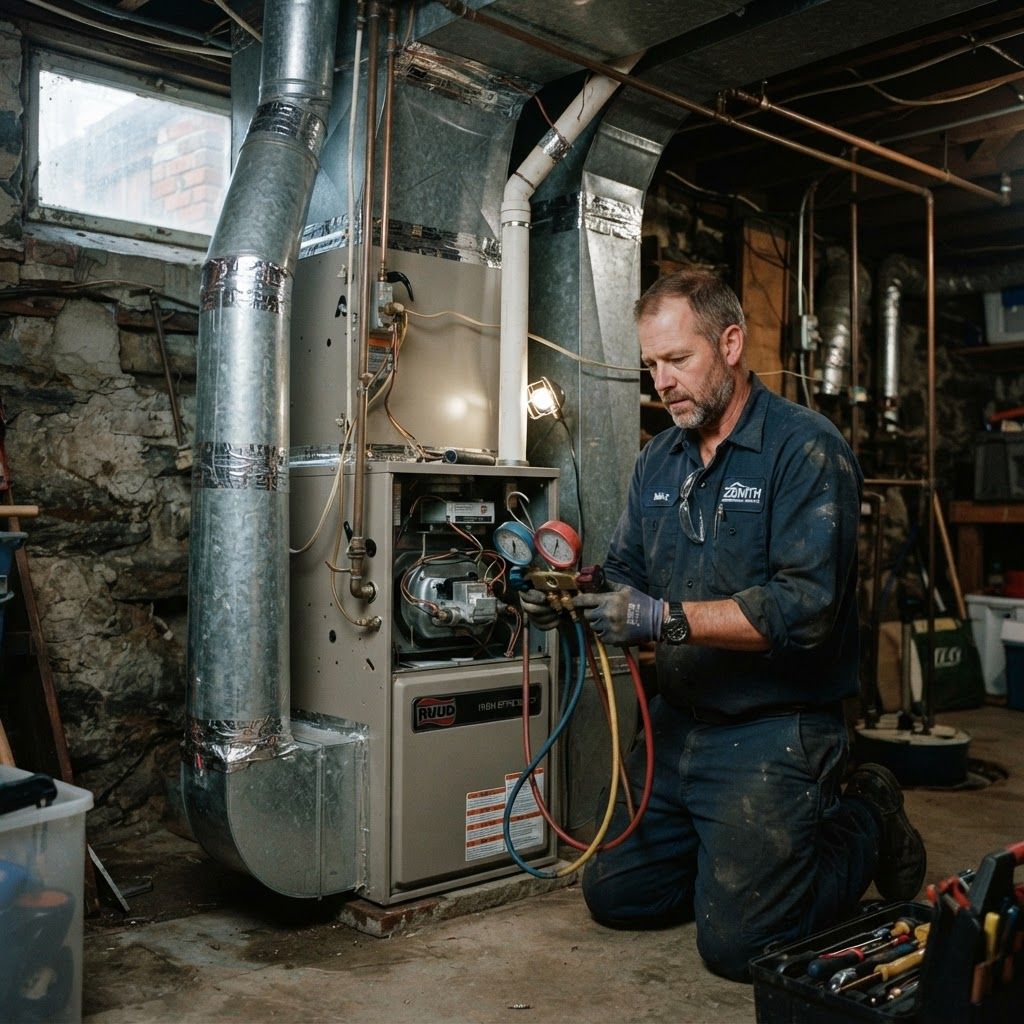
Why HVAC Quality Matters More in Buffalo
Few cities test a heating and cooling system the way Buffalo does. Winter temperatures regularly slip into the single digits, lake-effect snow bands can dump several feet in a matter of days, and summer humidity rolling off Lake Erie pushes air conditioners into long duty cycles. A furnace that would coast through a mild winter elsewhere will run thousands of additional hours here, which is exactly why local homeowners treat their HVAC contractor as a long-term partner rather than a one-time purchase.
The best Buffalo HVAC companies understand the region's specific challenges: older housing stock in neighborhoods like Elmwood Village and Allentown with limited ductwork, tight urban lots in South Buffalo, sprawling suburban builds in Amherst and Clarence, and commercial spaces downtown that must meet strict energy codes. Sizing, venting, and airflow decisions all shift depending on which of these environments a technician is working in.
Ten HVAC Companies Buffalo Homeowners Trust
1. T-Mark Plumbing, Heating & Cooling is one of the region's most recognizable full-service names, offering furnace and boiler replacement, air conditioning installation, indoor air quality upgrades, and around-the-clock emergency response. Its combined plumbing and HVAC divisions make it a practical choice for homeowners who prefer a single contractor for mechanical work.
2. Zenner & Ritter Home Services has served Western New York for generations and is known for careful load calculations and high-efficiency equipment recommendations rather than simple like-for-like swaps. The company's insulation and energy audit services complement its HVAC work, addressing the building envelope alongside the equipment.
3. Frey Electric extends well beyond electrical work into commercial mechanical systems, serving hospitals, schools, and industrial facilities across the region. Its size allows it to handle multi-phase projects with in-house engineering support.
4. Reimer Home Services pairs heating and cooling with plumbing and electrical divisions, and is widely known for transparent flat-rate pricing and maintenance membership plans that include priority scheduling during peak-season backlogs.
5. Airtech Heating & Cooling focuses on residential retrofits, ductless mini-split installations, and high-efficiency furnace conversions. Ductless systems have become especially popular in Buffalo's older homes where adding conventional ductwork is invasive or impossible.
6. Northtown Heating & Cooling serves suburban communities north of the city and has built its reputation on responsive seasonal tune-ups and honest repair-versus-replace guidance.
7. Sixth Sense Comfort Solutions emphasizes diagnostics and system commissioning, using static pressure testing and combustion analysis to verify performance rather than assuming a new unit is performing to spec.
8. Cellino Plumbing, Heating & Cooling combines a large service fleet with strong community visibility, offering same-day repairs, boiler service, and financing options that help homeowners handle unplanned replacements.
9. Buffalo Plumbing Heating & Air works with both residential clients and small commercial properties, handling rooftop units, radiant systems, and older steam boilers that remain common in the city's pre-war housing.
10. Comfort Windows & Doors Heating and Cooling brings a whole-home efficiency approach, addressing windows, insulation, and mechanical systems together for homeowners pursuing meaningful energy savings rather than isolated upgrades.
What Separates a Great Contractor from an Average One
Licensing and insurance are the baseline, not the differentiator. The contractors that consistently earn repeat business in Buffalo perform a genuine Manual J load calculation before quoting equipment, inspect and seal ductwork instead of ignoring it, and explain efficiency ratings in terms of real seasonal operating cost. They also document their work with photographs and commissioning data, which matters enormously when a warranty claim arises years later.
Emergency availability deserves particular attention. A furnace failure during a January storm is not an inconvenience, it is a pipe-freezing hazard. Companies with genuine twenty-four-hour dispatch, stocked service trucks, and in-region parts inventory can restore heat in hours rather than days. Ask directly how many technicians are on call overnight during winter, and whether the after-hours number reaches a local dispatcher or an out-of-state answering service.
Trends Shaping Buffalo's Heating and Cooling Market
Cold-climate heat pumps have shifted from experimental to mainstream. Modern inverter-driven units maintain useful capacity well below freezing, and many Buffalo homeowners now install them as dual-fuel systems paired with an existing gas furnace, letting the heat pump handle mild weather while the furnace covers deep-winter extremes. State and utility incentives have accelerated this adoption considerably.
Indoor air quality is the second major trend. Buffalo homes are sealed tight for much of the year, which concentrates humidity, allergens, and combustion byproducts. Balanced ventilation, whole-home dehumidification, high-MERV filtration, and heat recovery ventilators are increasingly written into standard proposals rather than offered as afterthoughts.
Smart controls and remote monitoring have also matured. Connected thermostats now allow contractors to diagnose short cycling, filter restrictions, or refrigerant issues before a homeowner notices a comfort problem, turning maintenance from reactive to predictive.
Choosing the Right Fit for Your Home
Start by defining your priority. If your equipment has failed outright, response speed and stocked inventory matter most. If you are planning a proactive replacement, favor a contractor who performs detailed load calculations and offers multiple efficiency tiers with honest payback math. For a century-old home with knob-and-tube wiring and a converted steam system, choose a company with demonstrable experience in that housing type rather than one that primarily serves new suburban construction.
Collect at least three written proposals that specify equipment model numbers, capacity, efficiency ratings, warranty terms, and the scope of ductwork or venting modifications. Comparable line items reveal which quotes are genuinely competitive and which have quietly omitted necessary work. In a climate as demanding as Buffalo's, the cheapest installation is rarely the least expensive system to own.