
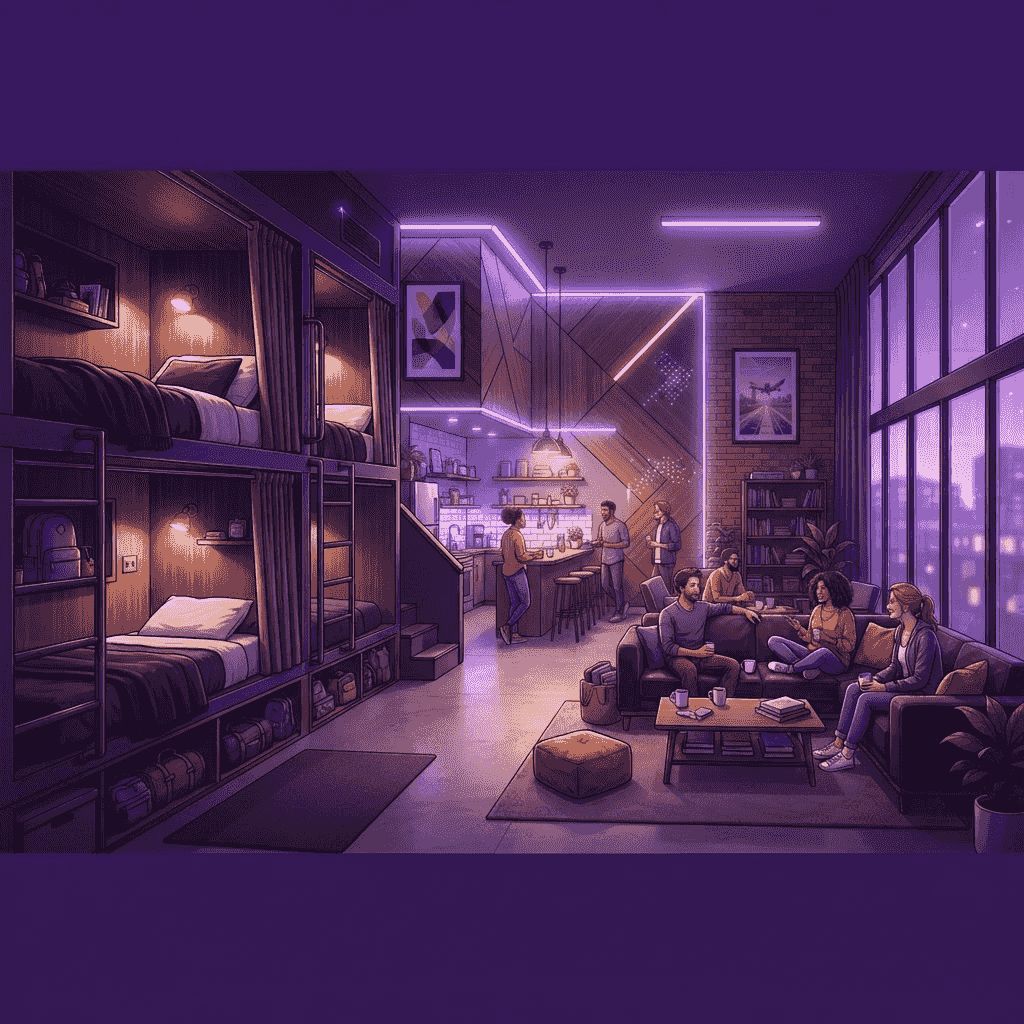
Understanding Madison's Budget Accommodation Landscape
Madison is not a backpacker capital in the way that coastal gateway cities are, and that shapes the shape of its hostel market. Instead of a dense cluster of large purpose-built hostels, the city offers a smaller, more varied set of options: an established downtown hostel, university-affiliated housing that opens to visitors in summer, guesthouse-style properties on the near-east and near-west sides, and cooperative houses with a long tradition of hosting travelers. The result is a market where research matters, because the character of two properties a mile apart can be entirely different.
The demand pattern is distinctive. Summer brings cyclists riding the regional trail network, conference attendees on tight budgets, and families visiting students. Autumn brings alumni and sports crowds who suddenly make every affordable bed in the city scarce. Winter is quiet and inexpensive, and travelers who do not mind cold weather can find remarkable value between January and March.
Ten Places Worth Considering
1. HI Madison Hostel
The city's best-known hostel operates in a historic house near the Capitol and State Street, offering mixed and single-gender dorms alongside a small number of private rooms. Shared kitchen access, a common lounge, and staff who know the neighborhood in detail make it the default first choice for solo travelers. Its central location means the farmers' market, the university, and the lakeshore path are all reachable on foot.
2. University of Wisconsin Summer Guest Housing
When the academic year ends, several campus residence halls open to short-term guests. Rooms are simple and institutional, but rates are low, linens are provided, and the location on the lakeshore is genuinely excellent. This option suits budget travelers visiting in June, July, and early August who value proximity over atmosphere.
3. Lowell Center Guest Rooms
Operated as a conference and guest facility on the eastern edge of campus, Lowell Center offers private rooms at rates that undercut most downtown hotels. It is quieter and more businesslike than a traditional hostel, making it a good fit for older travelers or anyone attending a campus event who still wants to keep costs down.
4. Union South Guest Accommodations
Attached to one of the university's student union buildings, these rooms combine straightforward pricing with immediate access to casual dining, a bowling alley, and event space. Guests appreciate the convenience of having food and social space in the same building, particularly in winter.
5. Madison Community Cooperative Guest Rooms
Madison has a long and unusual cooperative housing tradition, and several co-op houses periodically host short-term guests. Accommodation is basic and communal, with shared kitchens and chore expectations, but travelers seeking an authentic look at the city's cooperative culture find it rewarding.
6. Willy Street Guesthouse Rooms
Guesthouse-style rooms on the near-east side put visitors within walking distance of Williamson Street's restaurants, co-op grocery, and independent shops. Rooms are typically private with shared bathrooms, offering a middle ground between dorm beds and full hotels.
7. Atwood Neighborhood Guest Rooms
The Atwood corridor is one of Madison's most appealing residential districts, and small guest accommodations here provide quiet nights, easy bus access downtown, and proximity to Olbrich Botanical Gardens and Lake Monona beaches.
8. Capitol Neighborhood Shared Stays
Shared accommodation close to the Capitol appeals to travelers whose plans revolve around downtown events. Expect small rooms and shared facilities in exchange for a location that eliminates transportation costs entirely.
9. Near West Side Traveler Rooms
Properties in the Regent and Monroe Street areas offer budget rooms within walking distance of Camp Randall and Vilas Park. This district is well suited to visitors attending athletics events who want to avoid game-day hotel pricing.
10. Lakeshore Cyclist Lodging
Madison is a serious cycling city, and several small operators cater specifically to riders arriving on the trail network, offering secure bike storage, laundry, and early breakfast. For anyone touring by bicycle, these practical amenities matter more than decor.
Dorm Bed or Private Room?
The choice usually comes down to trip length and sleep tolerance. Dorm beds deliver the lowest cost and the highest chance of meeting other travelers, which genuinely matters for solo visitors. Private rooms in hostels and guesthouses typically cost more than a dorm bed but substantially less than a downtown hotel, and they preserve access to shared kitchens, which can cut food costs significantly over a week.
Practical questions worth asking before booking include whether linens and towels are included, whether there is a lockout period during the day, how bathrooms are shared, and whether the kitchen has adequate storage. In Madison specifically, ask about winter heating and about bicycle storage, since both come up frequently.
Trends in Affordable Travel
Two developments are reshaping this segment. The first is the blurring line between hostels and small boutique properties, with several operators adding private ensuite rooms and design-forward common areas while keeping communal kitchens. The second is the growth of purpose-built co-living and extended-stay options serving interns and short-term researchers, which has expanded the supply of affordable monthly accommodation well beyond what traditional hostels offer.
Final Thoughts
Madison rewards budget travelers who plan slightly ahead. The city is compact, walkable, and well served by buses and bike paths, which means an inexpensive bed in the right neighborhood delivers an experience comparable to a far more expensive downtown room. Booking early for autumn, taking advantage of summer campus housing, and considering the near-east and near-west sides will consistently produce the best combination of cost and comfort.