
Why Budget Accommodation Matters in Fremont
The San Francisco Bay Area is among the most expensive accommodation markets in North America, and that pressure extends well beyond the city center. For travelers on limited budgets, the arithmetic is unforgiving: a week in a conventional hotel can consume the majority of a modest trip budget. Fremont's position on the BART network, roughly forty-five minutes from downtown San Francisco and close to Silicon Valley employment centers, makes it a strategically sensible base for anyone willing to trade a private room for shared facilities.
The clientele here is distinctive. Alongside international backpackers, Fremont's shared-stay properties host summer interns arriving for technology placements, contract engineers on short assignments, graduate students attending programs at nearby universities, and professionals bridging a gap between leases. That mix produces a more mature, quieter hostel culture than tourist-heavy districts, and the properties below have adapted their facilities accordingly.
The Top 10 Hostels and Shared-Stay Properties in Fremont
1. Mission Peak Backpackers Lodge
Mission Peak Backpackers Lodge is the most complete hostel offering in the city. Accommodation ranges from four-bed to ten-bed dormitories alongside a limited number of private rooms, all with individual lockers, reading lights, and power outlets at each bunk. The communal kitchen is properly equipped, the lounge is comfortable, and the staff organizes weekend hiking trips to Mission Peak and nearby regional parks. Cleanliness standards are consistently well reviewed.
2. Bay Trail Traveler House
Bay Trail Traveler House caters to outdoor-oriented guests, with secure bicycle storage, gear washing facilities, drying space, and detailed trail information for the regional bay shoreline network. Dormitories are modest in size, and the property maintains quiet hours that are actually enforced. Guests planning cycling or hiking itineraries appreciate the practical infrastructure that general hostels rarely provide.
3. Warm Springs Co-Living Residence
Warm Springs Co-Living Residence occupies the space between hostel and apartment. Guests rent a bed or small private room in a shared suite with communal kitchens, coworking areas, and laundry, typically on stays measured in weeks or months. The property is popular with interns and contract professionals, and its coworking spaces include proper desks, monitors, and reliable high-speed internet.
4. Niles Station Guesthouse
Niles Station Guesthouse offers a smaller, more personal alternative in the historic Niles district. With a limited number of shared and private rooms in a converted older building, the atmosphere is closer to a family-run guesthouse than an institutional hostel. Breakfast is included, and the hosts are known for detailed local recommendations covering both Fremont and the wider region.
5. Ohlone Student and Traveler Stay
Ohlone Student and Traveler Stay serves academic visitors, exchange students, and travelers attending courses or conferences. Facilities include study rooms, printing access, and a quiet lounge, and the property offers discounted weekly and monthly rates for enrolled students. Common areas are designed for concentration as much as socializing.
6. Silicon Gateway Intern House
Silicon Gateway Intern House focuses specifically on the seasonal influx of technology interns. Rooms are simple and functional, but the property invests in what this group values: fast internet, shared workstations, transport information for reaching campuses, and organized social programming that helps arrivals build a network quickly. Stays are typically arranged by the month.
7. Central Fremont Budget Inn and Dorms
Central Fremont Budget Inn and Dorms combines a small dormitory wing with inexpensive private rooms in a central location near transit. It is a straightforward, no-frills property whose principal virtues are price and convenience. Guests should expect basic facilities and appreciate reliable cleanliness and a helpful front desk rather than amenities.
8. Alameda Bay Hostel and Lounge
Alameda Bay Hostel and Lounge places more emphasis on the social side of hostel life, with a large common area, shared evening meals several nights each week, and organized group outings across the bay. Dormitories are mid-sized and the atmosphere is sociable, making it a good match for solo travelers who want company rather than solitude.
9. Bayline Extended Stay Shared Suites
Bayline Extended Stay Shared Suites offers furnished apartments in which individual bedrooms are rented separately while kitchens and living areas are shared. The format suits relocating professionals who need more privacy than a dormitory allows but cannot commit to a full lease. Utilities, internet, and cleaning of common areas are typically bundled into a single monthly rate.
10. Pacific Commons Traveler Rest
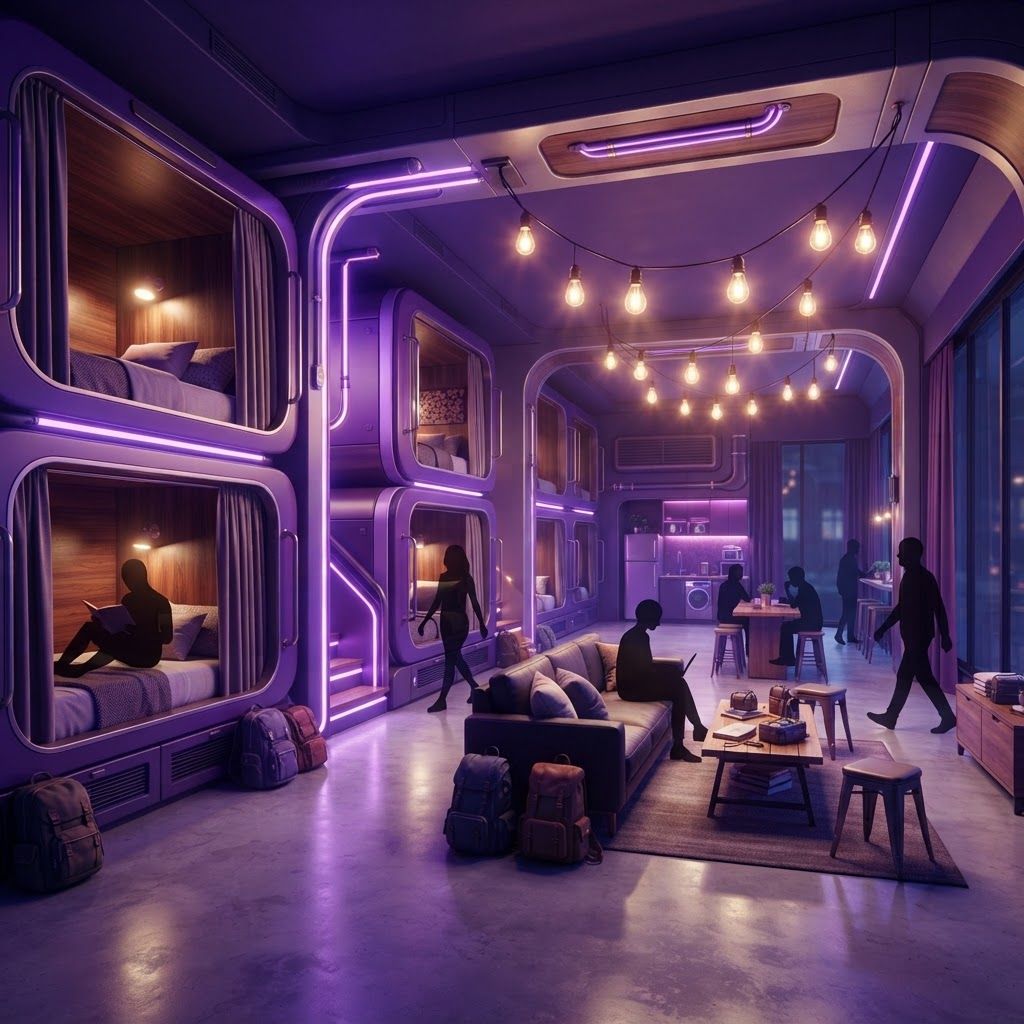
Pacific Commons Traveler Rest completes the list as a compact, efficiently run property serving short-stay travelers, including those transiting through the region between flights. Capsule-style bunks with privacy curtains, secure luggage storage, and twenty-four-hour access address the needs of guests on irregular schedules.
What to Check Before Booking
Verify transport access precisely, including walking distance to the nearest BART station and the frequency of local bus service, since Fremont is geographically large and some addresses are far less connected than others. Confirm dormitory size and whether bathrooms are en suite or corridor-based, as these two factors shape the experience more than any other.
Ask about security arrangements: individual lockers, key card access, and reception hours. Clarify kitchen access rules and whether cooking equipment and basic supplies are provided. Check whether linens and towels are included or charged separately. For longer stays, negotiate weekly or monthly rates directly and confirm what happens if your dates change, since flexible cancellation terms vary considerably across small operators.
Trends in Budget Accommodation
The clearest trend is the blurring of categories. Traditional hostels, co-living operators, and extended-stay providers are converging on a hybrid model offering privacy pods or small private rooms alongside genuinely useful shared workspace. Remote work has driven this shift, since guests now need to be productive rather than merely housed.
Quality expectations have risen as well. Guests increasingly expect hotel-grade cleanliness, contactless check-in, individual power and lighting at each bed, and reliable internet as baseline features rather than upgrades. Properties that have not modernized are losing ground quickly.
Final Thoughts
Fremont's shared accommodation sector offers real value in a region where value is hard to find, and its transit connectivity makes it a practical base for exploring the entire Bay Area. Prioritize location relative to transit, dormitory size, and security, and negotiate directly for stays longer than a week. With modest expectations about amenities and clear expectations about cleanliness, these properties can make an expensive region genuinely affordable.