
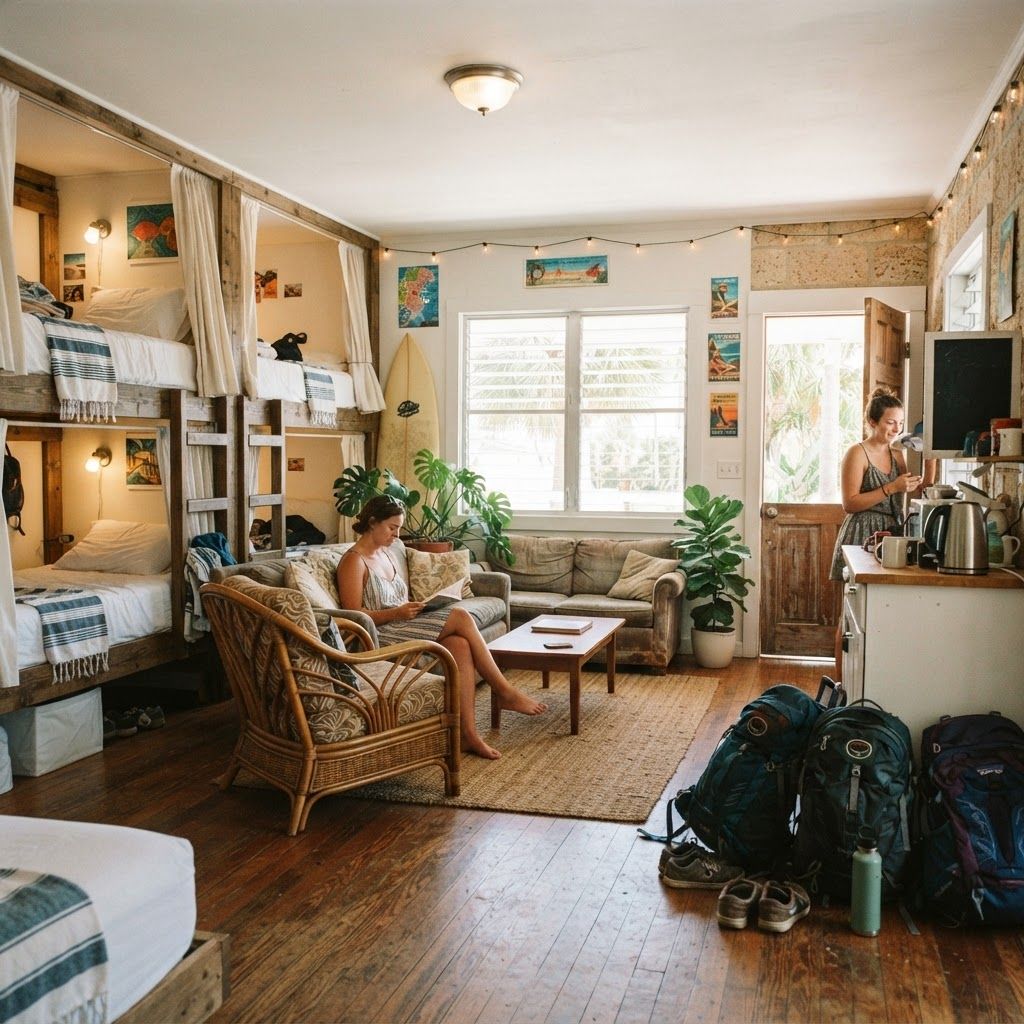
Budget Lodging in a Vacation Home Market
Cape Coral is not a traditional hostel destination. The city grew around single-family waterfront housing rather than tourism infrastructure, and its lodging inventory reflects that: private pool homes, mid-scale hotels, and extended-stay properties dominate. Travelers accustomed to the dense hostel networks of Miami Beach, Key West, or Orlando will find a smaller and less formal market here.
That does not mean budget travelers are out of options. Over the past several years, a mix of guesthouses, private rooms in shared homes, dorm-style accommodations, and hostel-adjacent properties in nearby Fort Myers, Fort Myers Beach, and Matlacha have filled the gap. Backpackers, digital nomads, seasonal workers, fishing enthusiasts, and solo travelers using Cape Coral as a base for exploring Sanibel, Pine Island, and the Everglades all make use of them. The trade-off is straightforward: significantly lower cost in exchange for shared facilities and fewer amenities.
What to Expect From Shared Accommodation Locally
Budget lodging in the Cape Coral area tends to fall into three shapes. The first is dedicated hostel-style properties with bunk dormitories, shared kitchens, and common lounges, concentrated mainly near the beaches in greater Fort Myers rather than inside Cape Coral itself. The second is guesthouses and small inns offering private rooms with shared bathrooms and kitchen access, which are more common within the city. The third is room rentals in residential homes, often long-stay oriented and popular with seasonal workers.
Practical expectations matter. Air conditioning is essential rather than optional in this climate, so confirm it is present and functioning in sleeping areas, not just common rooms. Kitchen access substantially reduces food costs in a city where restaurants cluster in specific districts. Because Cape Coral is spread across a very large area with limited public transit, a car, scooter, or bicycle is close to necessary, and parking availability should be confirmed. Laundry access is worth asking about for stays beyond a few nights.
The Ten Best Budget and Hostel-Style Options
1. Cape Coral Backpackers Guesthouse is among the closest things to a true hostel within the city, offering shared dormitory beds and a few private rooms with a communal kitchen and lounge. Its residential setting is quiet, and travelers cite the friendly, informal atmosphere and reasonable weekly rates.
2. Bimini Basin Budget Rooms provides private rooms with shared facilities near the south Cape entertainment district, allowing guests to reach restaurants and live music on foot rather than by car, a meaningful advantage in this market.
3. Coral Canal Hostel and Lodge combines dorm bunks with a canal-front outdoor common area, including a shared grill and kayak storage. It suits active travelers who plan to spend most of their time on the water.
4. Palm Court Guest House operates as a small inn with individual rooms, a shared kitchen, and on-site laundry. Its clientele leans toward longer stays, including seasonal workers and travelers spending a month or more in the region.
5. Del Prado Traveler's Inn offers no-frills private rooms at low nightly rates along a main corridor, making it practical for travelers who need a base with easy access to both bridges and northern routes.
6. Matlacha Fisherman's Bunkhouse sits just outside the city near Matlacha Pass and caters specifically to anglers with bunk-style lodging, gear storage, cleaning stations, and early-morning departure convenience.
7. Southwest Florida Surf and Stay is a beach-oriented hostel in the greater Fort Myers Beach area, a short drive from Cape Coral, featuring dorms, a social common room, and organized group outings that appeal to solo international travelers.
8. Riverside Shared Living focuses on medium-term stays with weekly and monthly rates, private bedrooms, and communal kitchen and living areas, a fit for remote workers who want low cost and stable internet.
9. Pine Island Road Budget Suites offers compact rooms with kitchenettes at hostel-adjacent pricing, popular with contractors and travelers who prefer private space without hotel rates.
10. Coral Coast Community Hostel rounds out the list with mixed dorm and private inventory, bicycle loans, and an emphasis on social programming including shared dinners and group trips to nearby islands.
How to Evaluate a Budget Property
Read recent reviews carefully and weight the last few months most heavily, since small properties change ownership and management more often than branded hotels. Prioritize comments about cleanliness, air conditioning performance, security of belongings, and how responsive management is to issues. Confirm whether lockers or lockable storage are provided in dorm rooms, which is the single most common gap in budget lodging.
Verify practical logistics before booking. Ask about check-in hours and whether late arrival is possible, since small operators may not staff a front desk around the clock. Confirm the exact address and its distance from your planned activities, because a listing described as Cape Coral may sit twenty minutes from the district you intend to visit. Clarify cancellation terms and whether the rate is per bed or per room. For stays during hurricane season, ask how the property handles storm closures and refunds.
Making Budget Travel Work in Cape Coral
A few habits stretch a budget considerably here. Use kitchen access rather than eating out for most meals, and shop at the larger grocery stores along Del Prado and Pine Island Road. Take advantage of free public amenities, including community parks, the Yacht Club area, and the extensive canal-side walking routes. Group up with other guests to split boat rentals, charters, or a ride to Sanibel, since shared costs turn otherwise expensive activities into affordable ones.
Travel in shoulder or low season if possible. Rates across all Cape Coral lodging drop substantially between May and November, and budget properties often become dramatically cheaper on weekly terms. Bring a reusable water bottle, sun protection, and insect repellent, all of which cost more locally than at home. With realistic expectations and some planning, Cape Coral can be explored comfortably on a modest budget, using shared lodging as a base for a region whose main attractions, the water, the wildlife, and the barrier islands, cost very little to enjoy.