
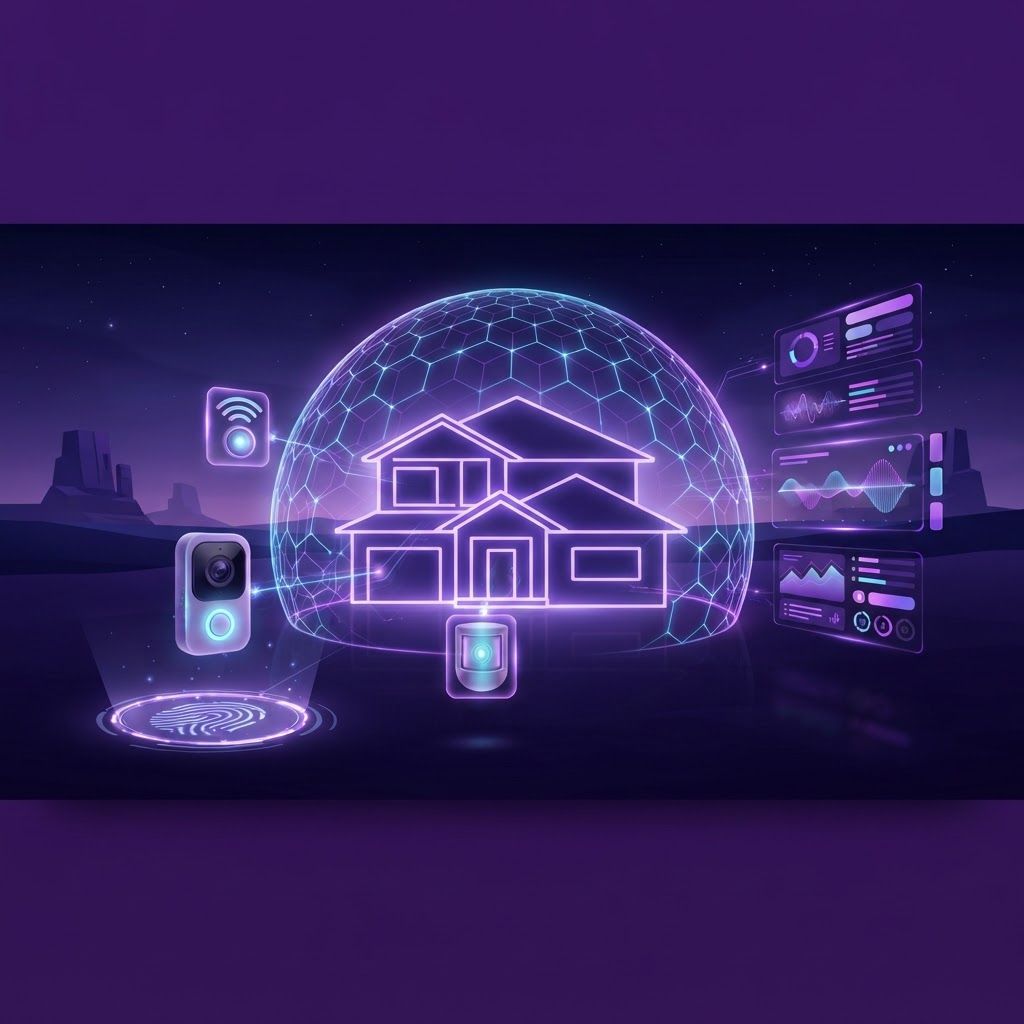
Security Needs in a Fast Growing West Valley City
Surprise presents an unusual security profile. It is a relatively safe suburban city by most measures, yet it has characteristics that make thoughtful home security genuinely worthwhile. A substantial seasonal population means thousands of homes sit vacant for months at a stretch, particularly across Sun City Grand and the surrounding age restricted communities. Rapid residential construction means new neighborhoods often have active job sites, unfamiliar vehicles, and incomplete perimeter walls for extended periods. And package delivery volume has made porch theft a routine nuisance rather than a rare event.
The technology landscape has shifted just as quickly. A decade ago, home security meant a landline connected panel and a contract with a national monitoring company. Today the category spans professionally installed and monitored systems, self monitored do it yourself kits, video doorbells, smart locks, sensor networks, and integrated platforms that tie security to lighting, thermostats, and garage doors. Choosing well starts with understanding which of those layers you actually need.
Professional Monitoring Versus Self Monitoring
Professional monitoring means a central station receives alarm signals around the clock and dispatches emergency services according to a verification protocol. It carries a monthly fee, typically ranges from modest to substantial depending on features, and is the right choice for households that want response even when nobody is available to look at a phone.
Self monitoring sends alerts directly to your device and leaves the response decision to you. It costs less, sometimes nothing beyond cloud video storage, and works well for tech comfortable households that are rarely unreachable. The tradeoff is real: if your phone is silenced overnight or you are on an international flight, nobody else is watching.
For seasonal residents specifically, professional monitoring is difficult to argue against. A water sensor that detects a failed water heater in an empty August house can prevent tens of thousands of dollars in damage, but only if someone is notified and empowered to act.
The Top 10 Home Security Companies Serving Surprise
1. Vivint Smart Home. Headquartered in the region and widely deployed across Arizona, Vivint offers professionally installed integrated systems combining cameras, sensors, smart locks, and thermostat control under a single application. The strength is integration depth; the consideration is contract length.
2. ADT. The most recognized name in the category, ADT brings extensive monitoring infrastructure and a large local installer network. Its longevity and redundancy in central station operations appeal to households that prioritize reliability over novelty.
3. SimpliSafe. A leading option for households that want professional monitoring without long term contracts, SimpliSafe uses wireless components that homeowners can install themselves and offers month to month monitoring plans, which suits renters and seasonal residents particularly well.
4. Brinks Home Security. Brinks combines professional monitoring with a hardware platform that supports both self installation and professional setup, and is frequently chosen for its balance between capability and cost.
5. Alder Security. With a significant Arizona presence, Alder emphasizes rapid alarm response times and medical alert integration, a meaningful feature set in a city with a large retirement population.
6. Cobra Security Systems. A regional operator serving the Phoenix metro, Cobra offers custom designed systems for both homes and small businesses, including camera placement planning that accounts for desert lighting conditions and glare.
7. Guardian Security Solutions. Guardian focuses on locally staffed installation and service, and has built a following among homeowners who prefer dealing with technicians who live in the West Valley rather than a national call center.
8. Titan Alarm. An Arizona based company serving both residential and commercial clients, Titan handles access control and camera systems for small businesses in addition to standard home alarm packages.
9. Ring Alarm. The doorbell camera that defined a category has grown into a full alarm ecosystem with optional professional monitoring. Its appeal is affordability and the sheer breadth of compatible devices, along with neighborhood alert features that some communities use actively.
10. Desert Shield Security. Rounding out the list, this smaller regional provider specializes in vacation and seasonal home programs, including scheduled property checks paired with remote monitoring for residents who spend summers elsewhere.
Features That Matter Most in Surprise Homes
Video doorbells top the practical list. They deter package theft, document delivery, and let seasonal residents speak to anyone at the door from across the country. Placement matters more than resolution: a camera facing direct afternoon sun will wash out exactly when you need it.
Environmental sensors deserve more attention than they usually get. Water leak detectors near water heaters, washing machines, and under sinks catch the failures that cause the most expensive damage. Temperature sensors alert seasonal homeowners when an air conditioner fails, which in an Arizona summer can warp flooring and ruin furnishings within days.
Smart locks and garage door controllers solve the recurring problem of granting access to cleaners, pet sitters, and contractors without distributing physical keys. Combined with camera coverage, they produce a verifiable access log.
Installation and Practical Considerations
Desert conditions impose real constraints. Heat degrades batteries faster than manufacturers rated lifespans suggest, so plan on more frequent replacement in outdoor sensors and cameras. Direct sun exposure shortens the life of plastic housings, making shaded or eave mounted placement worthwhile. Dust accumulation on camera lenses reduces image quality gradually enough that homeowners often do not notice until reviewing footage that matters.
Connectivity is another consideration. Many newer Surprise homes are large enough that a single router cannot reliably cover exterior camera positions, so a mesh network or dedicated access point may be necessary before a camera system performs as advertised. Cellular backup for the alarm panel is worth the modest monthly premium, since an intruder cutting internet service should not disable the system.
Choosing the Right System
Begin by defining the threat you are actually addressing. Package theft, vacant home protection, medical response, and perimeter intrusion each point toward different configurations, and a system designed for one may perform poorly at another.
Read contract terms carefully, particularly around term length, early termination, equipment ownership, and monitoring rate increases after a promotional period. Ask whether the equipment remains functional if you cancel monitoring, since some proprietary platforms do not.
Finally, remember that security is layered. Good exterior lighting, trimmed landscaping that eliminates concealment, solid door hardware, and reinforced strike plates contribute as much as any electronic system. The best providers in Surprise will tell you that directly rather than selling a sensor for every window.