
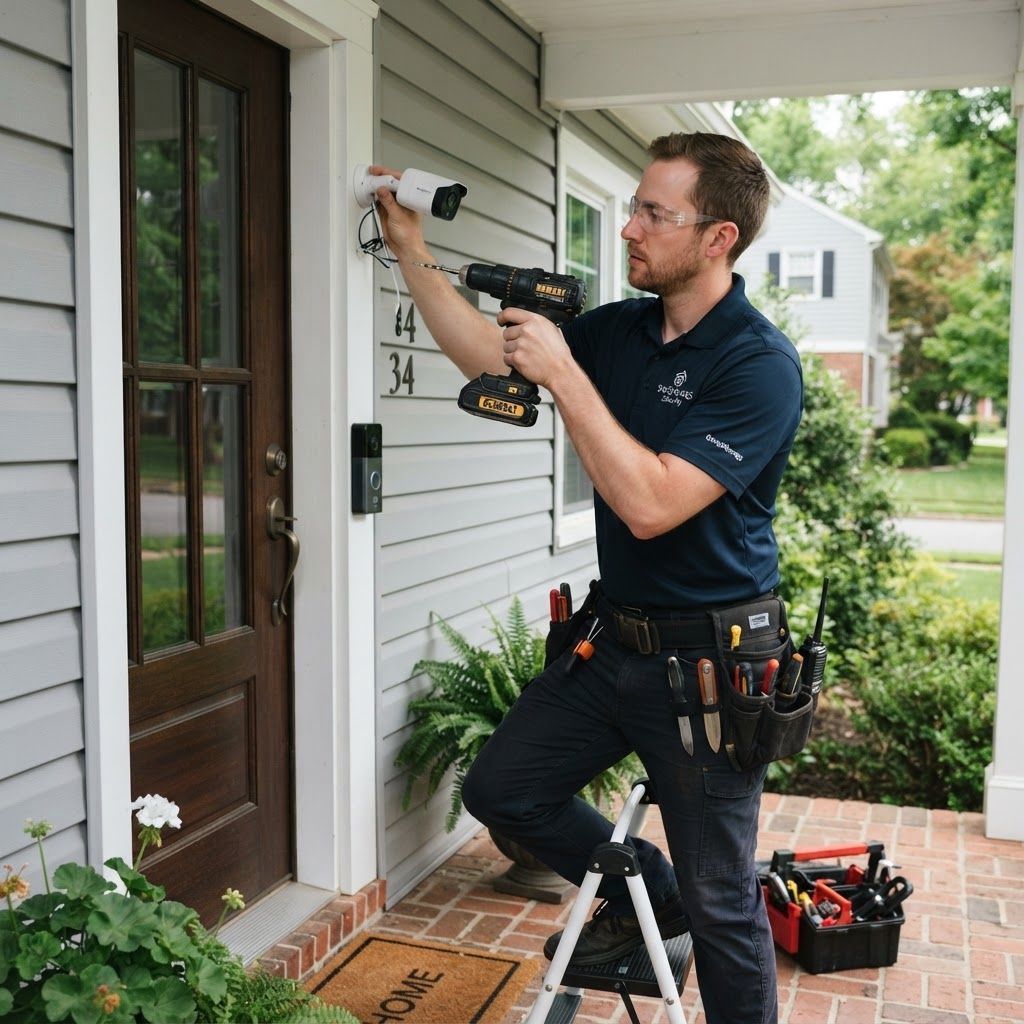
What Home Security Means Today
Residential security has changed substantially. A decade ago the standard package consisted of door and window contacts, a motion detector, a keypad, and a central monitoring contract. Today systems commonly include video doorbells, indoor and outdoor cameras with recording, smart locks, garage door control, glass break detection, and environmental sensors for smoke, carbon monoxide, water leaks, and low temperature. That last category matters considerably in St. Paul, where a furnace failure during a cold snap while a household travels can lead to frozen and burst pipes.
Two distinct models now compete. Professionally installed and monitored systems offer expert placement, reliable cellular backup communication, and a monitoring center that dispatches emergency response. Self-installed systems offer lower cost, no long contracts, and flexible monitoring options, though performance depends on the homeowner installing sensors correctly.
Components Worth Understanding
Entry sensors on doors and accessible windows remain the foundation, since most intrusions occur through doors. Motion detectors provide interior coverage layered behind perimeter sensors. Glass break sensors add protection on large windows and patio doors.
Cameras deliver the deterrence and evidence value most homeowners want. Placement matters more than resolution. Cameras covering entry points at a height that captures faces, with adequate low-light performance and a field of view that avoids pointing at neighboring property, outperform higher-specification cameras poorly positioned. Local storage versus cloud recording is a meaningful decision affecting privacy and ongoing cost.
Smart locks enable keyless entry, temporary codes for service providers, and remote verification that the door is actually locked. Environmental monitoring frequently delivers more real-world value than intrusion detection, since water leaks and freeze events are statistically more likely than burglary.
Ten Home Security Companies Serving St. Paul
Capital City Security Systems provides professionally installed monitored systems with cellular backup and local service technicians.
Northern Watch Home Security offers flexible monitoring without long-term contracts, appealing to renters and cost-conscious households.
Summit Smart Home and Security integrates security with lighting, thermostats, and voice control platforms for whole-home automation.
Great River Camera and Surveillance specializes in camera system design, including multi-camera coverage and network video recording.
Heritage Home Protection works with older homes where wiring pathways and window types complicate sensor installation.
Frostline Environmental Monitoring focuses on freeze, water leak, and sump failure detection alongside standard security functions.
Eastside Access Control serves multifamily buildings and small commercial properties with entry systems and intercoms.
Union Park Security Services operates as a local independent dealer offering personalized system design and in-person support.
Landmark Commercial Security handles business alarm, video, and access systems with monitoring and compliance documentation.
Riverfront Locksmith and Security completes the list combining physical hardware upgrades with electronic security integration.
Physical Security Comes First
Electronics detect and record, but hardware prevents. Solid core exterior doors, reinforced strike plates with three inch screws anchored into framing, quality deadbolts, secondary locks on sliding patio doors, and adequate exterior lighting stop more attempts than any sensor. Many older homes have original door frames where a single kick defeats the lock regardless of its quality.
Landscaping affects security too. Trimmed shrubs near windows remove concealment, and motion-activated lighting at entries and along dark side yards is inexpensive and effective. Visible signage indicating monitoring provides genuine deterrent value.
Contracts, Costs, and Privacy
Read monitoring agreements carefully. Term length, early termination fees, price escalation after a promotional period, equipment ownership versus lease, and what happens if you move all matter. Some providers lease equipment that becomes unusable if you cancel, while others sell equipment outright.
Understand video privacy implications. Ask where footage is stored, how long it is retained, who can access it, whether the provider shares data with third parties, and whether recordings are encrypted. If cameras cover shared spaces or capture audio, be aware of legal considerations around recording conversations.
Verify that monitoring centers are professionally certified and that systems use cellular or dual-path communication rather than depending solely on home internet, which can be interrupted.
Practical Selection Advice
Start by defining what you are actually protecting against. A household concerned primarily about package theft and knowing who is at the door needs a very different system than one protecting a home that sits empty for weeks. Match the system to the real risk rather than buying the largest package offered.
Request a walkthrough where the installer identifies vulnerable entry points and proposes sensor and camera placement. Ask about false alarm management, since repeated false dispatches can incur municipal fees. Confirm battery backup duration and how the system notifies you of sensor battery depletion.
Conclusion
Effective home security in St. Paul layers solid physical hardware, well-placed sensors and cameras, and environmental monitoring appropriate to a cold climate. The ten companies above span monitored professional systems, contract-free options, camera specialists, smart home integration, and commercial access control. Define your actual risks, scrutinize the contract, and reinforce the doors before investing in electronics.