
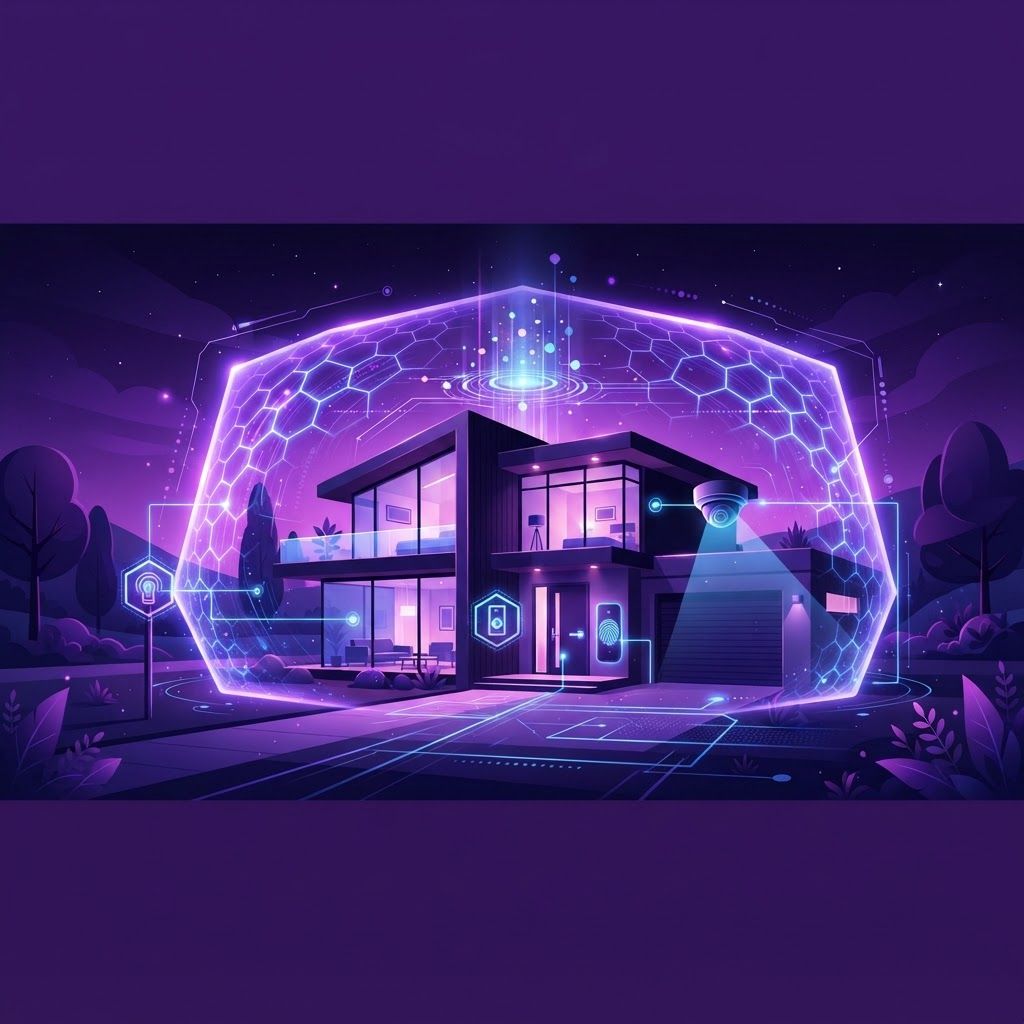
Security Has Become a Whole-Home System
Home security once meant a keypad by the front door, a siren, and a phone line to a monitoring center. That model still exists, but it now represents a fraction of what the category covers. Today's systems combine entry sensors, motion detection, video doorbells, exterior cameras with analytics, glass-break detection, smart locks, garage controllers, environmental sensors for smoke, carbon monoxide, water leaks and freezing pipes, and app-based control that works from anywhere.
For Spokane homeowners, several local factors make this expansion genuinely useful rather than gimmicky. Package theft and vehicle prowling are the most common property crimes in residential neighborhoods, and video verification at entry points addresses both directly. Detached garages and alley access, common in older parts of the city, create secondary entry points worth monitoring. Cold winters make freeze and water-leak sensors valuable, since a burst pipe in an unoccupied vacation home can cause damage far exceeding any burglary. And the region's substantial population of second homes and short-term rentals creates real demand for remote access control.
The Ten Security Service Categories
1. Professionally monitored alarm systems. Door and window contacts, motion sensors, and a control panel connected to a central station via cellular and internet paths.
2. Video surveillance. Exterior cameras with night vision, person and vehicle detection, local and cloud recording, and floodlight-integrated units.
3. Video doorbells and package protection. Two-way audio, motion zones, and package detection alerts for the most common residential loss.
4. Smart locks and access control. Keypad and app-controlled locks with unique codes for family, cleaners, contractors, and rental guests, plus access logs.
5. Environmental and life-safety monitoring. Monitored smoke and carbon monoxide detection, water leak sensors, and low-temperature alerts that protect against frozen pipes.
6. Smart home integration. Lighting, thermostats, garage doors, and scene automation tied to arming and disarming behavior.
7. DIY and self-monitored systems. Consumer kits with optional monthly monitoring, appealing to renters and cost-conscious households.
8. Commercial security. Access control, multi-site video management, alarm response, and compliance documentation for local businesses.
9. Medical alert and aging-in-place monitoring. Wearable pendants, fall detection, and activity monitoring for independent seniors.
10. Security assessment and consulting. Walkthrough evaluation of entry points, lighting, sightlines, landscaping concealment, and hardware quality, often the highest-value service and the least purchased.
What Distinguishes the Best Security Companies
Redundant monitoring paths. A system that reports only over home internet fails the moment power or service drops. Look for cellular backup with battery reserve, and ask how long the panel operates during an outage.
UL-listed central station with documented response. Ask for average alarm handling times, whether the station is redundant across multiple facilities, and how verification is performed before dispatch.
Video verification for faster dispatch. Systems that let monitoring operators view a clip of the triggering event dramatically reduce false alarms and improve law enforcement prioritization.
Transparent contract terms. This is where the industry earns its worst reputation. Read the initial term length, auto-renewal clause, early termination fee, equipment ownership at contract end, price escalation provisions, and cancellation procedure. Multi-year contracts with financed equipment can be reasonable, but only if fully disclosed.
Professional installation and system design. A competent installer maps entry points, places motion sensors to avoid pet false alarms, positions cameras for identification rather than mere detection, and mounts equipment out of easy reach.
Local presence and service response. A regional office that can send a technician for a failed sensor within days matters more than a national brand name.
Privacy and data practices. Ask where video is stored, how long it is retained, who can access it, whether footage is shared with third parties, and whether end-to-end encryption is offered.
No pressure at the door. Door-to-door alarm sales, particularly pitches claiming your existing provider has been acquired or that a same-day discount expires tonight, are a persistent problem. Reputable companies quote in writing and let you think about it.
Trends in Residential Security Technology
Artificial intelligence has meaningfully improved camera usefulness. Modern analytics distinguish people, vehicles, animals, and packages, which reduces the alert fatigue that caused earlier camera owners to disable notifications entirely. Some systems now recognize familiar faces and support customized alerting.
Interoperability is improving through common smart-home standards, reducing the historical problem of locking into one manufacturer's ecosystem. Local processing and on-device storage options have grown in response to privacy concerns, giving homeowners the choice between cloud convenience and local control.
Battery and wireless technology has made professional-grade sensors installable without drilling through finished walls, a significant advantage in older Spokane homes with plaster and no accessible cavities. Solar-powered exterior cameras have also become practical, and integration between security systems and monitored life-safety devices means one platform now protects against intrusion, fire, carbon monoxide, and water damage simultaneously.
Choosing Between DIY and Professional
DIY systems make sense for renters, smaller homes, tech-comfortable users, and anyone unwilling to sign a multi-year agreement. Costs are lower, monitoring is typically month to month, and equipment moves with you. The tradeoffs are self-designed sensor placement, self-troubleshooting, and generally simpler analytics.
Professional systems make sense for larger or more complex properties, homes with detached structures, households wanting insurance certificates for premium discounts, users who want someone else responsible when a sensor fails, and anyone integrating access control across multiple users. Professional design also tends to catch vulnerabilities a homeowner overlooks, such as basement windows, crawlspace hatches, and second-story access from a deck or tree.
Practical Steps That Improve Security Immediately
Technology supplements physical hardening; it does not replace it. Install solid-core exterior doors with three-inch screws into the framing on strike plates and hinges, since most forced entries defeat the frame rather than the lock. Add secondary blocking to sliding doors. Trim shrubs that conceal windows and improve exterior lighting at entry points, ideally motion-activated. Secure detached garages and sheds, which are frequently the softest target on a property. Never leave garage remotes in unlocked vehicles. Vary the appearance of occupancy during travel using smart lighting rather than obvious timers, and coordinate mail and package holds.
Final Thoughts
The best home security companies in Spokane sell system design and reliable response, not just hardware. They walk the property, place devices where they actually help, provide cellular backup and battery reserve, disclose contract terms plainly, and treat your video data as your property. Combine that with basic physical hardening and good lighting, and you get security that works whether or not anyone is watching the app.