
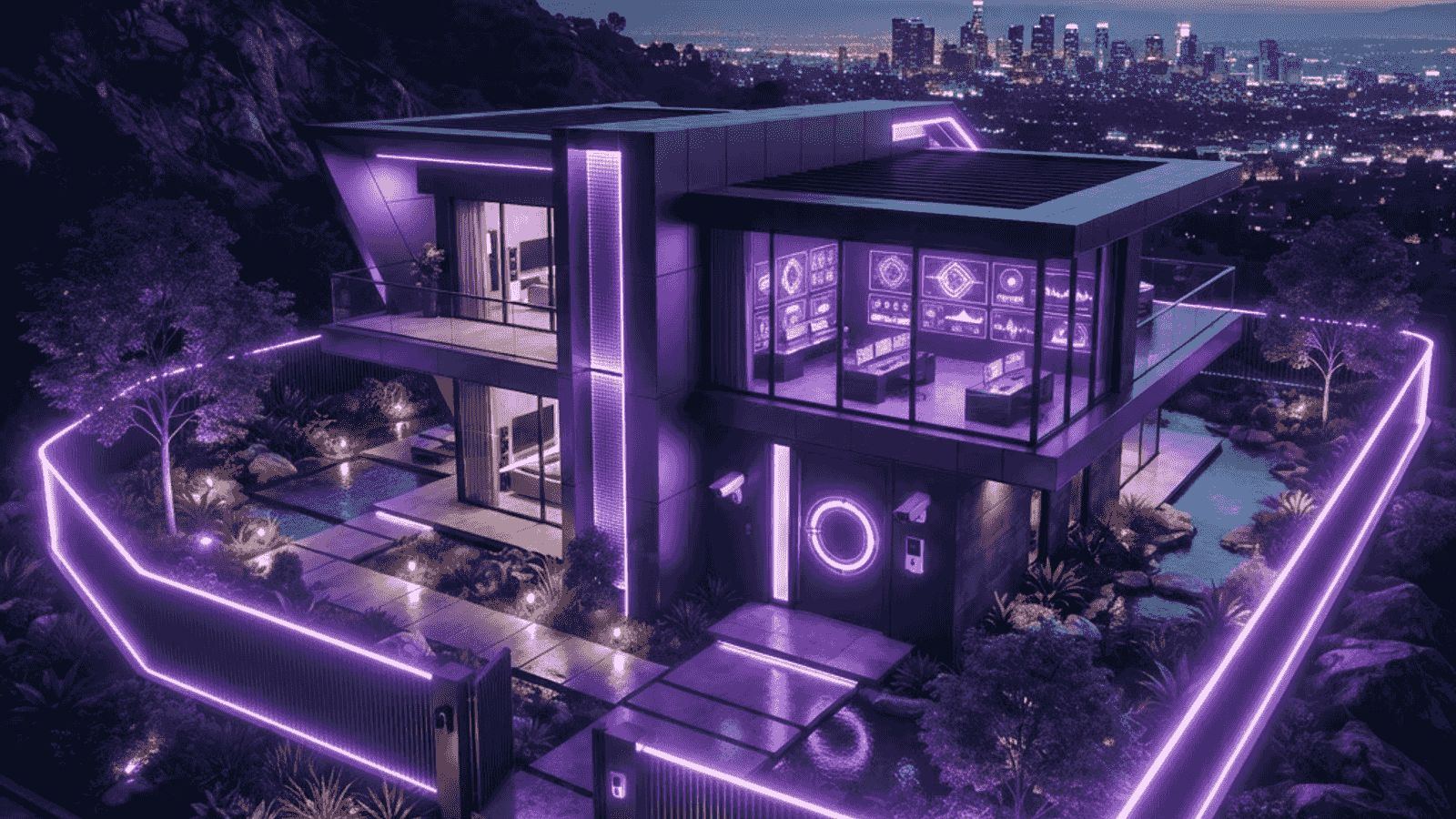
Home Security Has Moved Beyond the Alarm Siren
A decade ago a home security system meant door contacts, a motion sensor, a keypad, and a monthly monitoring bill. Today it means high-resolution cameras with intelligent detection, video doorbells, smart locks, glass-break and environmental sensors, and an app that shows what is happening in real time. For Riverside households, that evolution has practical benefits well beyond burglary prevention: package theft deterrence, remote access for family members and service providers, water leak alerts while traveling, and video documentation that resolves neighborhood disputes.
The market has broadened accordingly. Some homeowners want a professionally designed and monitored system with hardwired sensors and a service relationship. Others want a flexible self-monitored setup they control entirely. Both approaches are legitimate, and the right choice depends on property size, budget, and how much responsibility you want for responding to alerts yourself.
How to Evaluate a Security Provider
Monitoring quality is the most important variable in a professionally monitored system. Ask where the monitoring center is located, whether it is redundant, how quickly operators respond to a signal, and what verification steps occur before dispatch. Video verification reduces false alarms significantly, which matters because repeated false dispatches can result in municipal fines.
Equipment ownership and contract structure come next. Some providers subsidize hardware in exchange for multi-year agreements with automatic renewal, while others sell equipment outright with month-to-month monitoring. Neither is inherently wrong, but you should know which you are signing. Also verify that the system uses encrypted cellular communication with battery backup rather than relying solely on home internet, and confirm whether it integrates with the smart home platform you already use.
Top 10 Best Home Security Companies in Riverside
1. Inland Empire Security Systems
A local integrator known for custom-designed systems, professional installation, and clear contract terms without aggressive upselling. Strong on hardwired sensors in larger homes.
2. Citrus City Alarm & Monitoring
Provides professional monitoring with video verification and rapid operator response, along with straightforward month-to-month options for customers who own their equipment.
3. Canyon Crest Smart Home Security
Focused on integrated systems combining security, lighting, climate, and access control, designed for households already using a smart home ecosystem.
4. Magnolia Camera & Surveillance
Specializes in camera design and placement, including coverage mapping, local recording options, low-light performance, and license plate visibility at driveway entrances.
5. Orangecrest Residential Security
Serves newer neighborhoods with efficient wireless installations, doorbell cameras, and package detection features, plus HOA-compliant exterior equipment placement.
6. La Sierra Access & Locks
Combines locksmithing with smart access, installing high-security deadbolts, keypad and biometric locks, gate controls, and temporary access codes for guests and service providers.
7. Rubidoux Commercial Security Group
Handles small business and multifamily properties with video management systems, access control, intrusion detection, and documented monitoring for insurance purposes.
8. Wood Streets Discreet Security
Designs low-visual-impact systems for historic homes, concealing wiring and selecting hardware finishes that do not disrupt period architecture.
9. Arlington Self-Monitored Solutions
Helps homeowners build and configure self-monitored systems, providing installation and setup expertise without ongoing contracts for those who prefer full control.
10. Riverside Security Consultants
Offers vendor-neutral assessments, identifying vulnerabilities in lighting, landscaping sightlines, door and window hardware, and camera coverage before any equipment purchase.
Where the Industry Is Heading
On-device intelligence is the biggest technical shift. Cameras that distinguish people, vehicles, animals, and packages locally generate far fewer useless notifications than motion-triggered systems, and local processing reduces the amount of footage leaving the property. Two-way audio and active deterrence features such as spotlights and sirens built into cameras have also become common.
Privacy has become a purchasing criterion in its own right. Buyers increasingly ask where footage is stored, how long it is retained, whether encryption is end to end, and under what circumstances a company shares recordings. Local storage options and clearly stated retention policies are now competitive advantages. Meanwhile, environmental monitoring has expanded the category, with water leak, smoke, and temperature sensors bundled into security packages because the resulting insurance claims are often larger than theft losses.
Practical Advice Before You Buy
Start with an assessment rather than an equipment list. Exterior lighting, trimmed sightlines, solid door hardware, and reinforced strike plates prevent more incidents than any sensor. Then design coverage around actual entry points and blind spots, prioritizing the front door, driveway, side gates, and rear slider.
Read the agreement carefully for term length, renewal language, cancellation terms, price escalation, and what happens to the equipment if you cancel. Confirm cellular backup and battery runtime, ask whether professional monitoring includes video verification, and check whether the city requires alarm permits. Finally, plan for maintenance, including battery replacement schedules and periodic testing, since an unmonitored fault is the most common reason a system fails when it is needed.
Final Thoughts
The best home security setup is the one that fits how you actually live. The companies profiled here range from full-service integrators to consultants and self-monitoring specialists. Begin with a clear-eyed assessment of vulnerabilities, understand the contract before signing, and prioritize systems that reduce false alerts, because a system you trust is a system you will keep armed.