
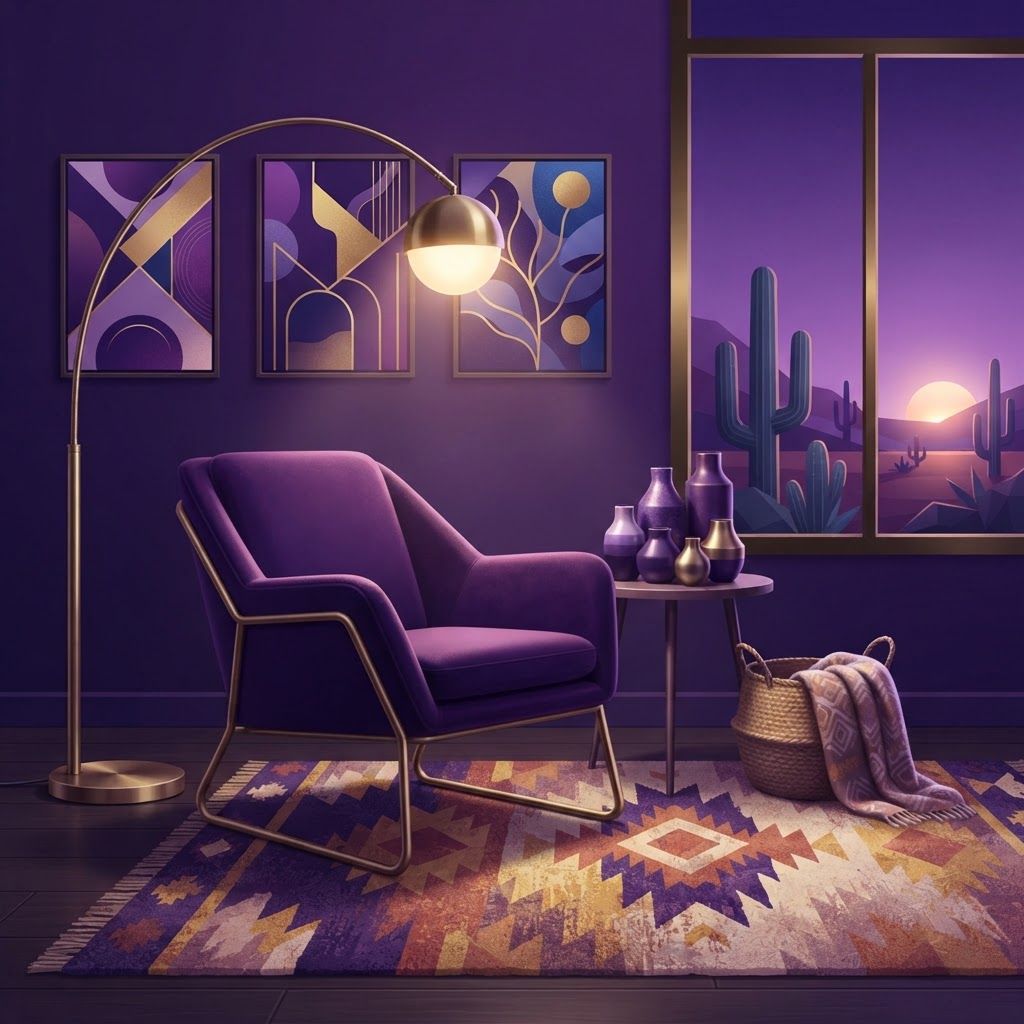
Designing for Desert Light and Desert Architecture
Interior design in Surprise starts with light. Arizona sunlight is intense, high in contrast, and unrelenting for most of the year, and it fundamentally changes how colors, materials, and textiles behave. A fabric that reads as warm beige in a Midwest showroom can look washed out and yellow under desert glare. Deep saturated colors that would overwhelm a dim northern room hold their own beautifully here.
Architecture is the second factor. Much of the housing stock across Surprise follows a southwestern or transitional vocabulary: stucco exteriors, tile roofs, arched openings, rounded drywall corners, and open plans with high ceilings that flow from kitchen to great room. These are generous spaces with few hard divisions, which means decor has to create zones that architecture did not.
The most successful interiors in the area work with both realities rather than against them. They control glare with layered window treatments, anchor large open rooms with substantial rugs and intentional furniture groupings, and use texture, natural materials, and considered color to create warmth in spaces that can otherwise feel cavernous.
The Top 10 Home Decor Brands and Retailers for Surprise Homes
1. Arhaus. Known for artisan influenced furniture with substantial natural wood, reclaimed materials, and handcrafted detail, Arhaus suits the organic modern direction that has become dominant in premium Arizona interiors. The scale of its upholstery works well in the large great rooms common to newer Surprise builds.
2. Pottery Barn. A dependable anchor for transitional interiors, Pottery Barn delivers durable upholstery, a coherent color language, and an accessories range broad enough to furnish a room from a single source. Its seasonal collections translate easily to desert palettes.
3. West Elm. For households leaning contemporary and mid century influenced, West Elm offers cleaner lines and a more graphic sensibility. Its lighting and textile collections in particular work well against stucco and neutral wall finishes.
4. Copenhagen Imports. A regional fixture in Arizona furniture retail, Copenhagen specializes in Scandinavian and contemporary European design. The lighter wood tones and restrained forms complement desert light without the heaviness that some traditional furniture brings.
5. Arizona Leather Interiors. Leather performs exceptionally well in this climate, resisting the fading and wear that many textiles suffer, and this regional specialist carries a deep selection with customization options in both traditional and modern silhouettes.
6. Serena and Lily. For coastal and casual interiors, which have gained real traction as a counterpoint to heavier southwestern styling, Serena and Lily offers woven textures, rattan, and light palettes that feel cooling in a hot climate.
7. CB2. The design forward sibling of a mass market retailer, CB2 appeals to younger Surprise households furnishing first homes with bold contemporary pieces at accessible price points.
8. Crate and Barrel. Reliable construction, a clean transitional aesthetic, and a strong tabletop and kitchen collection make this a practical choice for households that entertain, which in a city with a long outdoor season is most of them.
9. Anthropologie Home. For interiors that want personality rather than showroom neutrality, Anthropologie offers eclectic, pattern rich pieces that pair unexpectedly well with southwestern architecture and handmade ceramics.
10. Sonoran Home Collective. Rounding out the list, this regionally minded retailer focuses on southwestern and desert modern goods including handwoven textiles, ceramic vessels, iron work, and locally made art, offering the kind of specificity that national chains cannot.
Color Palettes That Work in Arizona Interiors
Warm neutrals remain the reliable foundation: sand, greige, warm white, and soft clay. These read cleanly under bright light and provide a backdrop that does not compete with the view outside, which in many Surprise homes includes mountains, golf course greens, or desert landscaping.
From there, the interesting decisions happen in accent color. Terracotta, rust, and burnt orange echo the landscape directly. Sage, eucalyptus, and muted olive bring in the desert plant palette. Deep indigo, turquoise, and lapis reference southwestern textile traditions and provide genuine contrast. Black metal accents in lighting and hardware have become nearly universal and provide the crispness that all warm palettes need.
What consistently underperforms is a palette of cool grays borrowed from cooler climates. Under Arizona light, cool gray frequently reads as flat and slightly blue, and rooms finished this way often feel oddly unwelcoming without the owner being able to identify why.
Materials, Textiles, and Practical Durability
Sun exposure is the practical enemy. Ultraviolet light fades upholstery, bleaches wood finishes, and degrades fibers over time. Performance fabrics originally developed for outdoor use have improved dramatically and now appear in genuinely attractive indoor upholstery, offering fade and stain resistance without an obvious synthetic feel.
Window treatment is the other half of the solution. Solar shades that cut glare while preserving views, layered with drapery for softness and acoustic control, protect furnishings while making rooms usable at all hours. Low emissivity window film is a worthwhile addition on western exposures.
For flooring, large format tile and luxury vinyl plank dominate for good reason: both handle temperature swings, resist the fine grit tracked in from desert landscaping, and stay cool underfoot. Layering substantial area rugs over hard flooring restores warmth and defines zones within open plans.
Styling Advice for Open Plan Desert Homes
Scale is where most open plan rooms go wrong. A sofa sized for a modest den looks marooned in a twenty foot wide great room. Choose larger anchor pieces and fewer of them, use rugs sized so that at least the front legs of all seating rest on them, and hang art and light fixtures in proportion to ceiling height rather than eye level habit.
Bring the outdoors in deliberately. Potted desert plants, natural fiber baskets, raw wood, and stone surfaces connect interiors to the landscape and add the texture that smooth stucco and tile lack. And treat the patio as a room rather than an afterthought, because in Surprise the outdoor season is long and the best homes here blur the boundary between inside and out with genuine intention.