
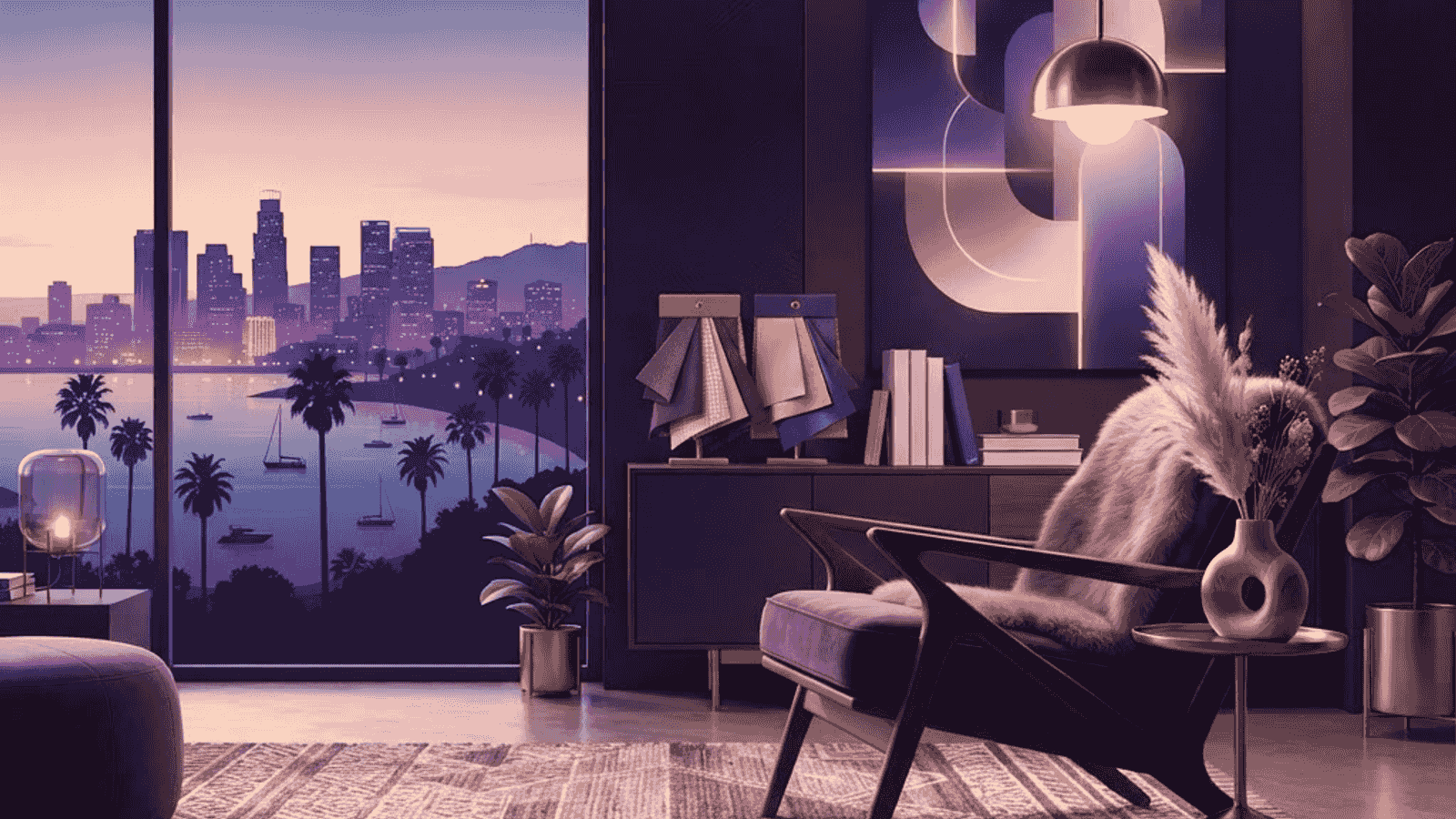
A City With Its Own Interior Language
Long Beach interiors do not look like Los Angeles interiors, and the difference is worth understanding before shopping. The city's housing stock leans heavily toward Craftsman bungalows, Spanish Colonial Revival duplexes, mid-century apartments, and converted downtown lofts. Rooms tend to be moderately sized with generous natural light, plaster walls, original hardwood, and architectural detail that already carries visual weight. Furnishing these spaces successfully means editing rather than filling.
Light is the other defining factor. Coastal daylight here is bright and slightly cool, and it flattens muddy colors while making clean tones and natural textures sing. Interiors that photograph well in this light typically rely on tactile materials, rattan, linen, oak, ceramic, wool, rather than high-gloss finishes, and they use saturated color as accent rather than field.
Scale discipline matters too. Many local apartments and bungalows have doorways and stairwells that will not accept oversized sectionals, and the good local retailers know this. They ask about room dimensions and access before selling a large piece, which is one of the clearest signals of a shop worth buying from.
The Top 10 Home Decor Brands and Retailers in Long Beach
1. Harbor & Oak Home is a design-forward furniture retailer focused on solid wood casegoods and upholstered pieces in restrained silhouettes. Their strength is scale-appropriate seating for smaller rooms, plus fabric selection guidance for households with pets and children.
2. Belmont Coastal Interiors specializes in a refined coastal aesthetic that avoids nautical cliche. Linen slipcovers, washed oak, woven pendants, and layered neutrals with sea-glass accents define the collection, and the team offers in-home styling consultations.
3. Retrograde Modern curates authentic and reproduction mid-century furnishings, a natural fit for the city's postwar apartments and Bixby Knolls ranch homes. Walnut credenzas, tapered-leg seating, sculptural lighting, and period ceramics anchor their inventory.
4. Fourth Street Vintage Collective operates as a multi-vendor marketplace of vintage and secondhand decor. Art, lamps, mirrors, textiles, and one-off case pieces from many eras make it the most efficient place in the city to find items nobody else will have.
5. Alamitos Textile House concentrates on soft goods. Handwoven rugs, linen bedding, custom drapery, cushions, and throws in natural fibers form the core, and they provide made-to-measure window treatment services with proper mounting advice.
6. Bixby Ceramic Studio is a local maker producing handmade pottery, vases, planters, dinnerware, and lighting components. Because pieces are produced in small batches, the glazes and forms vary slightly, which is precisely what keeps a shelf from looking mass-produced.
7. Signal Hill Lighting Gallery focuses on fixtures. Pendants, sconces, floor and table lamps, and shades are shown in working displays so buyers can judge output, color temperature, and glare rather than guessing from a catalog photograph.
8. Rose Park Plant & Vessel pairs indoor plants with the right containers. Their staff match species to actual light conditions, which prevents the common mistake of placing a light-hungry plant in a dim corner, and they carry planters scaled for apartment living.
9. Downtown Loft Supply serves converted industrial spaces with metal shelving, leather seating, reclaimed wood surfaces, large-scale art, and room dividers designed for open-plan interiors where zoning space is the central design problem.
10. Peninsula Art & Frame combines original local artwork with custom framing. Because framing choices strongly affect how art reads on a wall, having both under one roof helps buyers avoid mismatched matting and proportions.
Trends Shaping Home Decor
Warm minimalism continues to dominate, replacing the stark white interiors of the previous decade. Rooms still read as calm and uncluttered, but they achieve it through natural materials, layered neutrals, and visible texture rather than absence of color.
Provenance and longevity have become selling points. Buyers increasingly prefer solid wood over veneered particleboard, natural fiber rugs over synthetic, and repairable upholstery over disposable pieces. Secondhand and vintage shopping has shed any stigma and is now a mainstream sourcing strategy.
Support for local makers has strengthened considerably. Small-batch ceramics, hand-thrown lighting, locally milled furniture, and regional artwork give interiors specificity that catalog shopping cannot supply, and the shorter supply chain often means better quality per dollar.
Finally, lighting has been recognized as decor rather than infrastructure. Layered schemes combining ambient, task, and accent sources with warm color temperatures and dimming control do more for how a room feels than almost any furniture purchase.
How to Shop for Home Decor Well
Measure before you shop, and measure the path as well as the room. Note doorway widths, stair turns, elevator dimensions, and ceiling height. A sofa that fits the living room but not the hallway is a costly lesson.
Buy the anchor pieces first. A well-proportioned sofa, a properly sized rug, and correct lighting establish a room. Accessories layered onto a weak foundation never quite resolve.
Get the rug size right, since this is the most common error. In most living rooms the rug should extend under the front legs of all major seating, and undersized rugs make spaces feel smaller rather than larger.
Evaluate construction, not just appearance. Kiln-dried hardwood frames, eight-way hand-tied or sinuous spring suspension, high-resiliency foam with down wrap, and removable washable covers determine whether upholstery survives a decade.
Mix eras and price points deliberately. A vintage credenza next to a new sofa and a handmade ceramic lamp reads as a collected home; a single-catalog room reads as a showroom.
Finally, confirm delivery, assembly, and return terms before purchase, particularly for custom orders, which are usually non-returnable and can carry long lead times.
Final Thoughts
The best home decor sources in Long Beach share an understanding of the city's architecture, light, and room proportions. Whether the goal is furnishing a mid-century apartment, softening a downtown loft, or updating a century-old bungalow without erasing its character, combining a strong anchor purchase with vintage finds, local ceramics, considered lighting, and quality textiles produces interiors that feel personal and hold up over time.