
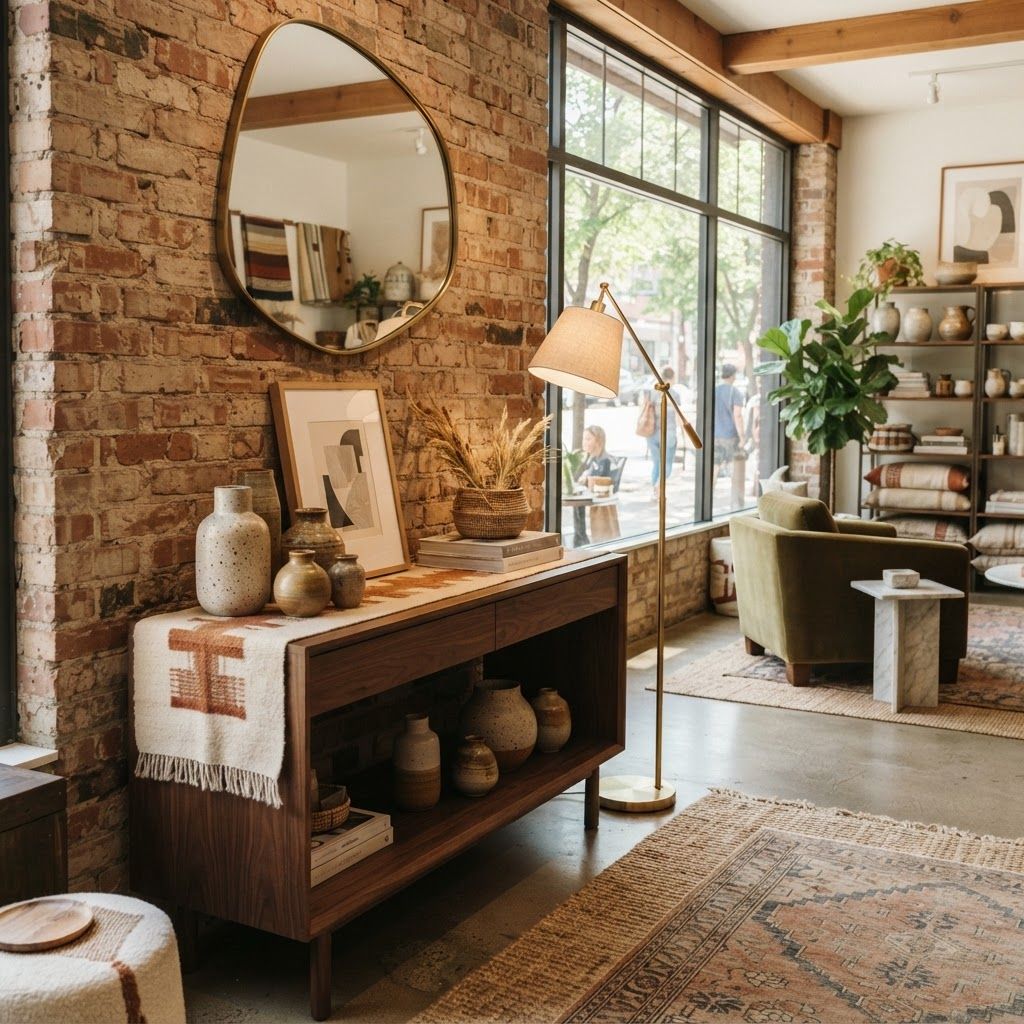
Decorating for Buffalo's Architecture
Few American cities give homeowners as much architectural character to work with. Buffalo holds significant Frank Lloyd Wright work at the Darwin Martin House, H.H. Richardson's monumental Richardsonian Romanesque complex, Louise Bethune's pioneering designs, and thousands of Victorian, Queen Anne, Arts and Crafts, and Colonial Revival homes across the Elmwood Village, Parkside, Allentown, and Central Park. That inheritance shapes local decorating instincts. Rooms tend to have generous ceiling heights, original woodwork, leaded glass, plaster crown detail, and tile fireplace surrounds, all of which reward furnishings with real material presence rather than lightweight, disposable pieces.
Climate influences the palette as much as architecture does. Buffalo winters are long and light levels stay low for months, which pushes local designers toward warm woods, layered textiles, wool and jute rugs, and lighting plans built on multiple lamps rather than a single overhead fixture. Deep jewel tones and saturated neutrals hold up better than cool, sparse minimalism in a house that spends half the year under gray skies.
The Local Design Movement
Buffalo's decor scene has been reshaped by a broader maker economy. Neighborhood retail districts along Elmwood Avenue, Hertel Avenue, and in Larkinville and the Cobblestone District support independent shops that mix vintage sourcing, small-batch ceramics, letterpress printing, and reclaimed-wood furniture. Salvage culture is genuinely strong here, driven by the volume of architectural material recovered from demolition. Homeowners routinely build rooms around a salvaged mantel, radiator cover, or set of original doors.
Ten Home Decor Brands and Retailers to Know
1. Buffalo Architectural Salvage and Buffalo ReUse-style operations supply original doors, hardware, mantels, lighting, and millwork recovered from local buildings, letting homeowners match period detail authentically.
2. Second Chic is a Buffalo favorite for curated consignment furniture and decor, offering quality pieces at a fraction of retail with steady inventory turnover.
3. Elmwood Home Furnishings serves the city's design-conscious core with upholstery, case goods, and accessories scaled for older homes and city lots.
4. Room on Hertel and similar independent design boutiques focus on modern furniture, lighting, and accessories with a strong editorial eye.
5. Raymour and Flanigan anchors the mainstream market with multiple Western New York showrooms, broad style range, and in-house delivery and design consultation.
6. Ethan Allen offers custom upholstery, finish selection, and complimentary design services, a common choice for homeowners furnishing a full living or dining room to last.
7. Buffalo Woodworks and local custom furniture makers build harvest tables, built-ins, and shelving from reclaimed regional lumber, ideal when standard sizing does not fit an older room.
8. Fern and Arrow-style plant and lifestyle shops pair indoor greenery with pottery, baskets, and textiles, addressing the very Buffalo need to bring life indoors through a long winter.
9. Terrapin Station and Buffalo's vintage and antique dealers along Hertel and Elmwood supply mid-century, Deco, and Victorian pieces that read as original rather than reproduced.
10. Buffalo Bespoke textile and ceramics makers selling through neighborhood markets and shops produce pillows, throws, stoneware, and wall pieces that give a room something no national catalog can.
Sourcing Strategically
Experienced Buffalo decorators mix tiers deliberately. Invest in the pieces that carry weight and get daily use: a well-built sofa with a hardwood frame and replaceable cushions, a dining table sized to the room, and real lighting. Save on the layers that change with taste, including pillows, art, and accessories. Buy rugs generously sized, since an undersized rug is the most common mistake in high-ceilinged older rooms. And measure stairwells and doorways before ordering, because a Buffalo double's staircase turn defeats many sectionals.
Working With Local Designers
Many Buffalo shops offer design consultation, either free with purchase or on an hourly basis. That service is most valuable at the planning stage, when decisions about paint, flooring, window treatments, and furniture layout still interact. Designers who work regularly in the city's older homes understand practical constraints that catalogs ignore: radiator placement limits furniture walls, plaster affects how paint reads, and original woodwork sets the undertone every other finish must respect.
Building a Room That Lasts
The strongest Buffalo interiors are not styled from a single source. They combine one or two substantial anchor pieces, something salvaged or vintage with genuine history, locally made textiles or ceramics for warmth, and lighting layered at three heights. Shop the city's independents alongside the larger showrooms, take the architecture seriously, and the result will feel specific to Buffalo rather than borrowed from anywhere else.