
A Manufacturing Region Built on Precision
Few American cities carry a manufacturing identity as specific as Rochester. The region's industrial base formed around optics, photographic systems, and precision instruments, disciplines that demand tolerances measured in fractions of a micron and process control that leaves nothing to chance. Even as the corporate landscape transformed, that capability stayed. Machinists, optical engineers, metrologists, and process technicians remained in the region and dispersed into hundreds of specialized companies.
The outcome is a manufacturing ecosystem where a single supply chain can be assembled almost entirely within a short drive: optical fabrication, thin film coating, precision machining, electronics assembly, injection molding, and test engineering. For product companies, this density reduces logistics friction and shortens development cycles considerably.
Core Manufacturing Capabilities in the Region
Optical fabrication is the signature capability, covering lens grinding and polishing, aspheric surfaces, prisms, windows, and specialty coatings. Precision machining supports aerospace, medical device, and industrial customers with tight tolerance components in challenging materials. Electronics manufacturing services provide circuit assembly, cable harnessing, and box build integration. Instrumentation and sensor production combines these disciplines into finished measurement systems.
Supporting services matter equally. Metrology laboratories, environmental testing, cleanroom assembly, and regulatory documentation capability allow local manufacturers to serve medical and defense customers with demanding qualification requirements.
Leading Hardware Manufacturers in Rochester
Optimax Systems is among the most respected precision optics manufacturers in the country, producing custom lenses and optical components for aerospace, defense, medical, and research applications. Its reputation rests on rapid prototyping combined with extreme accuracy.
Sydor Optics specializes in flat optical components, including windows, wafers, and substrates, serving semiconductor, display, and scientific instrumentation markets with high volume precision.
LighTopTech and photonics innovators represent the newer generation, commercializing advanced imaging modules developed from regional research in optical coherence and microscopy.
Carestream Health manufactures medical imaging systems and related hardware, sustaining a substantial engineering and production presence connected to the region's imaging legacy.
Ultralife Corporation, operating in the greater Rochester area, produces batteries and power systems for defense, medical, and industrial applications where reliability under harsh conditions is essential.
Transcat supports the ecosystem through calibration, test equipment distribution, and metrology services, functioning as critical infrastructure for manufacturers that must prove measurement traceability.
Baldwin Richardson and industrial contract producers illustrate the region's broader manufacturing depth beyond optics, applying disciplined process control across different product categories.
Precision contract machining firms throughout Monroe County provide computer controlled milling, turning, grinding, and electrical discharge machining, frequently holding aerospace and medical quality certifications.
Electronics contract manufacturers in the region deliver surface mount assembly, conformal coating, and functional testing, supporting both prototype runs and sustained production.
Custom instrumentation builders integrate optics, electronics, and mechanics into finished systems for laboratory, industrial inspection, and scientific customers, often working directly with engineering teams from concept through qualification.
Quality Systems and Certifications
Serious hardware buyers evaluate quality systems before capability lists. Rochester manufacturers commonly maintain internationally recognized quality management certification, with aerospace and medical suppliers holding additional industry specific approvals. These frameworks govern document control, traceability, corrective action, and supplier management.
For defense related work, additional requirements apply around export control and cybersecurity of technical data. Manufacturers that have invested in these controls open access to a customer base that others cannot serve, which has become a meaningful competitive dividing line in the region.
Trends Shaping Local Manufacturing
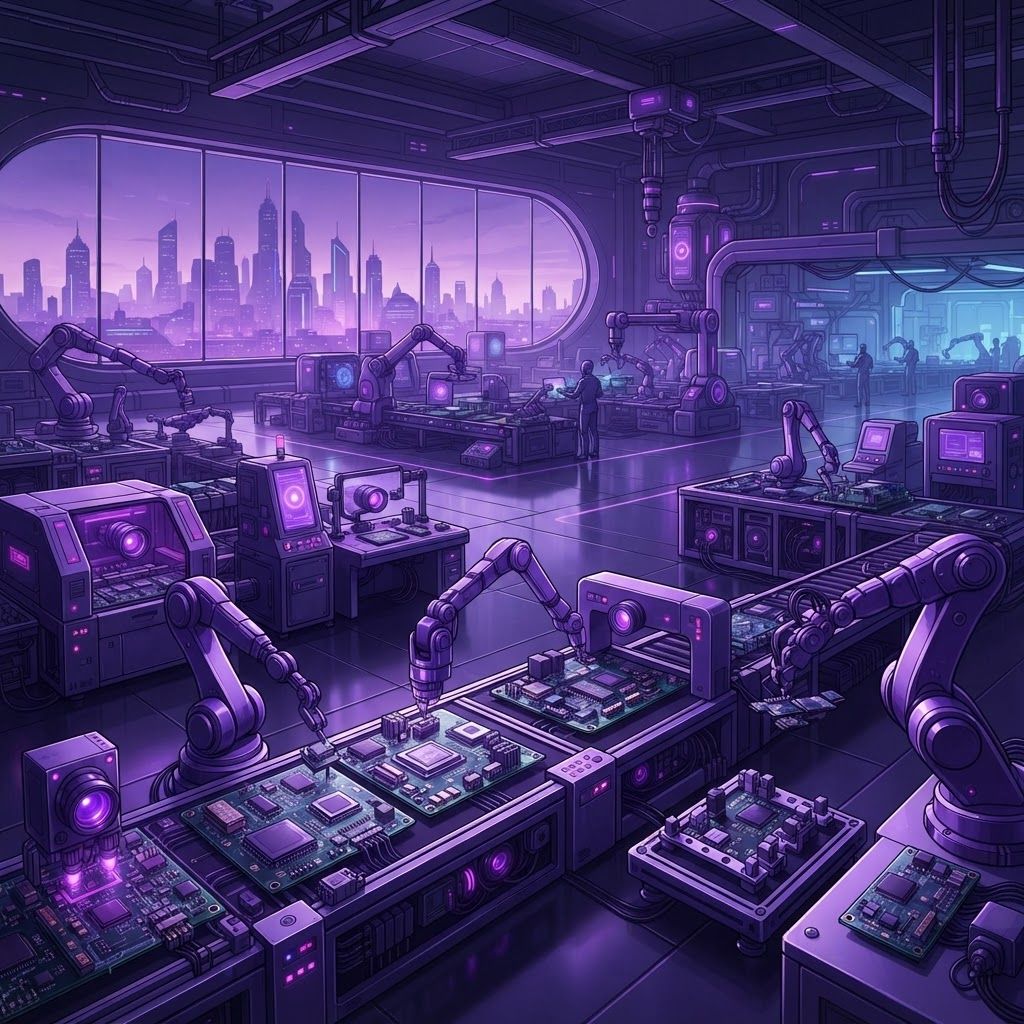
Automation adoption continues steadily, driven less by labor cost than by labor availability. Skilled machinists and optical technicians are scarce, so manufacturers deploy robotic loading, automated inspection, and machine monitoring to extend the productivity of experienced staff rather than replace them.
Digital thread initiatives are advancing. Connecting design models, work instructions, machine programs, and inspection results creates traceability that customers increasingly demand and that speeds root cause analysis when deviations occur.
Reshoring interest has provided genuine tailwinds. Supply chain disruptions prompted many product companies to reconsider distant sourcing, and Rochester's combination of engineering support and production capability appeals to firms that value responsiveness over lowest unit cost.
Sustainability requirements are also rising, with customers asking about energy intensity, waste streams, and material sourcing as part of supplier evaluation.
Working Effectively With a Rochester Manufacturer
Engage engineering early. Local manufacturers consistently report that involving them during design produces better outcomes than receiving finished drawings, because small geometry changes can dramatically reduce cost or improve yield.
Be explicit about tolerances that matter. Over specifying every dimension inflates cost without improving function. Strong suppliers will ask which features are critical and propose inspection plans accordingly.
Discuss volume expectations honestly. Processes optimized for prototype quantities differ from those suited to sustained production, and transitioning between them requires planning rather than assumption.
Finally, evaluate communication. Manufacturing relationships last years, and the ability to raise problems early, share data transparently, and resolve nonconformance constructively matters more over time than an initial quotation difference.
Outlook
Rochester's hardware manufacturing sector faces workforce succession as experienced technicians retire, but the region has responded with apprenticeships, technical education partnerships, and automation investment. The underlying advantage remains intact: an unusually deep concentration of precision capability with the engineering culture required to use it well. For companies developing physical products where accuracy matters, few American regions offer a comparable supplier base within such a compact geography.