
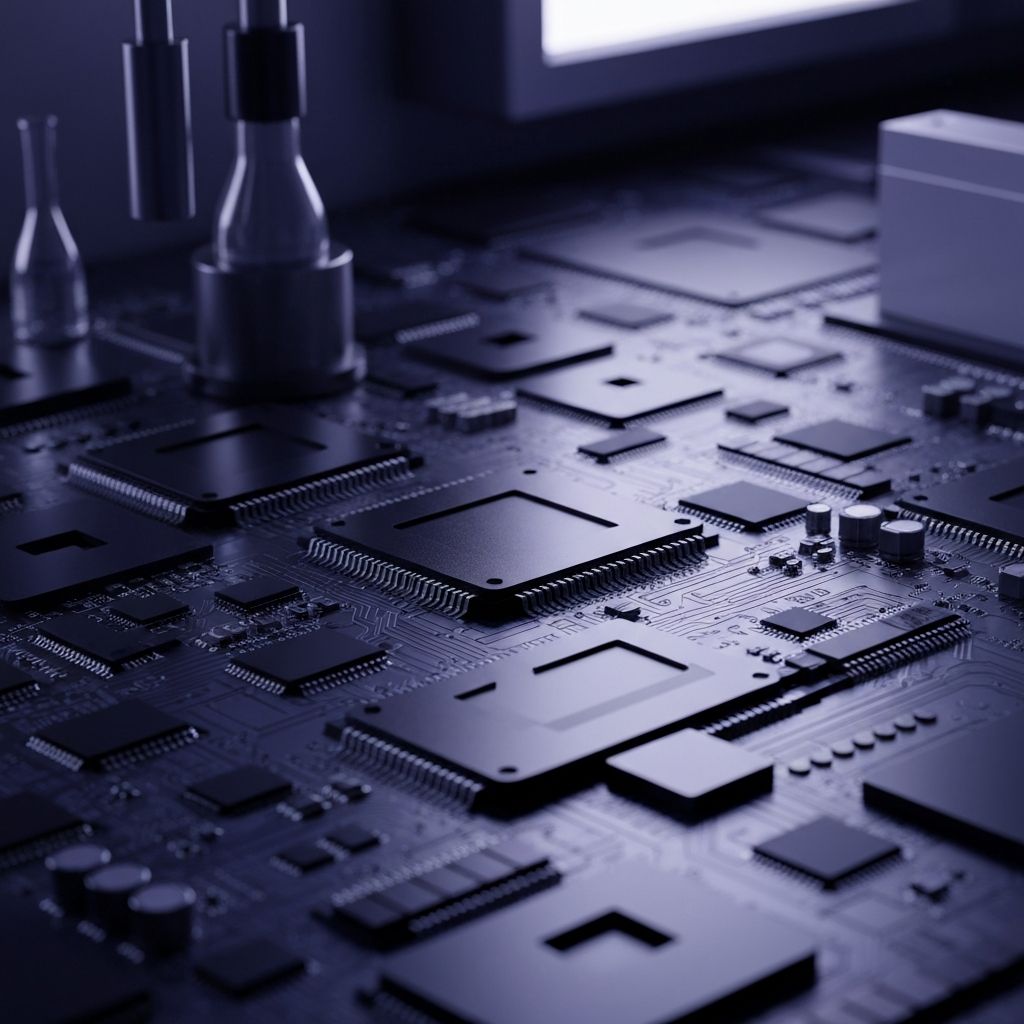
The Philippines: A Hub for Hardware Manufacturing
The Philippines has long been a key player in global electronics manufacturing. Electronics and semiconductors consistently rank among the country's top exports, contributing significantly to its industrial output. Strategic location, skilled labor, and government-backed economic zones have attracted both multinational giants and homegrown firms to set up advanced manufacturing facilities. From semiconductors and circuit boards to consumer electronics and industrial equipment, Filipino hardware manufacturers serve clients across the globe.
Why Hardware Manufacturing Thrives Here
The country's robust supply chain network, presence of special economic zones, and engineering talent pool have created favorable conditions for hardware production. The Philippine Economic Zone Authority offers tax incentives and streamlined operations for export-oriented manufacturers. Combined with strong English proficiency and a culture of quality, these factors have positioned the Philippines as a competitive manufacturing destination in Asia.
Top 10 Hardware Manufacturers
1. Integrated Microelectronics Inc. (IMI) — A subsidiary of Ayala Corporation, IMI is a global provider of electronics manufacturing services, serving automotive, industrial, and aerospace clients.
2. Ionics EMS — A homegrown electronics manufacturing services company specializing in printed circuit board assembly, box build, and product development.
3. Cirtek Holdings Philippines — Focused on semiconductor packaging and testing, Cirtek serves customers in telecommunications, automotive, and consumer electronics.
4. Texas Instruments Philippines — Operates one of the country's largest semiconductor assembly and test facilities, producing chips used worldwide.
5. ON Semiconductor Philippines — A major employer with state-of-the-art facilities focusing on power management and analog devices.
6. Analog Devices Philippines — Produces high-performance analog, mixed-signal, and DSP chips for global markets.
7. Murata Manufacturing Philippines — Specializes in electronic components like ceramic capacitors and filters, supporting consumer electronics globally.
8. EMS Components Assembly Inc. — A Filipino EMS provider serving the medical, industrial, and telecommunications sectors with quality assemblies.
9. Fastech Synergy Philippines — Offers contract manufacturing for semiconductors, industrial sensors, and precision electromechanical assemblies.
10. Lexmark Manufacturing Philippines — A major producer of printers, imaging products, and related hardware components serving global markets.
Key Products and Services
The breadth of products coming out of Philippine factories is impressive. Manufacturers produce semiconductors, printed circuit boards, consumer electronics, automotive electronics, medical devices, telecommunications equipment, and industrial controls. Many offer end-to-end services from design and prototyping to high-volume manufacturing and after-sales support.
Quality and Certification Standards
Leading manufacturers adhere to international standards such as ISO 9001, IATF 16949 for automotive, ISO 13485 for medical devices, and IPC standards for electronics. These certifications ensure that products meet stringent quality, reliability, and safety requirements demanded by global customers.
Trends Shaping Hardware Manufacturing
Industry 4.0 technologies—including IoT-enabled factories, robotics, and AI-driven quality control—are transforming production lines. Sustainability is also emerging as a key priority, with manufacturers investing in energy efficiency, waste reduction, and responsible sourcing. Additionally, demand for electric vehicle components, 5G hardware, and AI-related chips is fueling new growth areas.
Workforce and Innovation
The Philippines boasts a highly skilled workforce of engineers, technicians, and operators trained in modern manufacturing techniques. Universities and technical schools collaborate closely with industry players, producing graduates ready to contribute to advanced production environments. Innovation centers and R&D facilities are also expanding, allowing Filipino firms to move beyond contract manufacturing into product design and development.
Choosing a Hardware Partner
When selecting a manufacturer, businesses should consider technical capabilities, certifications, supply chain resilience, scalability, and intellectual property protection. Site visits, customer references, and pilot runs are valuable steps in the evaluation process. Long-term partnerships often deliver the best outcomes, especially for complex or high-volume products.
Conclusion
The Philippine hardware manufacturing industry is a powerhouse that combines technical excellence, scalable capacity, and global market reach. The companies featured above represent the best of the country's manufacturing capabilities, delivering high-quality products that power industries worldwide. As the global hardware landscape continues to evolve, these manufacturers will remain essential partners for innovation and growth.