
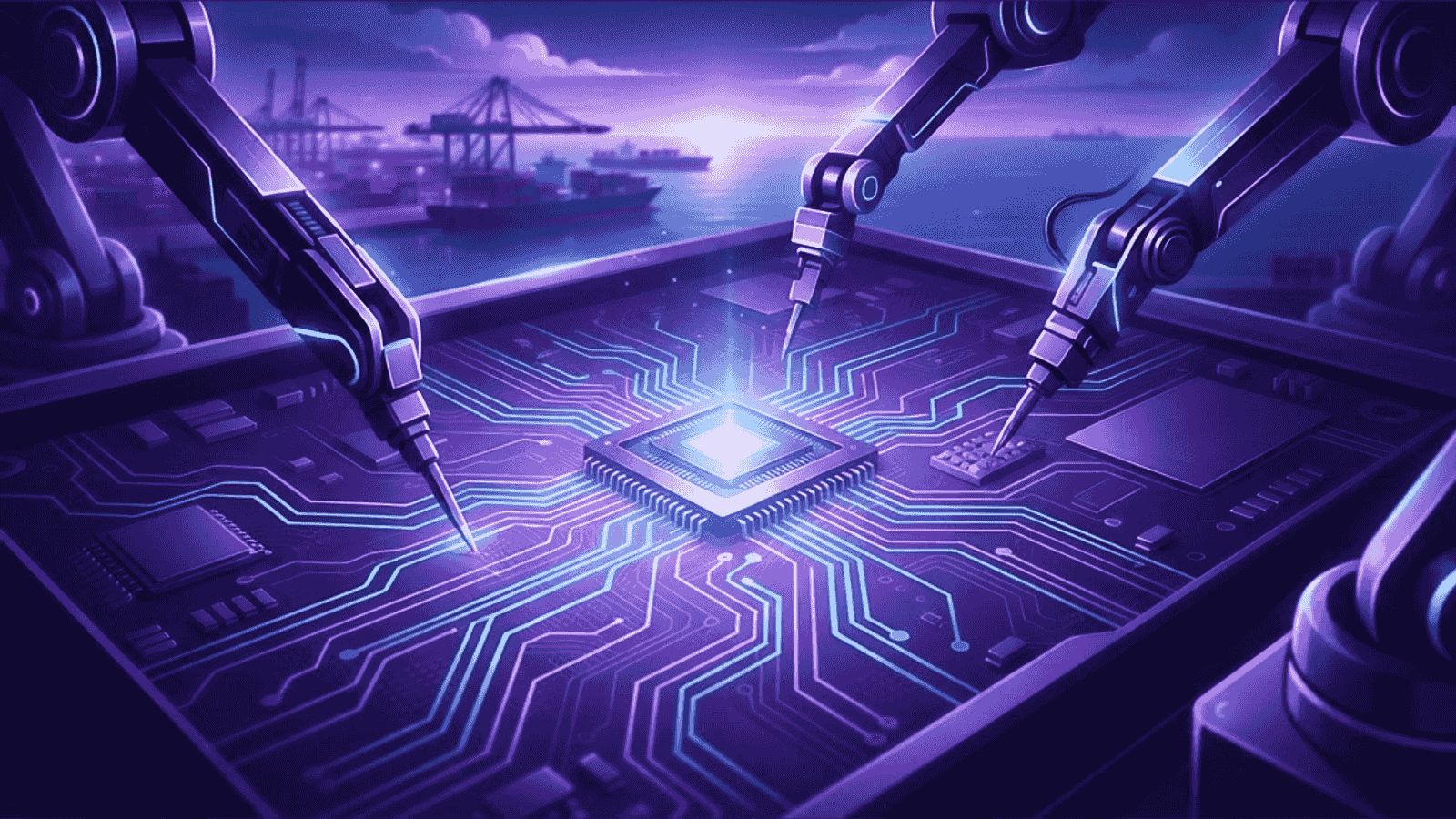
A Manufacturing City That Never Stopped Building
Long Beach has been making things for more than a century. Shipbuilding, aircraft production, oil equipment, and defense manufacturing shaped the city's economy and its workforce, and while the specific products have changed, the underlying capability never disappeared. Today the city and its immediate surroundings host a dense network of precision machinists, electronics assemblers, industrial equipment builders, and specialty fabricators serving aerospace, marine, energy, medical, and technology customers.
What makes the local hardware ecosystem distinctive is its concentration of demanding requirements. Aerospace customers need documented traceability and tight tolerances. Marine and port equipment must survive salt air, constant vibration, and continuous duty cycles. Medical device work demands validated processes. Energy sector components face pressure, heat, and corrosive conditions. Manufacturers who can satisfy those constraints develop capabilities that transfer well across industries, which is why many local firms serve several sectors simultaneously.
Understanding the Hardware Categories
Local manufacturers fall into recognizable groups. Precision machine shops produce metal components to tight tolerances, often with certifications for aerospace and defense work. Electronics manufacturing services handle circuit board assembly, cable harnesses, box builds, and testing. Industrial equipment builders design and fabricate specialized machinery, material handling systems, and marine equipment. Product development firms take concepts through design, prototyping, and production transfer. And specialty fabricators focus on sheet metal, composites, enclosures, or welded structures.
The Ten Leading Hardware Manufacturers
1. Ceroa Precision Manufacturing
Ceroa Precision Manufacturing operates a multi axis machining and inspection facility serving aerospace, medical, and energy customers. The firm maintains rigorous quality documentation, full material traceability, and coordinate measuring inspection, and it is frequently chosen for components where a dimensional failure would be catastrophic. Engineering support during design for manufacturability review is included rather than billed separately.
2. Harbor Marine Systems
Harbor Marine Systems designs and builds equipment for vessels, terminals, and waterfront infrastructure. Products include hydraulic systems, mooring equipment, deck machinery, and corrosion resistant assemblies. Decades of experience with salt water environments inform material selection and coating specifications that dramatically extend service life.
3. Aerodyne Components Group
Aerodyne Components Group produces structural and mechanical components for aerospace and defense programs. The company handles controlled technical data appropriately, maintains the process approvals such work requires, and specializes in low to medium volume production runs where setup efficiency and first article accuracy determine profitability.
4. Signal Hill Electronics Assembly
Signal Hill Electronics Assembly provides circuit board assembly, cable and harness fabrication, and complete box builds. The firm supports prototype through production volumes and offers functional testing and environmental screening. Hardware startups particularly value its willingness to take on small initial runs and scale gradually.
5. Pacific Coast Industrial Works
Pacific Coast Industrial Works builds custom machinery and automation systems for manufacturers, food processors, and logistics operators. Projects range from conveyor and sortation systems to purpose built assembly fixtures and robotic work cells. Mechanical design, controls engineering, and installation are handled under one roof.
6. Bluewater Medical Devices
Bluewater Medical Devices manufactures components and assemblies for medical equipment under validated processes with full documentation. Cleanroom assembly, biocompatible material handling, and design history file support are core capabilities. The firm's regulatory familiarity substantially reduces the burden on device developers.
7. Catalina Composites
Catalina Composites fabricates carbon fiber and advanced composite structures for marine, aerospace, motorsport, and industrial customers. Strengths include tooling design, vacuum infusion, and structural bonding, along with finish quality suitable for visible applications. Weight critical projects are a natural fit.
8. Belmont Sheet Metal and Enclosures
Belmont Sheet Metal and Enclosures produces precision sheet metal work, custom enclosures, panels, brackets, and welded assemblies with in house finishing. Fast turnaround on prototypes combined with production capacity makes it a frequent partner for electronics and equipment companies needing housings.
9. Anchor Line Product Development
Anchor Line Product Development takes hardware concepts from sketch to manufacturable product, offering industrial design, mechanical engineering, electronics design, rapid prototyping, and supply chain setup. The firm emphasizes early cost modeling so that design decisions account for production economics rather than discovering them late.
10. Long Beach Energy Equipment
Long Beach Energy Equipment manufactures components and systems for energy infrastructure, including pressure containing assemblies, valve components, instrumentation skids, and increasingly equipment for electrification and renewable installations. Material certification and pressure testing capabilities support demanding specifications.
Trends Reshaping Local Manufacturing
Supply chain reshoring has meaningfully increased inquiries at domestic shops, as companies reassess the true cost of long lead times and distant suppliers. Automation adoption is accelerating among small manufacturers, driven by labor availability and by collaborative robots that no longer require dedicated engineering teams to deploy. Additive manufacturing has found a durable niche in tooling, fixtures, and low volume parts rather than replacing conventional methods. Digital thread practices connecting design, production, and inspection data are spreading, improving traceability and reducing rework. And sustainability requirements are influencing material choices, energy use, and waste handling across the sector.
How to Select a Manufacturing Partner
Visit the facility if at all possible, since floor organization and equipment condition reveal a great deal. Confirm the certifications relevant to your industry and ask to see the quality manual. Discuss capacity honestly, including what happens when a larger customer's order competes with yours. Request first article inspection procedures and understand how nonconformances are handled. Clarify tooling ownership and where intellectual property boundaries lie. Ask about design for manufacturability input, because a supplier who suggests changes early usually saves far more than the price difference. And build relationships before you need them urgently, since capacity goes to trusted customers first.
Final Thoughts
Long Beach's hardware manufacturers represent an increasingly valuable asset as companies rediscover the advantages of nearby production. Short feedback loops, in person problem solving, and shared quality expectations are difficult to replicate across an ocean. For product companies of any size, the depth of capability within a short drive of the harbor deserves serious attention.