
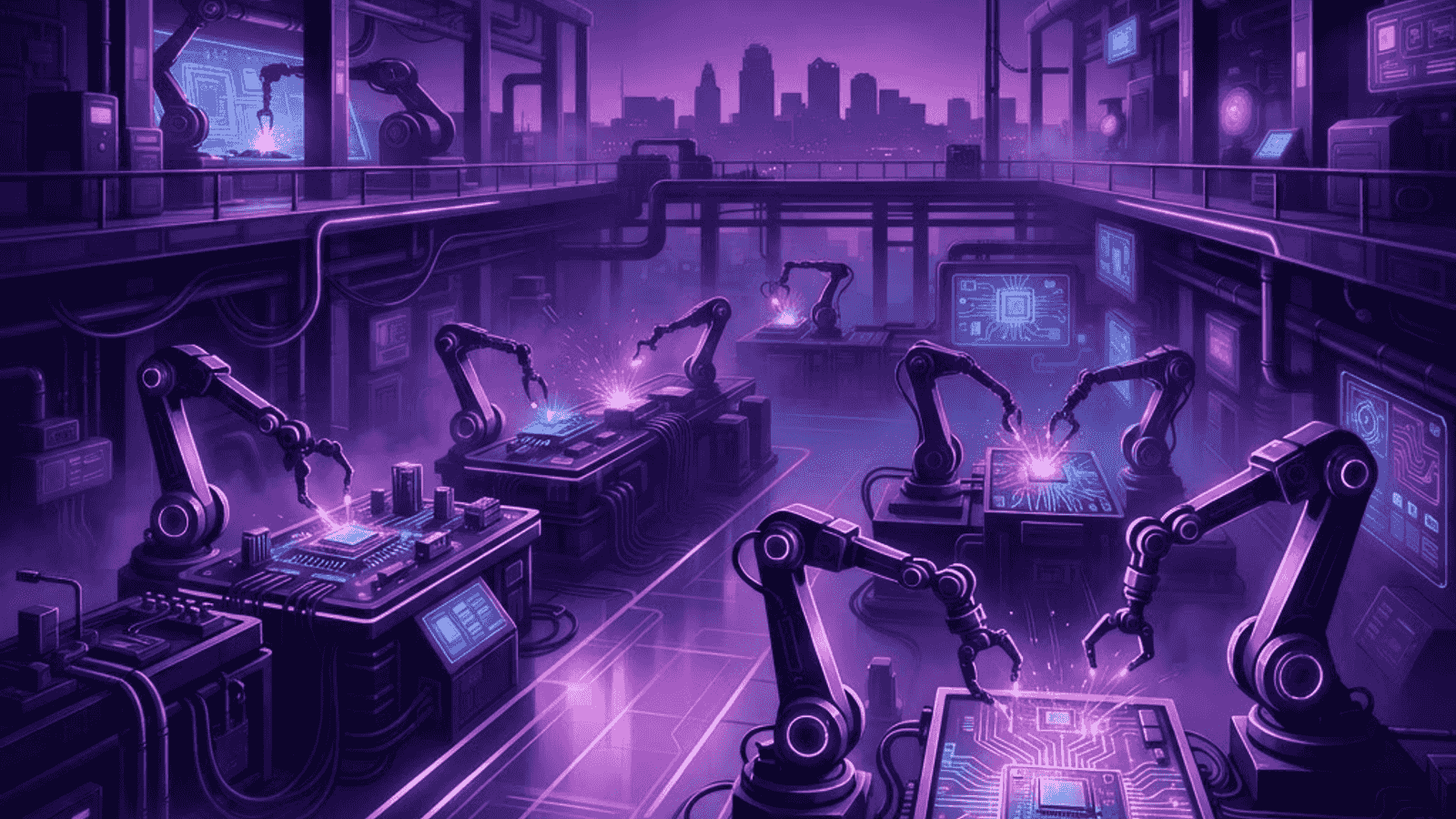
Kansas City as a Manufacturing Center
Manufacturing has been foundational to Kansas City since the stockyards and rail yards defined its early economy, and that industrial DNA never disappeared. Today the metro supports an exceptionally diverse hardware manufacturing base, from automotive assembly and aerospace machining to electronics production and agricultural equipment fabrication. The region's central geography means finished goods can reach most of the continental United States within two days by truck, which continues to attract production investment.
Equally important is the workforce. Generations of skilled machinists, welders, tool and die makers, and industrial engineers have built a labor pool that newer manufacturing regions struggle to replicate. Local technical colleges and apprenticeship programs continue feeding that pipeline.
How This List Was Assembled
Selection considered production capability, quality certification, engineering support, industry reputation, capital investment in modern equipment, and importance to the regional economy. Both large anchor manufacturers and specialized precision shops are represented.
1. Ford Kansas City Assembly Plant
Located in Claycomo, this facility is among the largest automotive assembly operations in North America and a cornerstone of the regional industrial economy. It produces high-volume trucks and commercial vans, supporting an extensive network of local suppliers. Its scale, automation investment, and lean manufacturing discipline set standards that ripple throughout the metro supply base.
2. GM Fairfax Assembly Plant
The Fairfax facility in Kansas City, Kansas has manufactured vehicles for decades and has undergone significant retooling for electrified production. Its stamping, body shop, paint, and general assembly operations represent world-class process engineering. The plant's supplier requirements have elevated quality systems across dozens of regional partners.
3. Honeywell Federal Manufacturing and Technologies
Operating the National Security Campus in south Kansas City, this organization performs some of the most demanding precision manufacturing in the country. Work spans advanced electronics, engineered materials, and non-nuclear components requiring extraordinary tolerances and traceability. Its presence has cultivated an unusually deep local competency in high-reliability production and metrology.
4. Garmin
Headquartered in Olathe, Garmin designs and manufactures navigation, aviation, marine, fitness, and outdoor electronics. What distinguishes the company is vertical integration, with substantial engineering and production capability under one roof. Its aviation avionics work in particular demands rigorous certification discipline, and the company is widely considered the flagship hardware technology employer in the metro.
5. Bayer Crop Science and Agricultural Equipment Manufacturers
The broader agricultural technology cluster around Kansas City includes significant equipment and systems manufacturing. Operations here produce application equipment, sensing hardware, and processing machinery serving row crop and livestock agriculture. Proximity to the Animal Health Corridor gives the region unique credibility in agricultural hardware.
6. Precision Machining and Contract Manufacturing Shops
Dozens of established precision machine shops across the metro provide computer numerical control milling, turning, grinding, and multi-axis machining. Many hold aerospace and medical quality certifications and serve as tier two and tier three suppliers to national programs. Their combination of engineering support and rapid turnaround makes them essential to regional product development.
7. Electronics Contract Manufacturers
Kansas City hosts several electronics manufacturing services providers offering surface mount assembly, through-hole soldering, cable harness fabrication, box build integration, and functional testing. These firms typically serve industrial controls, medical devices, and telecommunications customers. Their value proposition centers on domestic supply chain resilience and design for manufacturability feedback.
8. Metal Fabrication and Structural Manufacturers
Heavy fabrication remains a regional strength, encompassing laser cutting, press brake forming, robotic welding, powder coating, and large weldment assembly. These operations supply construction equipment, material handling systems, and energy infrastructure. Investment in automation has allowed many to compete effectively against offshore alternatives.
9. Plastics, Injection Molding, and Tooling Companies
The metro supports a mature plastics manufacturing sector including injection molding, thermoforming, extrusion, and in-house mold building. Tooling expertise is particularly valuable, since local mold makers shorten development cycles significantly compared to overseas tooling sources. Packaging, consumer products, and automotive interiors are common end markets.
10. Emerging Additive Manufacturing Providers
Additive manufacturing has moved beyond prototyping in Kansas City, with providers now delivering production polymer and metal parts, tooling inserts, and complex geometries impossible to machine conventionally. These companies frequently partner with traditional shops to offer hybrid production strategies, which is where the technology delivers its strongest economics.
Trends Reshaping Regional Manufacturing
Reshoring continues to drive inquiry volume across the metro as companies reassess supply chain risk. Automation and collaborative robotics are being adopted aggressively, less to reduce headcount than to offset persistent skilled labor shortages. Industrial internet of things instrumentation is spreading rapidly, giving plant managers real-time visibility into throughput, downtime, and quality. Sustainability requirements from large customers are also pushing energy monitoring and material efficiency initiatives deeper into the supply base.
Selecting a Manufacturing Partner
Match the supplier to your volume and tolerance requirements rather than defaulting to the largest available shop. Verify quality certifications relevant to your industry, tour the facility if possible, and evaluate engineering responsiveness during the quoting process, because that behavior predicts how problems will be handled later. Discuss capacity honestly, understand tooling ownership terms, and clarify inspection and documentation expectations before the first production order.
Final Thoughts
Kansas City offers a rare combination of large-scale assembly capability, high-reliability precision manufacturing, and a dense network of specialized suppliers, all supported by exceptional logistics access. For companies bringing physical products to market, the metro deserves serious consideration as both a production location and a sourcing region.