
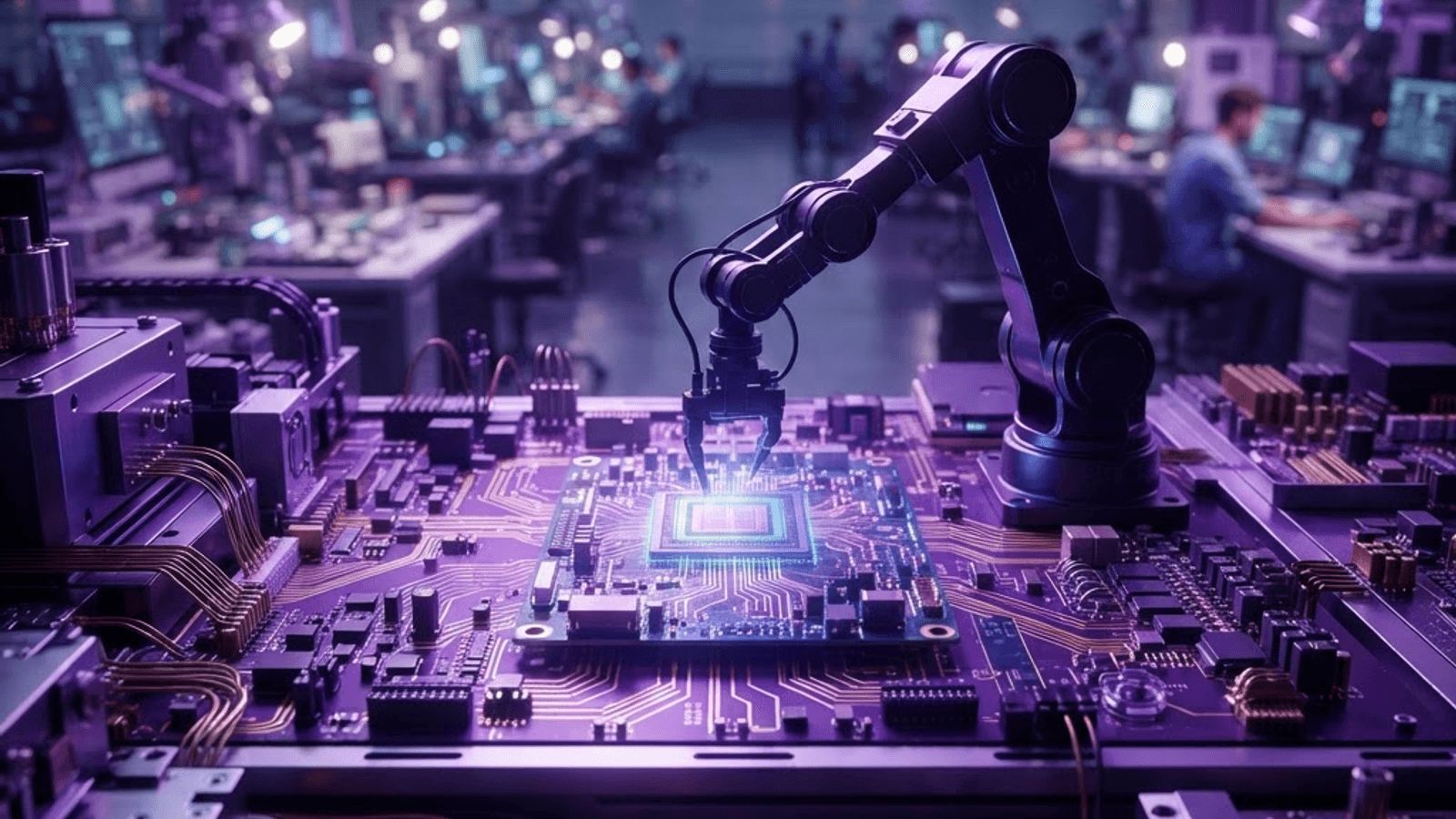
An Industrial Heritage Turned Toward Precision
Huntington's relationship with manufacturing runs deep. Rail, river, and highway access made it a natural production center, and generations of skilled trades built an institutional knowledge base that persists in the region's workforce. What has changed is the nature of the output. Where the emphasis once fell almost entirely on heavy fabrication and rail equipment, today the strongest growth lies in precision machining, electronic assembly, industrial control systems, medical and laboratory equipment, and specialized components produced in moderate volumes for demanding customers.
This shift plays to a genuine regional advantage. Mid-volume, high-specification manufacturing rewards proximity, communication, and craftsmanship far more than it rewards the lowest possible unit cost. Companies that need engineering collaboration during production, rapid iteration on a design, or documented quality control for regulated markets often find a domestic partner in a city like Huntington more economical overall than a distant supplier with a cheaper quoted price.
What Separates a Strong Manufacturing Partner
Quality systems come first. Certification to recognized standards indicates that processes are documented, measured, and auditable rather than dependent on individual memory. For regulated products, this is non-negotiable. Second is engineering support: a manufacturer that can review your design for producibility will save you far more than one that simply builds what you send and invoices for the resulting scrap.
Third is transparency about capacity and lead time. A partner who honestly says a job will take ten weeks is more valuable than one who promises six and delivers twelve. Fourth is supply chain resilience, including documented second sources for critical inputs. Finally, consider communication. Hardware programs generate constant small decisions, and a responsive account engineer materially affects the outcome.
The Ten Leading Hardware Manufacturers in Huntington
1. Ohio Valley Precision Manufacturing
The most versatile operation in the region, Ohio Valley Precision Manufacturing runs multi-axis machining, turning, and grinding for tight-tolerance metal components. Aerospace, energy, and medical device customers form the core of its business, supported by an in-house metrology lab and full material traceability. Its engineering team is known for producibility reviews that routinely reduce part cost before the first chip is cut.
2. Tri-State Electronics Assembly
A contract electronics manufacturer handling surface-mount and through-hole assembly, Tri-State Electronics Assembly serves industrial controls, instrumentation, and equipment builders. Automated optical inspection, functional testing, conformal coating, and box build services allow customers to source a finished product rather than a bare board. The firm's strength is low-to-mid volume work where flexibility outweighs scale.
3. Marshall Instrument Works
Producing laboratory and scientific instrumentation, Marshall Instrument Works builds analytical equipment, test fixtures, and custom research apparatus. Because much of its output is effectively one of a kind, the company excels at translating a researcher's functional requirement into a manufacturable, calibrated, documented instrument.
4. Guyandotte Industrial Controls
This manufacturer builds control panels, motor control centers, automation enclosures, and switchgear assemblies for plants and utilities. Guyandotte Industrial Controls handles design, wiring, labeling, and factory acceptance testing to applicable electrical codes, and its documentation packages are notably thorough, which shortens commissioning considerably on site.
5. River City Metal Fabrication
Serving customers who need sheet metal and structural work, River City Metal Fabrication provides laser cutting, forming, welding, and finishing. Enclosures, frames, brackets, guarding, and weldments are routine output. The company's rapid quoting and short-run capability make it a common choice for prototype and bridge production before higher-volume tooling is justified.
6. Appalachian Medical Devices
Operating under quality systems appropriate to regulated production, Appalachian Medical Devices manufactures components and subassemblies for medical equipment makers. Cleanroom assembly, validated processes, sterilization coordination, and full lot traceability define its operations. Customers value the firm's willingness to support design history documentation rather than treating compliance as the client's problem alone.
7. Cabell Plastics and Molding
Cabell Plastics and Molding produces injection molded parts, thermoformed components, and machined plastics. In-house tooling capability allows the company to iterate mold design quickly, and material expertise helps customers select resins that meet mechanical, chemical, and regulatory requirements without unnecessary cost.
8. Heritage Rail and Heavy Equipment
Continuing the region's industrial tradition, Heritage Rail and Heavy Equipment manufactures and rebuilds heavy components for rail, mining, and material handling applications. Large-envelope machining, heavy welding, and field service capability distinguish the operation. Rebuild and refurbishment work has grown substantially as customers extend asset life rather than replace outright.
9. Bluefield Cable and Wire Harness
Specializing in custom cable assemblies, wire harnesses, and connector solutions, Bluefield Cable and Wire Harness serves equipment manufacturers who need reliability in demanding environments. The company handles crimping, overmolding, continuity testing, and documentation, and its willingness to take on small quantities has made it a durable partner for niche equipment builders.
10. Summit Point Prototype Systems
The fastest-moving operation on the list, Summit Point Prototype Systems combines additive manufacturing, CNC machining, and rapid electronics assembly to turn concepts into functional hardware quickly. Product development teams and startups use it for iteration before committing to production tooling, and its engineers are candid about which prototype methods will and will not translate to volume.
Forces Shaping Regional Manufacturing
Reshoring pressure has been the most significant tailwind, as customers reassess the true cost of distant supply chains after years of disruption. Automation adoption is rising as well, but in this market it typically supplements a skilled workforce rather than replacing it, since mid-volume work resists full automation. Workforce development has become a strategic priority, with apprenticeship and technical training partnerships now common. Finally, customers increasingly demand digital traceability, expecting serialized records and inspection data delivered with the shipment.
How to Approach a New Supplier
Visit the floor before committing. Ask to see the quality system in practice, not just the certificate. Bring a real drawing and request a producibility review as part of the quoting process. Discuss capacity honestly, including what happens if your volume triples. Start with a modest first order and evaluate not only the parts but the communication around them. Huntington's manufacturers compete on reliability and collaboration, and the companies above have sustained long customer relationships precisely because they deliver both.