
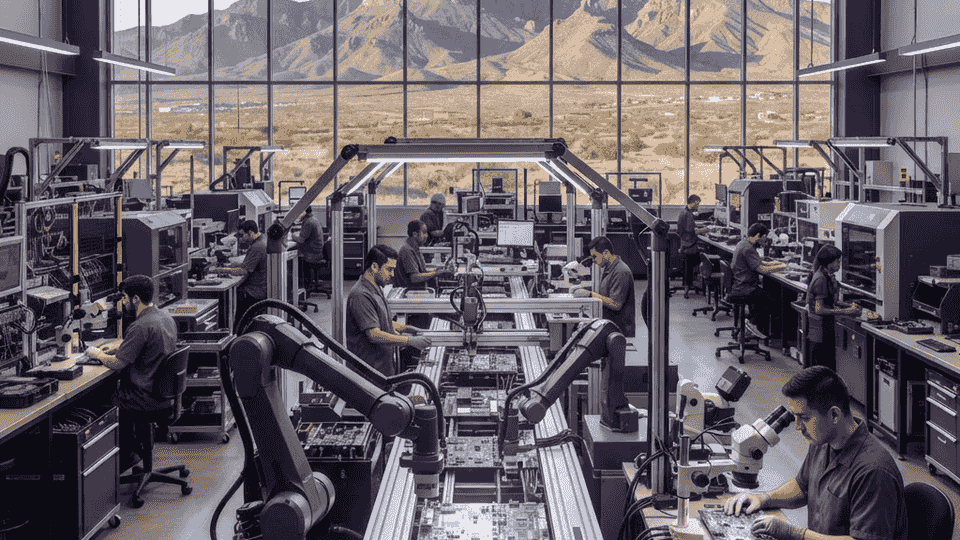
El Paso's Manufacturing Advantage
El Paso has long been a center of manufacturing, and its position on the border with Mexico gives it a unique advantage in hardware production. The region's integrated manufacturing ecosystem, spanning both sides of the border, allows companies to combine skilled labor, efficient logistics, and access to global supply chains. Hardware manufacturers here produce everything from electronic components and circuit boards to industrial equipment and consumer products. This deep manufacturing heritage, paired with modern facilities, makes El Paso an appealing home for businesses that need reliable, cost-effective production.
What Local Hardware Manufacturers Produce
The hardware manufacturers of El Paso serve a wide array of industries. Some specialize in electronics assembly, building printed circuit boards and populating them with components for use in devices across sectors. Others focus on industrial machinery, precision metal parts, and custom fabrication. Contract manufacturers handle production for companies that design products but lack their own factories, offering everything from prototyping to full-scale runs. This diversity means businesses can often find a local partner capable of turning designs into finished, market-ready hardware.
The Value of Cross-Border Production
One of El Paso's greatest strengths is its cross-border manufacturing model, often described as twin-plant or shelter operations. This arrangement lets companies conduct capital-intensive or specialized work on the U.S. side while leveraging manufacturing capacity across the border, all coordinated seamlessly. The result is a balance of quality, cost efficiency, and proximity to the U.S. market. For hardware companies, this model reduces shipping times and costs compared to overseas production while maintaining competitive pricing, making the region especially attractive for nearshoring.
Quality, Precision, and Standards
Reputable hardware manufacturers in El Paso prioritize quality and precision. They invest in modern equipment, from automated assembly lines to advanced testing systems, ensuring products meet exacting specifications. Many hold certifications demonstrating adherence to international quality and safety standards, which is essential for industries such as medical devices, automotive, and aerospace. Rigorous inspection and testing throughout production catch defects early, protecting both the manufacturer's reputation and the client's brand. This commitment to quality distinguishes the region's leading producers.
Trends Shaping Hardware Manufacturing
The hardware manufacturing sector is evolving alongside broader industry shifts. Automation and robotics are increasing efficiency and consistency, while smart-factory technologies use sensors and data to optimize operations in real time. Nearshoring has gained momentum as companies seek to shorten supply chains and reduce dependence on distant suppliers, benefiting border regions like El Paso. Sustainability is also rising in importance, with manufacturers adopting energy-efficient processes and responsible materials sourcing. These trends position El Paso's manufacturers to compete in a changing global market.
Choosing a Hardware Manufacturing Partner
Selecting a hardware manufacturer is a critical decision that affects product quality, cost, and time to market. Evaluate a manufacturer's experience with products similar to yours and review their certifications and quality processes. Assess their capacity to scale from prototypes to full production and their ability to meet your timelines. Communication and transparency are vital, especially when coordinating complex, cross-border operations. A strong partner will collaborate closely, offering guidance on design for manufacturability and helping you bring a reliable product to market efficiently.
From Prototype to Production
A capable manufacturer should support the transition from an engineering sample to a repeatable product. Early design reviews can simplify assembly, reduce part counts, improve test access, and identify components with long lead times. Small pilot runs then verify tooling, work instructions, packaging, and inspection criteria before significant inventory is committed. Buyers should ask how engineering changes are documented and how nonconforming parts are contained. These details determine whether production remains stable as volume rises and whether problems can be traced to their source.
Supply-Chain Resilience and Total Cost
Unit price is only one element of manufacturing cost. Freight, duties, inventory, quality failures, communication delays, and emergency expedites can erase the apparent savings of a distant supplier. El Paso's proximity to major transportation corridors and cross-border capacity can shorten replenishment cycles and make factory visits practical. Businesses should evaluate alternate sources for critical components and understand how a partner responds to shortages. A transparent manufacturer will discuss risks openly, maintain useful inventory visibility, and collaborate on substitutions rather than waiting until a disruption stops production.
Making a Confident Choice
Before committing, compare several candidates using the same criteria and record the reasons behind the decision. Look for clear communication, realistic promises, transparent pricing, and evidence of dependable work. Local reputation can add useful context, but the best choice is the organization whose capabilities fit your particular priorities. A thoughtful evaluation creates better expectations on both sides and lays the groundwork for a satisfying, productive relationship.
Conclusion
El Paso's manufacturing legacy and cross-border position make it a compelling location for hardware production. The region's leading manufacturers offer skilled labor, modern facilities, and integrated supply chains that balance quality with cost efficiency. For businesses seeking a dependable partner to build electronics, components, or industrial products, El Paso's hardware manufacturers provide the expertise and strategic advantages needed to succeed in a competitive global economy.