
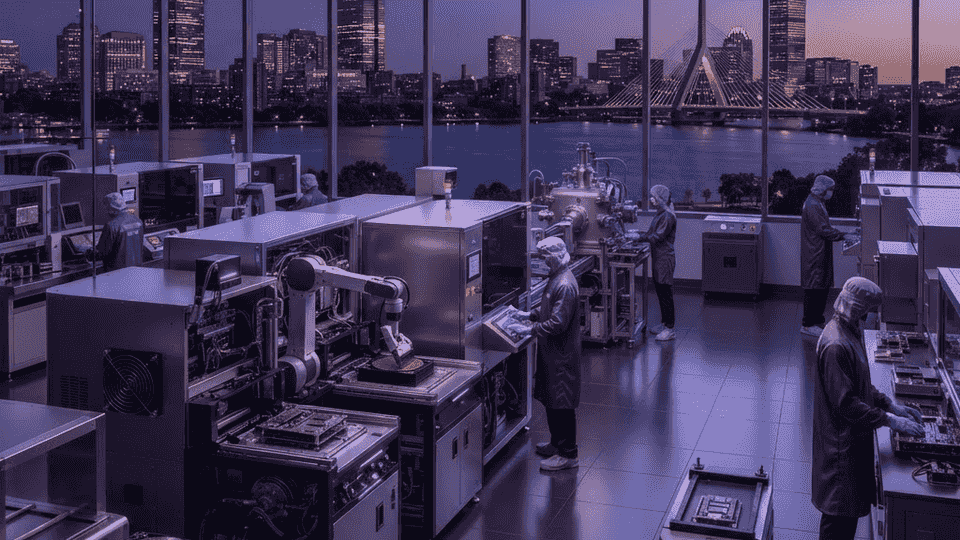
Boston's Legacy in Hardware Manufacturing
Boston has a long and distinguished history in hardware and precision manufacturing, dating back to its early role in American industry. Today, the region combines that heritage with world-class research to produce advanced hardware across robotics, semiconductors, medical devices, and scientific instruments. This blend of tradition and innovation makes Boston a significant center for high-value manufacturing.
The presence of leading universities and research institutions has profoundly influenced the region's hardware sector. Many manufacturers work closely with academic labs, translating breakthroughs in engineering and materials science into commercial products. This collaboration fuels a steady stream of innovation and keeps Boston at the cutting edge of hardware development.
What Boston Hardware Manufacturers Produce
Hardware manufacturers in Boston create a wide range of sophisticated products. Robotics companies design advanced machines for logistics, manufacturing, and research, while medical device makers produce equipment critical to healthcare and life sciences. Semiconductor and electronics firms develop components that power everything from consumer devices to specialized scientific instruments.
Precision and quality are hallmarks of the region's manufacturing. Many companies serve demanding industries where reliability is essential, such as healthcare, defense, and research. This focus on high standards has helped Boston manufacturers build strong reputations and attract clients who require dependable, expertly engineered hardware.
Notable Hardware Manufacturers in the Region
Boston Dynamics stands out as a globally recognized leader in advanced robotics, producing machines celebrated for their mobility and intelligence. Analog Devices, headquartered in the region, is a major force in semiconductors and signal processing technology. iRobot, known for its consumer robotics, also has deep roots in the Boston area.
The region is home to numerous medical device manufacturers and precision engineering firms that supply hospitals, laboratories, and research institutions. Many of these companies emerged from or maintain close ties to local universities, reinforcing Boston's reputation as a hub where scientific research and hardware manufacturing intersect.
Trends Shaping Hardware Manufacturing
Several trends are transforming hardware manufacturing in Boston. Automation and robotics are increasingly integrated into production processes, improving efficiency and consistency. At the same time, the convergence of hardware with software and artificial intelligence is enabling smarter, more capable products, particularly in robotics and medical technology.
Sustainability and advanced materials are also gaining importance, as manufacturers seek to reduce environmental impact and improve product performance. Boston's strong research base positions the region well to lead in these areas, developing next-generation hardware that is both innovative and responsible.
Partnering with Hardware Manufacturers
For organizations seeking hardware manufacturing partners, Boston offers exceptional expertise and quality. When evaluating manufacturers, consider their engineering capabilities, quality standards, industry experience, and capacity to scale production. Strong partners bring not only technical skill but also a collaborative approach that supports complex, high-stakes projects.
As industries increasingly depend on advanced, intelligent hardware, Boston's manufacturers are well positioned to meet that demand. Their combination of engineering excellence, research-driven innovation, and commitment to quality makes the region a premier destination for cutting-edge hardware development.
Ten Hardware Manufacturers to Know
A Greater Boston shortlist includes Analog Devices, iRobot, Boston Dynamics, Desktop Metal, Formlabs, Insulet, Abiomed, Teradyne, Brooks Automation, and Vicor. Analog Devices designs semiconductor technology used across industrial, communications, and automotive applications. iRobot and Boston Dynamics illustrate the region's robotics heritage, while Teradyne develops automated test equipment and industrial automation solutions.
Desktop Metal and Formlabs have advanced additive manufacturing with different systems and target markets. Insulet and Abiomed represent Boston's strength in sophisticated medical hardware. Brooks Automation serves demanding semiconductor and life sciences environments, and Vicor develops high-performance power components. Several of these companies operate in nearby Massachusetts communities rather than downtown Boston, reflecting the broader manufacturing corridor surrounding the city.
Evaluating a Manufacturing Partner
Hardware buyers should examine more than production price. Design-for-manufacturing support, quality systems, supply chain resilience, testing capabilities, and traceability can determine whether a product succeeds. Medical and other regulated devices require documented processes and relevant certifications. Teams should also ask how a manufacturer handles component substitutions, engineering changes, intellectual property, and demand fluctuations.
Early prototypes and pilot runs can expose issues before expensive tooling or larger production commitments. A good partner will communicate tolerances clearly, identify risky components, and recommend practical changes without compromising the product's purpose. Boston's high-cost environment means many local firms focus on complex, high-value manufacturing rather than commodity volume. That specialization can be a major advantage for organizations developing technically demanding products that require close collaboration between research, engineering, and production. Buyers should visit facilities when possible and review how work moves from incoming inspection through final testing. Production records, calibration practices, and corrective-action procedures reveal more than a polished proposal. It is equally important to understand which processes are performed in-house and which depend on subcontractors.
Supply chain planning deserves attention at the design stage. Components with a single source, long lead time, or uncertain lifecycle can threaten delivery years later. Strong Boston-area partners help identify alternatives, manage inventory assumptions, and redesign around available materials. These habits improve continuity and make it easier to scale a promising prototype into a dependable commercial product.