
Why Aurora Became a Hardware Manufacturing Hub
Aurora's manufacturing story did not begin with semiconductors or smart devices. It began with metal, machining, and the industrial corridors that fed a growing regional economy. That foundation matters, because hardware is unforgiving: tolerances are measured in microns, materials behave differently under thermal stress, and a single sourcing error can idle an entire production line. Cities that already understand tooling, logistics, and skilled trades tend to adapt well when electronics enter the picture, and Aurora is a clear example of that transition.
Today the local landscape spans contract electronics manufacturers, enclosure and sheet-metal specialists, industrial automation builders, and firms producing finished consumer and commercial devices. What ties them together is proximity. Aurora manufacturers can often source machined parts, coatings, cable assemblies, and packaging within a short drive, which compresses development cycles and reduces the freight costs that quietly erode hardware margins.
What Separates a Great Manufacturer From an Adequate One
Before reviewing specific companies, it helps to know what experienced buyers actually evaluate. Certifications such as ISO 9001 and, for medical or aerospace work, ISO 13485 or AS9100 signal that quality management is documented rather than improvised. Equally important is design-for-manufacturability support: a strong partner will review your drawings and tell you which features are needlessly expensive before quoting them. Traceability, first-article inspection reports, and in-house testing capability separate manufacturers that can scale from those that struggle past prototype volumes.
The Top 10 Hardware Manufacturers in Aurora
1. Aurora Precision Works
Aurora Precision Works is frequently cited as the benchmark for tight-tolerance CNC machining in the area. The company runs multi-axis milling and turning cells alongside in-house metrology, which allows it to validate complex geometries without outsourcing inspection. Its reputation rests on repeatability across long production runs, making it a natural fit for industrial equipment makers and robotics companies that cannot tolerate dimensional drift between batches.
2. Fox Valley Electronics Assembly
Specializing in surface-mount and through-hole printed circuit board assembly, Fox Valley Electronics Assembly serves clients that need low-to-medium volume builds with rigorous documentation. The company's differentiator is transparency: customers receive detailed process records, solder-paste inspection data, and functional test results. For startups moving from a working prototype to a sellable product, that visibility often prevents costly field failures.
3. Northline Enclosure Systems
Northline Enclosure Systems focuses on sheet metal fabrication, powder coating, and custom enclosures for electronics and networking equipment. Its value lies in integration. Rather than shipping bare metal, the team can deliver assembled cabinets with thermal management, gaskets, and hardware inserts installed, which reduces the number of vendors a client must coordinate.
4. Meridian Industrial Controls
Meridian Industrial Controls builds control panels, motor starters, and automation assemblies for manufacturing plants and utilities. Because the firm employs licensed engineers alongside its build technicians, it can take responsibility for both schematic design and physical construction. That combination is particularly useful for facilities modernizing legacy equipment without complete replacement.
5. Prairie Circuit Technologies
Prairie Circuit Technologies concentrates on rigid and flexible printed circuit board production, including multilayer stackups and impedance-controlled designs. Its engineers are known for collaborating early with hardware teams to resolve routing and layer-count questions before fabrication begins. Fast turnaround on prototype panels has made it a common first stop for local product developers.
6. Halstead Cable and Harness
Wire harnesses rarely receive attention until they fail. Halstead Cable and Harness builds custom cable assemblies, overmolded connectors, and wiring looms for vehicles, medical devices, and factory equipment. The company invests heavily in continuity and hipot testing, and it documents every crimp specification, which matters enormously in safety-critical applications.
7. Summit Additive Manufacturing
Summit Additive Manufacturing brings industrial 3D printing to the Aurora supply chain, working in engineering polymers and metal powders. Beyond rapid prototyping, the firm produces bridge-production parts, jigs, and fixtures that would be uneconomical to machine. Clients value the ability to iterate on housing geometry in days rather than weeks.
8. Blackstone Tool and Die
For high-volume stamped components, Blackstone Tool and Die designs and maintains progressive dies in house. Owning the tooling process means the company can adjust die geometry quickly when part revisions arrive, avoiding the long lead times associated with external toolmakers. Its longevity in the market speaks to consistent process discipline.
9. Vertex Device Manufacturing
Vertex Device Manufacturing offers full box-build services, taking responsibility for procurement, assembly, firmware loading, functional testing, and retail-ready packaging. This turnkey model appeals to brands that want a single accountable partner rather than managing a dozen suppliers. Its supply-chain team actively tracks component obsolescence, a service that has become essential given ongoing semiconductor volatility.
10. Riverbend Optics and Sensors
Riverbend Optics and Sensors produces optical assemblies, sensor modules, and calibrated measurement components. Cleanroom assembly capability and rigorous calibration procedures make it a specialist choice for instrumentation, inspection systems, and scientific equipment builders. The company's engineering staff frequently assists clients with tolerance analysis at the concept stage.
Industry Trends Shaping Aurora Manufacturing
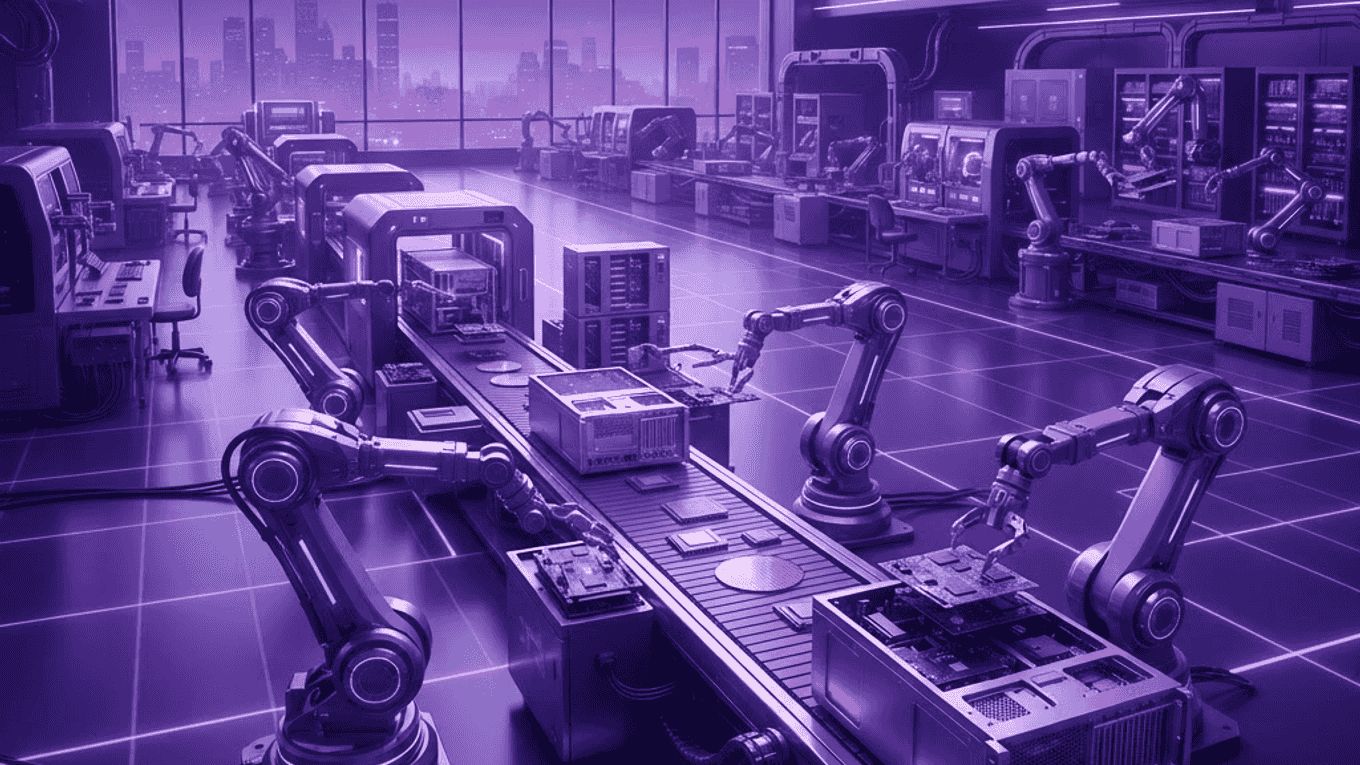
Several forces are reshaping how these companies operate. Reshoring has increased inquiries from brands that previously manufactured overseas and now prioritize shorter, more resilient supply chains. Automation is spreading beyond large plants, with collaborative robots handling repetitive assembly so skilled technicians can focus on inspection and process improvement. Sustainability requirements are also filtering down from major buyers, pushing manufacturers to document energy use, reduce scrap, and adopt recyclable packaging.
Perhaps the most significant shift is data. Modern shop floors capture cycle times, machine utilization, and defect rates continuously, and the manufacturers that analyze this information effectively deliver measurably better on-time performance. When evaluating partners, asking how they use production data reveals a great deal about operational maturity.
How to Choose the Right Partner
Start by matching capability to volume. A machining specialist that excels at fifty precision components may not be the right choice for fifty thousand injection-molded parts. Request a plant tour, inspect how work-in-progress is organized, and ask to see inspection reports from a recent job. Discuss communication expectations openly, because most manufacturing disputes originate from unclear revision control rather than technical incompetence.
Finally, consider the relationship horizon. Hardware products evolve, and the manufacturers listed here tend to perform best when treated as engineering collaborators rather than interchangeable vendors. Aurora's density of complementary suppliers means a well-chosen partner can often assemble the rest of your supply chain locally, giving your product a meaningful advantage in speed and quality control.