
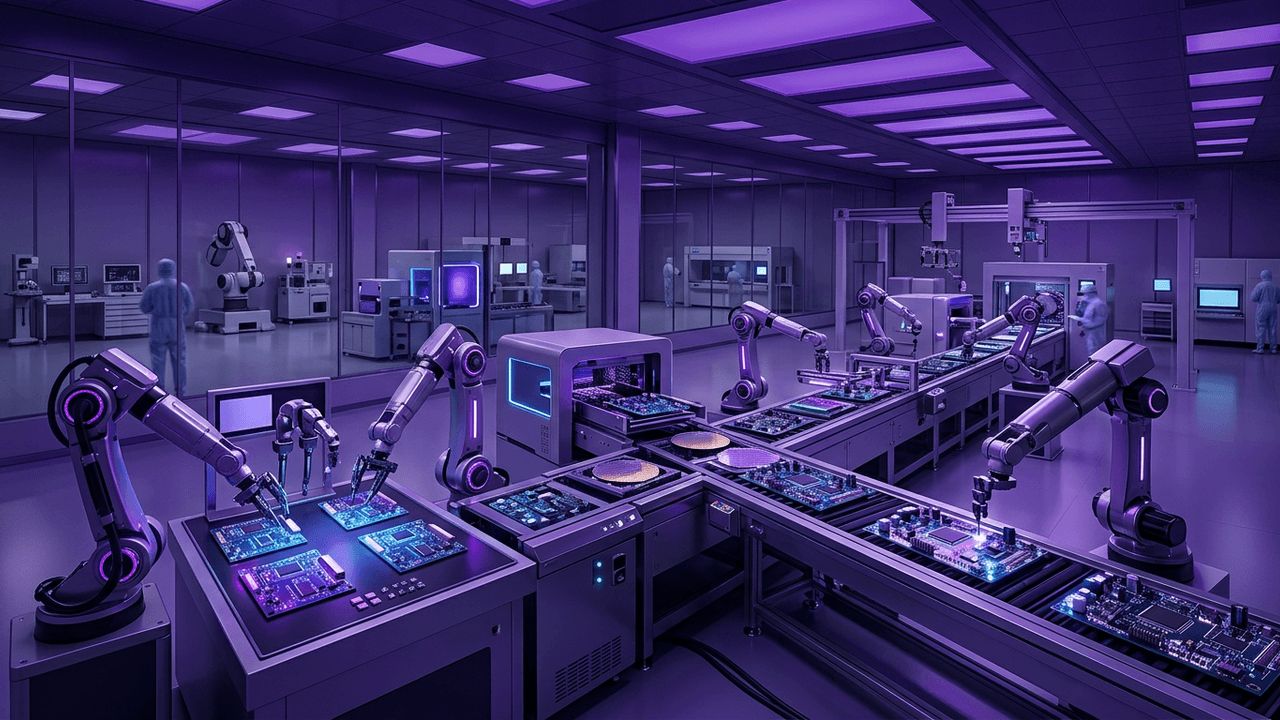
Ann Arbor's Engineering and Manufacturing Legacy
Ann Arbor is often associated with software and research, but the region also has a strong tradition of hardware engineering and advanced manufacturing. Its location in southeast Michigan, the heart of the American automotive industry, combined with the University of Michigan's top-ranked engineering college, has attracted companies building everything from semiconductor equipment to vehicles, sensors, simulators, and medical devices.
The companies below design, engineer, or manufacture physical technology in or near Ann Arbor. They were selected for innovation, technical excellence, economic impact, and their contribution to the region's engineering ecosystem.
The 10 Best Hardware Manufacturers in the Ann Arbor Area
1. KLA
KLA is a global leader in process control and yield management equipment for the semiconductor industry. Its large Ann Arbor campus focuses on engineering and development for inspection and metrology systems used by the world's leading chipmakers. KLA's investment has made it one of the most significant technology employers in the region.
2. Toyota Motor North America Research and Development
Toyota operates a major research and development center in the Ann Arbor area, where engineers design, develop, and test vehicles and advanced technologies for the North American market. Work includes vehicle engineering, powertrain development, materials research, and connected vehicle technologies.
3. Hyundai America Technical Center
Hyundai America Technical Center, located near Ann Arbor, supports vehicle design, engineering, testing, and validation for Hyundai and Kia models. Its facilities include emissions labs and testing capabilities that contribute to the brands' North American product development.
4. Luna Innovations
Luna Innovations, which incorporated Ann Arbor-area companies Picometrix and Advanced Photonix, develops advanced optical and terahertz technologies. Its sensors and test systems are used for non-destructive inspection, telecommunications, and industrial measurement.
5. FAAC
FAAC, based in Ann Arbor, designs and builds driving and vehicle simulators used to train law enforcement officers, commercial drivers, firefighters, and military personnel. Its realistic simulation hardware and software improve safety and readiness in high-risk professions.
6. Cybernet Systems
Cybernet Systems develops advanced hardware and software solutions, including robotics, sensors, and simulation systems, for government and commercial clients. Its engineering capabilities span research prototypes to fielded products.
7. May Mobility
May Mobility integrates autonomous driving hardware, including sensors, computing systems, and vehicle platforms, with its decision-making software. Its autonomous vehicles represent a fusion of hardware engineering and AI that reflects Ann Arbor's mobility strengths.
8. SkySpecs
SkySpecs designs autonomous drone inspection systems for wind turbines. Its combination of aerial hardware, sensors, and analytics software enables fast, safe inspections that support renewable energy operators around the world.
9. BD Accuri
Accuri Cytometers was founded in Ann Arbor and developed compact, affordable flow cytometers for life sciences research. Acquired by BD, the technology continues to influence laboratory instrumentation, demonstrating Ann Arbor's strength in scientific hardware.
10. Michigan Aerospace Corporation
Michigan Aerospace Corporation develops optical sensing and lidar-based technologies for aerospace, defense, and atmospheric measurement applications. Its precision instruments highlight the region's capabilities in specialized, high-performance hardware.
What Drives Hardware Innovation in Ann Arbor
Several factors support hardware innovation in the region. The University of Michigan's engineering programs provide talent and research partnerships. Proximity to automotive manufacturers and suppliers creates demand for advanced components and testing. Facilities like Mcity enable real-world validation of connected and automated vehicles. Michigan's skilled manufacturing workforce and supply chain infrastructure make it practical to move from prototype to production.
How to Work With a Hardware Partner
Organizations seeking hardware partners should evaluate engineering capabilities, quality certifications, prototyping speed, testing facilities, and manufacturing capacity. Clear specifications and early collaboration on design for manufacturability help reduce costs and delays. Intellectual property agreements, supply chain resilience, and long-term support should also be considered before finalizing partnerships.
Hardware Trends in Ann Arbor
Electrification and battery technology are major areas of investment across southeast Michigan. Semiconductor manufacturing is receiving renewed national attention, increasing the importance of companies like KLA. Autonomous systems, including vehicles, drones, and robots, continue to blend hardware and AI. Advanced sensing technologies, such as lidar, radar, and terahertz imaging, are finding new applications in safety, inspection, and healthcare.
Careers in Hardware Engineering
For mechanical, electrical, and systems engineers, the Ann Arbor area offers diverse opportunities across automotive, semiconductor, aerospace, and medical technology. The combination of established corporations and innovative startups allows engineers to work on cutting-edge projects while enjoying the city's high quality of life.
The Role of Research Partnerships
Many of the region's hardware breakthroughs began as university research. The University of Michigan's engineering labs, nanofabrication facilities, and technology transfer office help researchers turn discoveries into patents, prototypes, and startup companies. Corporate partners sponsor research, recruit graduates, and license new technologies. This close relationship between academia and industry shortens the path from idea to product and keeps Ann Arbor at the forefront of hardware innovation.
Final Thoughts
Ann Arbor's hardware manufacturers and engineering centers prove that the region's innovation extends well beyond software. These ten organizations are building the physical technologies that power chips, vehicles, energy systems, and scientific discovery.