
Furnishing Buffalo's Distinctive Homes
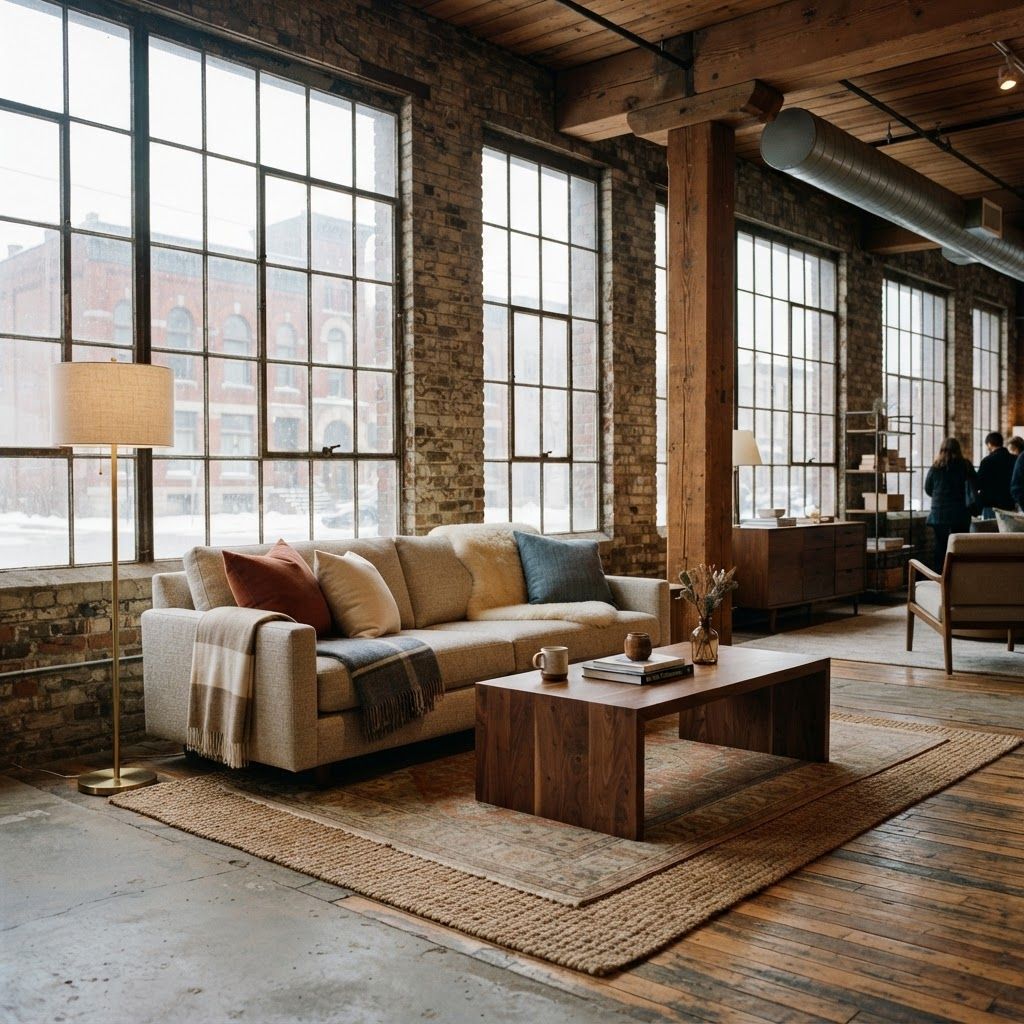
Buffalo has one of the most architecturally interesting residential inventories in the country, and that directly shapes its furniture market. The city is full of late-nineteenth and early-twentieth century homes with narrow staircases, tall ceilings, ornate woodwork, bay windows and rooms that do not conform to modern open-plan proportions. Add the converted warehouse lofts in the Larkin district and the more conventional suburban construction of the Northtowns and Southtowns, and you get a market that has to serve three very different kinds of space.
Practical consequences follow. Sectional sofas that fit a suburban family room frequently cannot navigate a Victorian stairwell. Case goods scaled for eight-foot ceilings look undersized in a room with eleven-foot ceilings and heavy trim. Buffalo furniture retailers that thrive are the ones whose staff ask about staircases, doorway widths and ceiling heights before recommending anything.
Understanding Furniture Quality
Construction determines whether furniture lasts a decade or a lifetime. For upholstery, look for a kiln-dried hardwood frame, eight-way hand-tied or high-gauge sinuous springs, and high-density foam or a down-wrapped cushion core. For case goods, dovetailed drawers, solid wood or high-grade plywood rather than particleboard, and back panels that are attached into a groove rather than stapled on all indicate care.
Materials matter as well. Full-grain leather ages well and can be conditioned. Performance fabrics have improved substantially and are worth the premium in households with children or pets. Solid wood tops can be refinished, while veneer over engineered cores generally cannot, though good veneer is more stable across Buffalo's humidity swings than wide solid boards.
Leading Furniture Stores in Buffalo
1. Queen City Home Furnishings covers the full-service mid-market, offering living, dining and bedroom collections with in-home design consultation and delivery that includes assembly and packaging removal. Their measuring service prevents the classic staircase failure.
2. Larkinville Modern focuses on contemporary and modern design suited to loft and open-plan spaces, with an emphasis on lower-profile seating and modular configurations that work in large rooms without visually crowding them.
3. Allentown Antiques and Estate Furnishings serves the historic-home market with period pieces, including Victorian, Arts and Crafts and mid-century work. For homes with original trim, era-appropriate furniture often looks intentional in a way new reproduction rarely achieves.
4. Buffalo Custom Woodworks builds to order, which is the definitive answer for awkward dimensions. Built-in shelving, dining tables sized to an actual room, window seats and bedroom pieces scaled to a specific alcove all fall in this category.
5. Elmwood Village Interiors combines a curated retail floor with full interior design services, handling space planning, fabric selection and project coordination for clients who want a cohesive result rather than individually chosen pieces.
6. Northtowns Furniture Gallery serves suburban family needs with durable upholstery, sectionals, recliners and kids' furniture, with performance fabric options and protection plans prominently offered.
7. Lake Effect Upholstery and Restoration reupholsters and repairs rather than replaces. Reframing and recovering a well-built vintage sofa frequently costs less than a comparable new piece and yields better construction, which makes restoration a genuine value play.
8. Steel City Industrial Furnishings produces reclaimed wood and steel pieces drawing on the region's manufacturing heritage. Heavy, durable tables, shelving and benches suit both loft interiors and high-traffic commercial spaces.
9. Western New York Office Furniture supplies desks, ergonomic seating, conference tables and storage, including refurbished commercial-grade options. With hybrid work established, ergonomic task chairs have become one of the strongest categories locally.
10. Buffalo Mattress and Sleep Center rounds out the list on the sleep side, offering in-store trial across firmness levels, adjustable bases and platform frames, plus removal of old mattresses at delivery.
Trends in Local Furniture Buying
Several patterns are clear. Longevity is displacing fast furniture, with more buyers willing to spend once on a repairable piece. Multifunction design remains strong because home offices and guest space frequently share a room. Performance textiles have moved from niche to default in family households. Domestic and local manufacturing carries genuine weight, both for lead-time reliability and for supporting regional makers. Restoration and secondhand buying continue to grow, supported by Buffalo's deep supply of well-made older furniture.
Practical Buying Guidance
Measure before shopping, and measure the path rather than only the room. Record doorway widths, stairwell turns, ceiling height at the landing and elevator dimensions if applicable. Bring those numbers to the store and ask for the diagonal depth of any large upholstered piece, since that figure determines whether it clears a turn.
Sit on upholstery for at least ten minutes before deciding, and check whether cushions are reversible, since rotating them roughly doubles usable life. Ask about lead times honestly, because custom upholstery commonly takes several months. Confirm what delivery includes, particularly stair carries and assembly. Request fabric samples to view in your own light, as north-facing Buffalo rooms in winter render color very differently from a showroom. Finally, keep humidity relatively stable indoors, since aggressive winter heating dries solid wood and causes joints and panels to move.
Final Thoughts
Buffalo's furniture market is unusually well suited to its housing, with custom makers and restoration specialists filling the gaps that mass retail cannot. Whether furnishing a Victorian with period pieces, a loft with modular modern seating or a suburban family room with durable upholstery, the strongest approach is to measure carefully, prioritize construction quality, and lean on local makers and restorers when standard dimensions do not fit.