
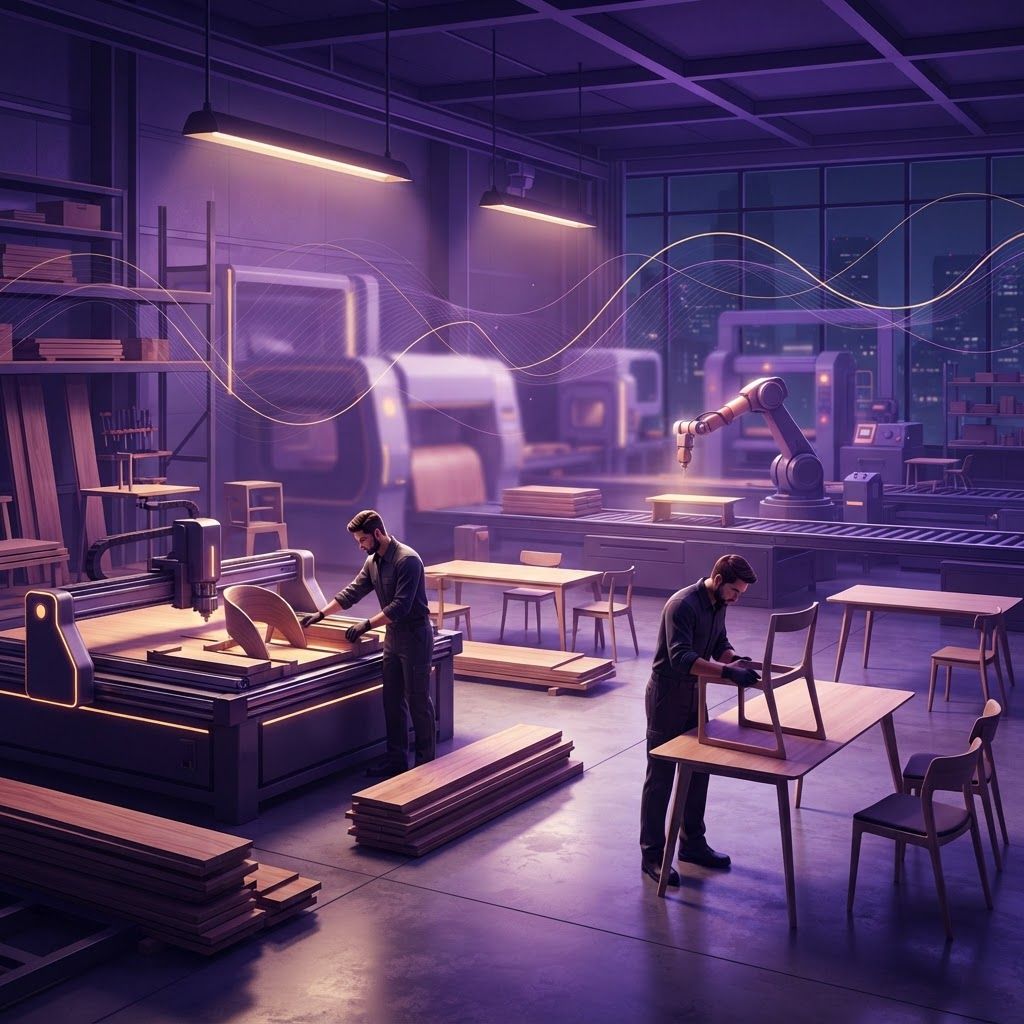
A Craft Industry with Commercial Depth
Furniture manufacturing in Tempe spans two worlds that rarely overlap elsewhere. On one side are small studios producing custom hardwood pieces for homeowners and designers, working largely by hand with attention to joinery and finish. On the other are contract manufacturers producing commercial furniture at volume for offices, restaurants, hotels, and institutions. Both benefit from the region's growth, its design culture, and a climate that shapes material choices in specific ways.
That climate deserves mention. Extremely low humidity affects wood differently than the conditions in which most furniture is manufactured. Solid wood moves as it equilibrates, and pieces built in humid regions can crack or loosen after months in a desert home. Local makers understand this and account for it in joinery design and material selection, an advantage that imported furniture cannot match.
Custom and Bespoke Makers
Mill Avenue Woodworks builds custom hardwood furniture to commission, specializing in dining tables, credenzas, and built-in casework. The studio favors traditional joinery reinforced for the local climate and finishes chosen for durability under bright interior light.
Desert Grain Furniture Studio works extensively with mesquite, walnut, and reclaimed lumber, producing pieces with a distinctly regional character. Its makers often incorporate live edges and natural voids stabilized with resin.
Papago Design Fabrication combines woodworking with metal fabrication, producing mixed-material pieces for designers and architects who need something no catalog offers.
Commercial and Contract Manufacturers
Tempe Contract Furniture manufactures seating, tables, and casegoods for hospitality and restaurant clients, building to commercial durability standards that residential furniture cannot meet.
Valley Office Furnishings Manufacturing produces workstations, conference tables, and storage systems for corporate clients, with capability for coordinated large-scale installations.
Rio Salado Institutional Furniture serves schools, libraries, and healthcare facilities, where cleanability, safety, and extreme durability outweigh aesthetic considerations.
Upholstery and Soft Seating
Copper State Upholstery Works manufactures upholstered seating and also performs restoration and reupholstery, extending the life of well-built frames whose fabric has worn out.
Southwest Seating Company specializes in commercial upholstered seating with performance fabrics rated for heavy traffic, serving restaurants, theaters, and waiting areas.
Outdoor and Specialty Furniture
Sonoran Outdoor Furniture builds patio and poolside furniture engineered specifically for desert exposure, using powder-coated aluminum frames and solution-dyed fabrics that resist ultraviolet degradation.
Arizona Modern Furniture Company produces contemporary residential pieces in small production runs, bridging the gap between one-off custom work and mass-produced imports.
Trends in Furniture Manufacturing
Sustainability has become a genuine purchasing criterion rather than a marketing angle. Certified lumber, low-emission finishes, and repairable construction appeal to buyers who increasingly resist disposable furniture. Several local makers now design explicitly for repair, using mechanical fasteners where a manufacturer chasing lowest cost would use adhesive.
Digital fabrication has changed small-shop economics. Computer-controlled routers and precision cutting allow small studios to produce complex, repeatable components that previously required industrial equipment, narrowing the capability gap between custom makers and factories.
Hybrid work has reshaped commercial demand. Offices need fewer individual desks and more collaborative and reconfigurable furniture, which has shifted contract manufacturers toward modular, mobile, and power-integrated designs.
Outdoor living continues to expand as a category. In Tempe, where outdoor space is usable most of the year, shaded patio furniture built for real exposure is treated as essential rather than seasonal.
How to Judge Furniture Quality
Examine joinery first. Mortise and tenon, dovetail, and doweled construction indicate a maker investing in longevity. Staples, visible screws, and adhesive-only joints suggest the opposite.
Check the frame material in upholstered pieces. Kiln-dried hardwood frames last decades; softwood and engineered panel frames often do not survive a move. Ask the maker directly, since this is invisible once upholstered.
Evaluate drawer construction. Solid drawer boxes with dovetailed corners and full-extension slides reflect a different quality tier than stapled boxes on friction runners.
Ask about wood movement accommodation. Solid wood tabletops should be attached with fasteners that permit seasonal expansion. A tabletop screwed rigidly to an apron will eventually crack, particularly in this climate.
Finally, discuss finish. Catalyzed finishes resist heat, moisture, and abrasion far better than simple oil, which matters for surfaces in daily use.
Lead Times and the Commission Process
Custom furniture operates on a different timeline than retail purchasing, and misaligned expectations cause most of the friction between makers and clients. A commissioned dining table typically involves an initial consultation, design development with drawings, material selection and sourcing, fabrication, finishing with adequate cure time, and delivery. Hardwood may need to acclimate in the shop before machining, and finishes require days between coats.
Realistic timelines run from several weeks for a straightforward piece to several months for complex casework or large commercial orders. Makers who promise unusually short delivery are often rushing finish cure time, which produces surfaces that mark easily and fail prematurely.
The commission process itself rewards clear communication. Bring dimensions, photographs of the space, and examples of pieces you admire. Discuss how the furniture will be used, including whether children, pets, or heavy daily wear are factors. Approve drawings and wood samples in person when possible, since species and finish look markedly different under real light than in photographs. Good makers welcome this involvement.
Final Thoughts
Tempe's furniture manufacturers offer something that mass-market retail cannot: pieces designed for local conditions, built to a specification you can verify, and made by people you can speak with directly. Whether commissioning a dining table or furnishing a restaurant, the local market rewards buyers who ask about joinery, materials, and finish. Furniture built properly becomes a long-term asset rather than a recurring expense.