
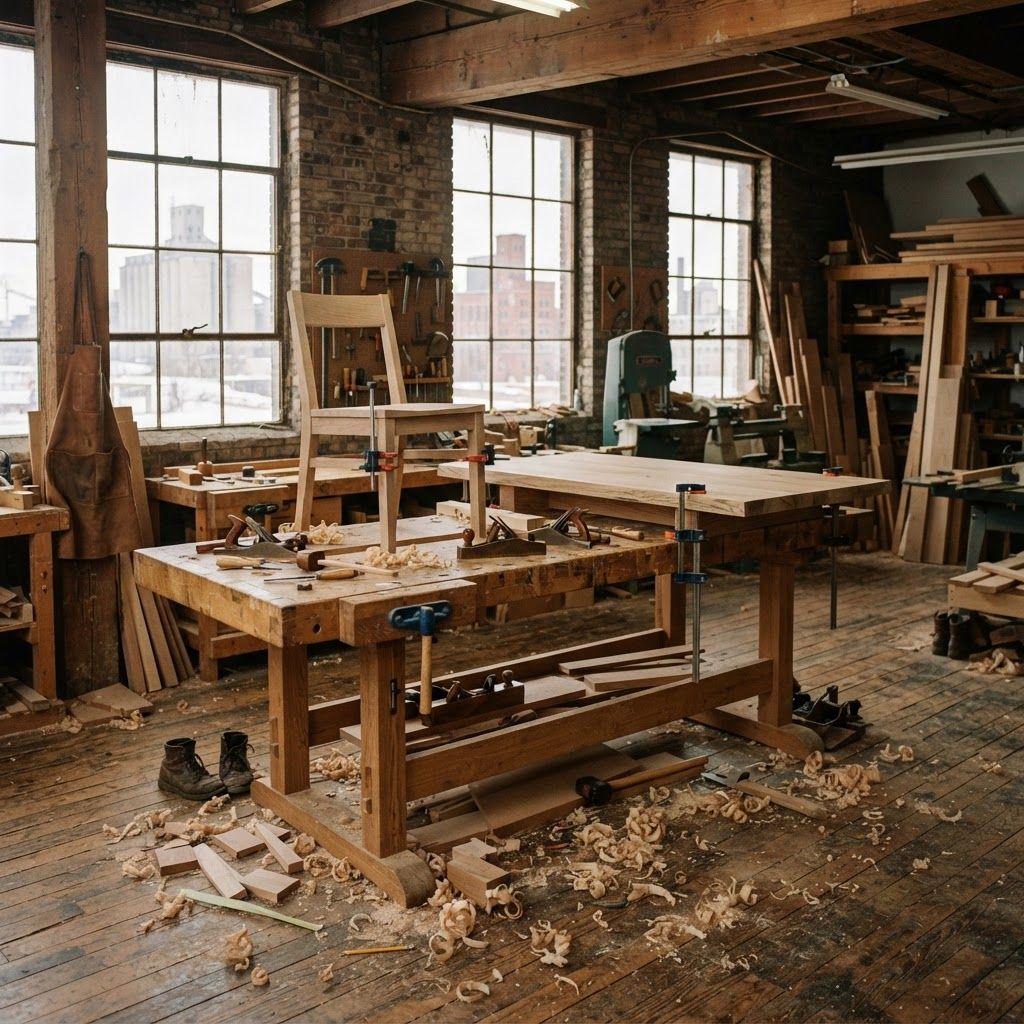
Buffalo takes design seriously. A city that commissioned work from Louis Sullivan, Frank Lloyd Wright and Eliel Saarinen developed an unusually literate audience for craftsmanship, and that appreciation extends to furniture. The region's makers occupy a distinctive position between mass-market importers and boutique one-off studios, producing well-built pieces at accessible prices with the flexibility to customize.
A Craft Tradition With Practical Roots
Western New York's furniture trade grew alongside its lumber and hardware industries, and the housing stock reinforced it. Buffalo's dense inventory of Victorian, Craftsman and mid-century homes features irregular room dimensions, deep window wells and built-in details that standard retail furniture simply does not fit. Custom makers thrive in that environment, and the same shops have expanded into commercial work as the city's hospitality and office sectors have been renovated.
Ten Notable Furniture Manufacturers
Allentown Woodcraft builds solid hardwood furniture in the Arts and Crafts tradition that suits the region's housing stock. Mortise and tenon joinery, hand-rubbed finishes and locally sourced oak, cherry and maple define the work, and the shop welcomes clients who want to modify dimensions or finishes.
Queen City Furniture Company produces a broader catalog of residential case goods including bedroom sets, dining tables and storage pieces. Its appeal is straightforward: North American hardwood construction at prices that compete with imported alternatives, supported by a repair service that keeps pieces in use for decades.
Larkin District Furnishings concentrates on contract and hospitality furniture for restaurants, hotels and offices. Commercial work demands durability ratings, fire code compliance and predictable lead times, and this company has built its reputation on meeting installation schedules that designers depend on.
Niagara Hardwood Studio works at the higher end with live-edge slabs, sculptural dining tables and statement pieces. Careful material selection is central, with slabs air-dried and kiln-finished on site so that clients can choose specific boards for their projects.
Elmwood Upholstery Works handles both new upholstered furniture and restoration of existing pieces. Traditional eight-way hand-tied springs and hardwood frames sit alongside contemporary fabric options, and the restoration business has grown as owners recognize that a well-framed vintage sofa is worth reviving.
Buffalo Contract Seating specializes in task chairs, lounge seating and collaborative furniture for workplaces and institutions. Ergonomic testing and heavy-duty cycle ratings matter here, and the company supports specification with mock-ups so that clients can trial seating before committing to volume orders.
Lakeshore Cabinet and Millwork produces kitchen cabinetry, built-ins and architectural millwork. Field measurement and installation are included, which is essential in older homes where nothing is truly plumb, and the shop matches historic trim profiles for renovation projects.
Hertel Avenue Design Co. blends mid-century influence with modern materials, producing credenzas, shelving and occasional tables with clean lines. The studio's smaller scale allows rapid prototyping and short production runs for designers and boutique retailers.
Frontier Office Furniture manufactures desks, workstations and conference tables with an emphasis on integrated power and cable management. As hybrid work reshapes offices, the company has focused on reconfigurable systems that adapt as headcount and layouts change.
Cobblestone Custom Tables works primarily in reclaimed material, converting timber from regional barns and industrial buildings into dining and conference tables. Provenance documentation accompanies each piece, appealing to clients who want material with a traceable history.
What Is Changing in Furniture Manufacturing
Sustainability has become a purchasing criterion rather than a talking point. Buyers ask about wood sourcing, low-emission finishes and repairability, and local production carries a genuine advantage in transportation footprint. Reclaimed and certified materials have moved from niche to expected in many specifications.
Customization has been democratized by digital tools. Computer numerical control routers and design software let modest shops offer bespoke dimensions and configurations at prices once reserved for standard catalog items. Meanwhile the durability conversation has strengthened, as consumers frustrated by disposable furniture increasingly calculate cost per year of service rather than upfront price.
How to Evaluate a Furniture Maker
Inspect construction rather than surfaces. Look at joinery, drawer boxes, frame material and hardware quality, since these determine whether a piece survives twenty years of use. Ask what the shop actually builds versus what it sources, as some retailers present imported goods as local production.
Discuss lead time honestly at the outset. Genuine custom work takes weeks or months, and a maker who promises unrealistic delivery is either overcommitted or cutting corners. Clarify warranty and repair terms too, because the willingness to service a piece years later is a reliable signal of confidence in the work.
What a Custom Project Actually Involves
Commissioning furniture follows a predictable rhythm, and understanding it prevents frustration. The process usually begins with a conversation about function, dimensions and material preference, followed by sketches or drawings and a firm quote. Most shops request a deposit before purchasing material, since hardwood represents real capital tied up in a single project. Clients are then typically invited to approve wood selection and finish samples, because color varies considerably between boards even within the same species.
Build time depends on complexity and current backlog rather than any fixed schedule, and finishing in particular cannot be rushed without compromising durability. Delivery and placement are worth clarifying in advance, especially in Buffalo's older homes where narrow staircases and tight landings sometimes require assembly on site rather than delivery of a completed piece.
Final Thoughts
Buffalo's furniture manufacturers deliver something increasingly rare: durable construction, real customization and direct access to the people building the piece. For homeowners restoring a century-old property or designers outfitting a commercial space, the region's shops offer craft and accountability that distant supply chains cannot match.