
Why St. Louis Is a Freight Powerhouse
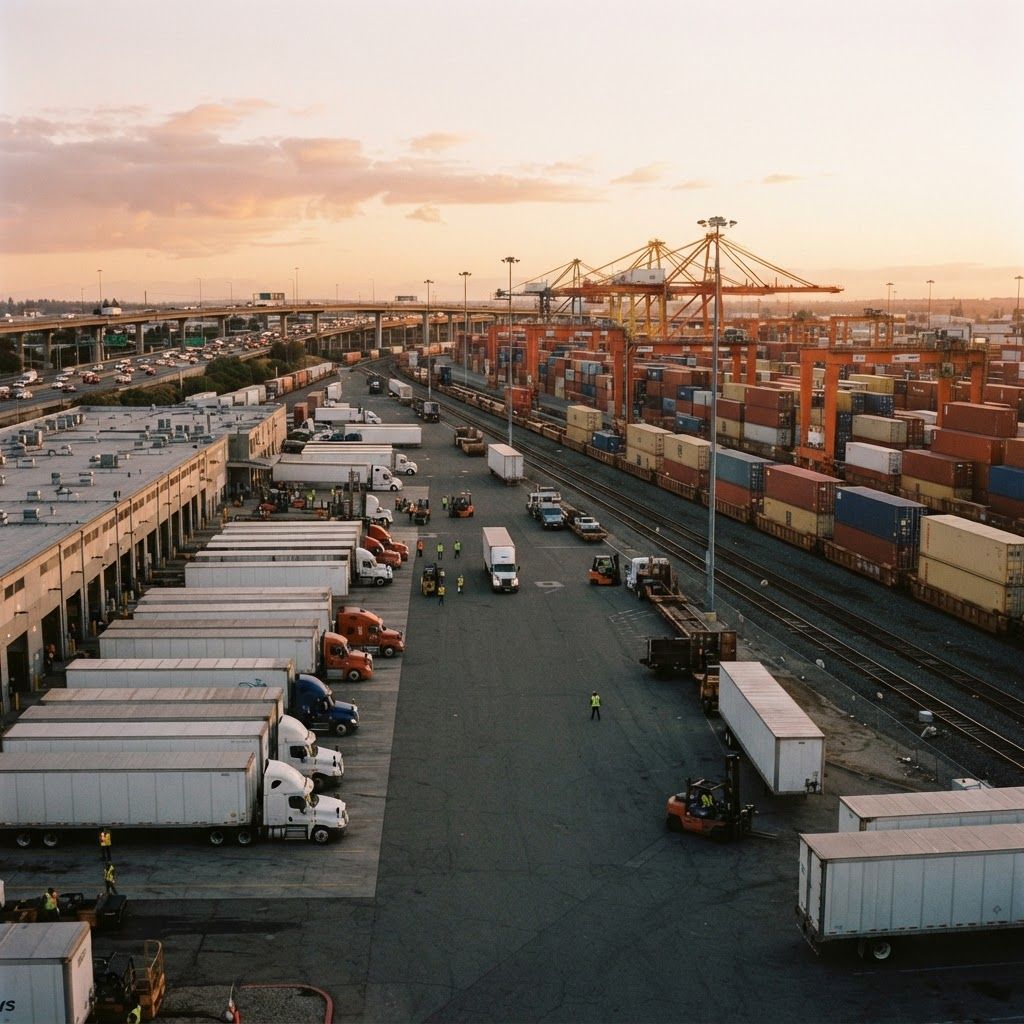
Few American cities have a stronger structural claim to freight importance than St. Louis. Six Class I railroads serve the region, a figure matched by only a handful of North American markets. Four interstate highways intersect here. The Port of St. Louis handles enormous barge tonnage on the Mississippi as the northernmost ice-free, lock-free port on the river, meaning barges can move south to the Gulf year round without transiting a single lock. MidAmerica St. Louis Airport and Lambert International provide air cargo capacity, and the region's central position puts a substantial share of the American population within a single truckload day.
That infrastructure has made freight a foundational regional industry rather than a supporting one. Manufacturers, agricultural processors, chemical producers, automotive assemblers and distribution operators all rely on a dense local carrier and broker community that has developed genuine multimodal sophistication.
Understanding Freight Service Models
Shippers new to the market should understand what they are actually buying. Asset-based carriers own their trucks and trailers and employ their drivers, offering control and consistency. Freight brokers own no equipment and instead match freight to capacity across a carrier network, offering flexibility and market coverage. Third-party logistics providers layer management, technology and analytics on top of transportation execution. Less-than-truckload carriers consolidate multiple shippers' freight onto shared trailers moving through terminal networks, which is how smaller shipments move economically. And intermodal providers combine rail line-haul with truck drayage on both ends, trading transit time for meaningful cost savings on long hauls.
The Ten Best Freight Companies Serving St. Louis
1. Hogan Transportation
Hogan is a St. Louis institution and one of the region's most complete freight organizations. Founded locally more than a century ago, it operates truckload carriage, dedicated contract fleets, truck leasing and rental, and logistics management. The dedicated fleet business is where it particularly excels: for manufacturers and distributors needing consistent, branded, driver-stable capacity on repeating lanes, Hogan builds and operates that capacity as an extension of the customer's operation. Its local headquarters means decision-makers are accessible in a way national competitors rarely match.
2. UniGroup
Headquartered in Fenton, UniGroup is the parent organization behind two of the largest household goods and specialized transportation networks in the country. Beyond residential relocation, its capabilities extend deep into high-value product logistics, trade show transportation, electronics and medical equipment handling, and international freight forwarding. For freight requiring white-glove handling, climate control or specialized packaging, this is a regional leader with global reach.
3. Contract Freighters and Regional Truckload Carriers
Missouri supports several large truckload operations whose networks make St. Louis a primary hub, offering dry van, temperature-controlled and cross-border Mexico service. These carriers are the workhorses of regional manufacturing and consumer goods movement, and their scale provides capacity reliability during tight markets when brokers struggle to cover loads. Cross-border capability is increasingly valuable as nearshoring shifts supply chains toward Mexico.
4. Prime Inc.
Based in Springfield with substantial St. Louis lane density, Prime is one of the largest refrigerated carriers in North America and also operates flatbed and tanker divisions. Its refrigerated capability matters enormously to the region's food and beverage processing sector, and its driver training academy has made it unusually resilient to the industry-wide driver shortage. Equipment is modern and telematics-equipped.
5. ABF Freight
ABF is a leading less-than-truckload carrier with strong terminal coverage across Missouri and Illinois. LTL is how most small and mid-sized shippers actually move freight, and ABF's strengths are its reliable transit times, established claims handling and capability with difficult freight including guaranteed and time-critical shipments. Its parent organization also offers brokerage and household moving services, creating a single-source option across service types.
6. XPO
XPO operates one of the largest LTL networks in North America with significant regional presence. Its investment in terminal capacity, trailer technology and pricing systems has improved service consistency substantially, and its digital tools give shippers real visibility into pickup, transit and delivery status. For businesses shipping pallets rather than full trailers, it is one of the strongest options available.
7. Saia LTL Freight
Saia has expanded aggressively from a southeastern base into national coverage, and its service quality metrics have consistently ranked among the best in the LTL sector. Damage rates are low, transit reliability is high, and its customer service model is more responsive than most competitors of comparable size. For shippers who have had claims problems elsewhere, Saia is frequently the remedy.
8. C.H. Robinson
As one of the world's largest freight brokers and third-party logistics providers, C.H. Robinson brings market intelligence and capacity access that no single asset carrier can match. Its value in St. Louis is flexibility: when volumes spike unpredictably, when a lane is unusual, or when a shipper needs to benchmark rates against the broader market, brokered capacity solves problems that contracted fleets cannot. Its technology platform provides genuine rate transparency and tracking.
9. Total Quality Logistics
TQL operates a high-touch brokerage model built around dedicated account representatives who work individual shippers' freight personally. For small and mid-sized businesses without internal transportation departments, that hands-on approach delivers real value, particularly on spot freight, expedited moves and difficult specialized loads. Response speed is its defining characteristic.
10. Intermodal Drayage and Rail Freight Providers
Given six Class I railroads and multiple intermodal terminals, drayage providers and intermodal marketing companies form a critical layer of the local freight economy. These operators handle container and trailer movement between rail ramps, warehouses and ports, manage chassis supply, and coordinate rail line-haul bookings. For any shipper moving freight more than roughly 700 miles, intermodal through a competent local drayage partner typically cuts cost meaningfully versus over-the-road truckload while reducing emissions.
Trends Shaping the Freight Market
The market is being reshaped by several forces. Freight visibility technology has moved from differentiator to baseline expectation, with shippers demanding real-time tracking on every load. Capacity cycles have grown more volatile, making a mix of contracted and brokered capacity the prudent strategy rather than committing entirely to either. Sustainability reporting requirements from large shippers are pushing carriers toward emissions measurement and modal shift toward rail and barge. Nearshoring has increased north-south freight flows, benefiting St. Louis's position on the I-55 and I-44 corridors. And driver recruitment remains the binding constraint on truckload capacity growth.
How to Select a Freight Partner
Start by mapping your actual lane profile, shipment sizes and service requirements, because the right partner for weekly full truckloads is not the right partner for daily pallet shipments. Verify carrier operating authority and safety ratings through public federal databases. Request references from shippers with similar freight characteristics. Understand claims processes and liability limits before you have a claim. Confirm insurance certificates independently rather than accepting broker assurances. Evaluate technology integration capability if you run a transportation management system. And for any long-haul lane, ask specifically whether intermodal is viable, since the savings are often substantial and rarely volunteered.
Final Thoughts
St. Louis offers freight capabilities that few markets can match, spanning truckload, LTL, intermodal, barge, air cargo and specialized handling. Hogan and UniGroup anchor the local asset base, national LTL carriers provide dense terminal coverage, and the broker community supplies the flexibility that volatile markets demand. Build a partner mix that matches your freight profile and use the region's multimodal depth rather than defaulting to trucks for everything.