
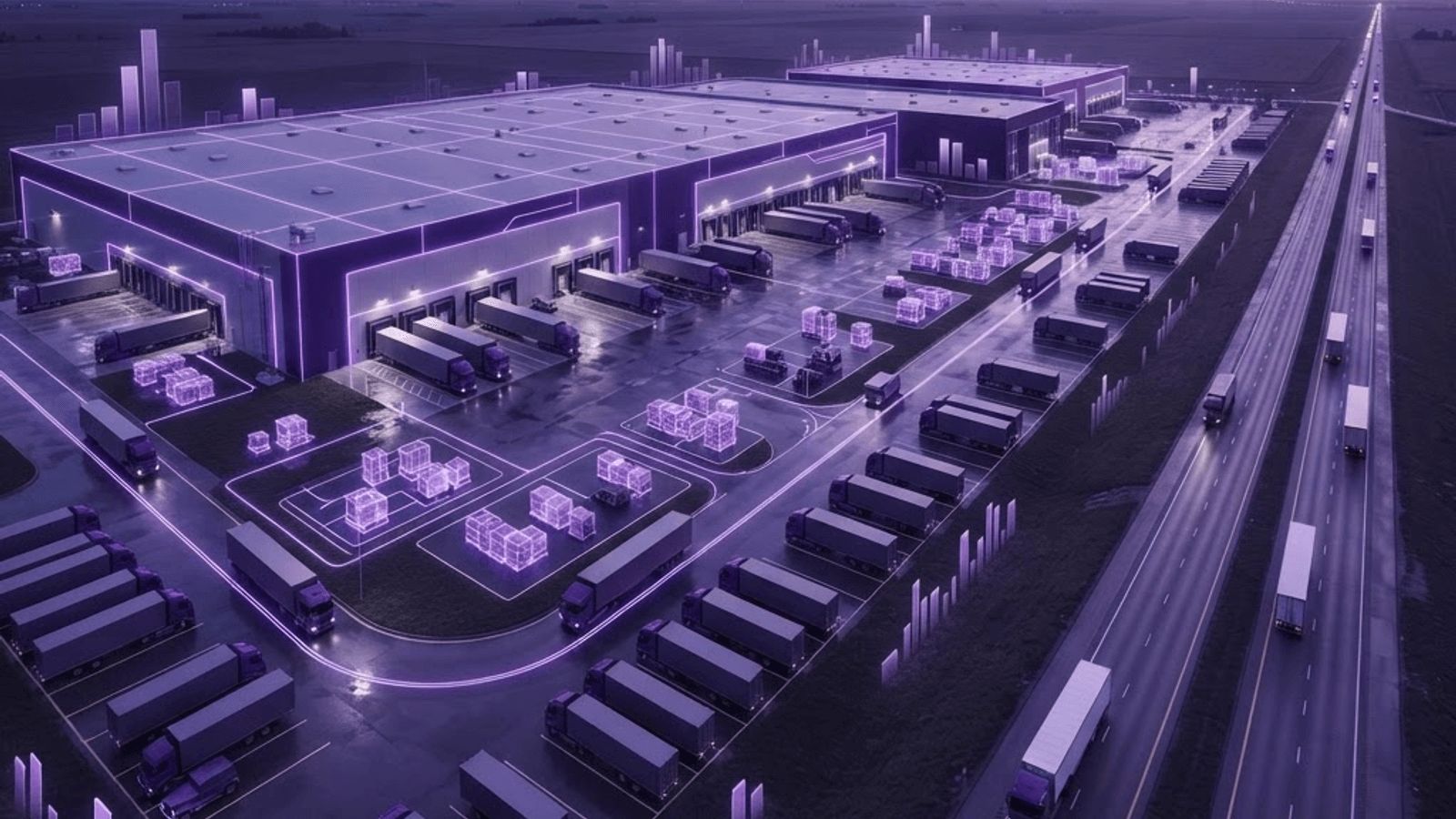
Why Freight Is a Kansas City Strength
Kansas City handles more rail tonnage than almost any other metropolitan area in the United States and sits at the intersection of four interstate highways. It is a major inland port and intermodal center, with substantial warehouse capacity along the I-35 corridor and in the industrial districts surrounding the metro. For Overland Park businesses, that infrastructure translates into real commercial advantage: broad carrier competition, strong outbound and inbound capacity, and next-day or second-day transit to a very large share of the domestic population.
Overland Park itself is less a warehouse district than a decision center. Corporate offices, distributors, medical device firms, animal health companies, and e-commerce operations headquartered in Johnson County generate freight that moves through nearby terminals. That means local shippers are usually buying transportation management and carrier relationships rather than operating their own docks.
The Top 10 Freight Companies Serving Overland Park
1. YRC Freight and Regional Less-Than-Truckload Carriers
Kansas has a deep less-than-truckload heritage, and regional LTL carriers remain the backbone for palletized shipments too small for a full truck. Strengths include dense terminal networks in the central states, reliable next-day regional transit, and established appointment and liftgate service options.
2. Old Dominion Freight Line
Widely regarded as the service leader in less-than-truckload, with consistently low claims ratios and strong on-time performance. Typically commands a premium rate, which is often justified for fragile, high-value, or time-sensitive freight.
3. Estes Express Lines
A large privately held LTL carrier with broad national coverage and strong capabilities in residential and limited-access delivery. Frequently competitive on longer lanes out of the Kansas City market.
4. XPO Logistics
Combines LTL capacity with brokerage and last-mile capability, plus well-developed digital tools for rating, tracking, and analytics. Useful for shippers that want both asset-based capacity and technology in one relationship.
5. J.B. Hunt Transport Services
A dominant intermodal provider, leveraging rail line-haul with truck drayage on both ends. Given Kansas City's rail density, intermodal often delivers meaningful cost savings versus over-the-road truckload on lanes longer than seven hundred miles.
6. Schneider National
A major truckload and intermodal carrier with dedicated fleet programs, temperature-controlled capacity, and cross-border Mexico service. Strong choice for shippers with predictable, recurring truckload volume.
7. Werner Enterprises
Provides truckload, dedicated, and logistics services with a substantial presence in the central corridor. Known for driver retention and for dedicated fleet solutions that give shippers guaranteed capacity at negotiated rates.
8. C.H. Robinson
One of the largest freight brokerages in the world, offering access to a vast carrier network across truckload, LTL, flatbed, and specialized equipment. Valuable for shippers with variable volume, unusual equipment needs, or seasonal surges.
9. Heartland Freight Brokerage Group
Represents the strong local brokerage community in the Kansas City area. Regional brokers typically offer closer relationships, faster problem escalation, and better knowledge of area carriers than large national platforms.
10. Regional Flatbed and Heavy Haul Specialists
For construction materials, machinery, and oversized loads, specialized carriers handle permitting, route surveys, escort coordination, and securement engineering. Essential for freight that cannot move in a dry van.
Choosing Between Service Modes
Mode selection drives most of the cost equation. Parcel service handles small packages efficiently up to roughly one hundred and fifty pounds. Less-than-truckload covers palletized freight from a few hundred pounds up to around fifteen thousand pounds. Truckload becomes economical above roughly ten to twelve pallets or when freight requires exclusive use of a trailer. Intermodal competes on longer lanes where a day or two of additional transit is acceptable.
The most common costly mistake among Overland Park shippers is defaulting to a single mode. Shipping six pallets by truckload wastes money, while pushing twenty pallets through LTL invites damage and handling delays.
Controlling Freight Costs
Accurate freight classification and dimensional data are the foundation of correct pricing. Reweigh and reclassification charges are the leading source of invoice disputes, and they are almost always avoidable with proper measurement. Density-based pricing has become standard, which rewards efficient packaging and tight palletization.
Consolidate shipments where possible, since one larger shipment nearly always costs less than several small ones on the same lane. Negotiate accessorial charges explicitly, including liftgate, residential delivery, inside delivery, limited access, and detention. Finally, invest in packaging: reducing claims improves both cost and customer experience more reliably than shaving a few dollars off the base rate.
Technology and Visibility
Shipper expectations have changed substantially. Real-time tracking, electronic bills of lading, automated appointment scheduling, and API integration with order management systems are now standard requirements rather than differentiators. Carriers and brokers that provide clean data and proactive exception alerts materially reduce the internal labor cost of managing freight.
Analytics matter as well. Reviewing lane-level performance, claims history, and accessorial patterns quarterly typically reveals savings that rate shopping alone will not surface.
Final Thoughts
Overland Park shippers operate from one of the best freight positions in the country, with access to premier LTL carriers, major intermodal providers, national truckload fleets, and a deep local brokerage community. Select the mode that matches your shipment profile, classify freight accurately, negotiate accessorials in writing, and evaluate carriers on total landed cost including claims rather than base rate alone.