
Mobile as a Freight Gateway
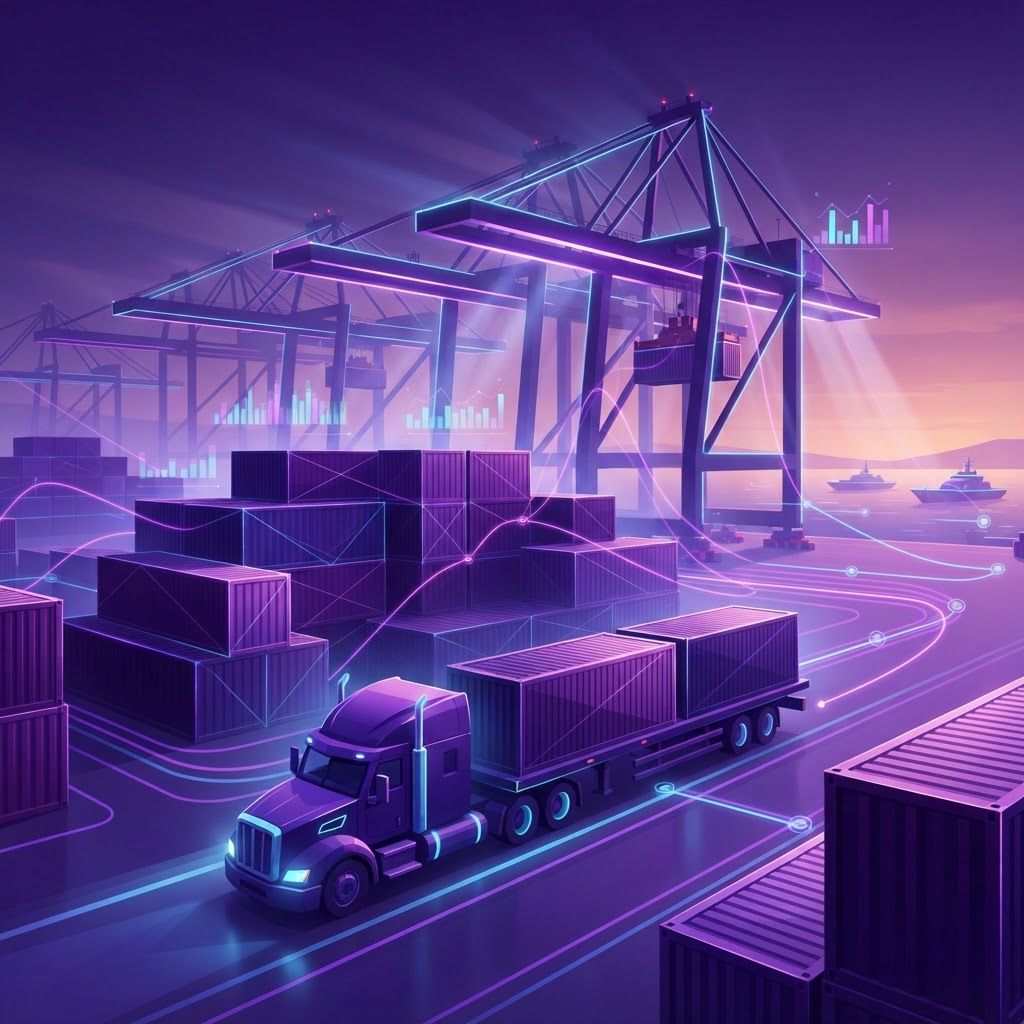
Mobile is not simply a city that happens to have a port. It is a genuine multimodal freight gateway, and that shapes the entire regional economy. The Port of Mobile handles containerised cargo, bulk commodities including coal and aggregates, forest products, steel and project cargo, while five Class I railroads provide direct rail interchange, an unusual advantage for a port of its size. Interstate 10 delivers east-west highway connectivity across the Gulf states, Interstate 65 runs north into the industrial Midwest, and inland waterway access reaches deep into the Tennessee and Ohio river systems. For shippers, this concentration of modes means genuine routing flexibility, and it has attracted a dense cluster of freight companies to the metro area.
What Shippers Should Look for in a Freight Partner
Selecting a freight provider is a risk management exercise as much as a cost exercise. Capacity reliability matters most, because a low rate is worthless if equipment does not appear. Modal expertise is critical, since the skills required for oversize project cargo differ enormously from parcel consolidation. Documentation accuracy determines whether international shipments clear smoothly or sit accruing demurrage. Technology visibility has become a baseline expectation, with shippers wanting shipment tracking, proof of delivery and exception alerts. Finally, financial stability protects against service collapse mid-contract, a real concern in a cyclical industry.
The Top 10 Freight Companies Serving Mobile
Averitt Express operates a strong southeastern network with less-than-truckload, truckload and dedicated services, and its regional density makes it a frequent choice for shippers moving goods between Gulf Coast and inland southeastern markets. Its integrated logistics arm adds warehousing and port drayage capability.
Old Dominion Freight Line is consistently among the most reliable less-than-truckload carriers in the country, with a service quality record that many shippers regard as the industry benchmark. For freight where damage-free delivery and transit consistency outweigh the lowest rate, it is a natural selection.
Saia LTL Freight has deep roots in the Gulf South and provides comprehensive regional coverage with competitive transit times across Alabama, Mississippi, Louisiana and Florida. Its familiarity with the local geography suits shippers with distributed customer bases.
XPO combines a substantial less-than-truckload network with technology investment, offering shippers detailed shipment visibility and analytics alongside physical capacity. Larger accounts often value the reporting depth as much as the freight service itself.
Estes Express Lines remains one of the largest privately held carriers in North America, and its stability and broad terminal network give shippers confidence on long-haul lanes originating in the Port City.
Boyd Bros Transportation is an Alabama-headquartered flatbed specialist, well suited to steel, building materials, machinery and other cargo that cannot travel in a dry van. Flatbed expertise, including load securement and permit handling, is a genuinely specialised discipline.
Cooper Marine and Timberlands reflects the marine side of regional freight, with barge and inland waterway operations connected to the port complex. For bulk commodities, barge transport delivers cost per ton figures that road freight cannot approach.
APM Terminals Mobile anchors container handling at the port, providing the terminal infrastructure that ocean carriers and drayage operators depend on. Terminal efficiency directly influences the total cost of every containerised shipment moving through the city.
Gulf Coast Drayage Services represents the crucial short-haul segment, moving containers between the terminal, rail ramps and regional warehouses. Reliable drayage is often the difference between smooth import flows and costly detention charges.
CN Railway provides one of the Class I rail connections serving Mobile, linking Gulf freight to the Midwest and Canada. Rail intermodal offers meaningful cost and emissions advantages on longer inland movements.
Choosing the Right Mode
Mode selection should follow the freight profile rather than habit. Less-than-truckload suits palletised shipments below roughly ten thousand pounds where transit flexibility matters. Full truckload becomes economical as volume rises and offers faster, single-handling transit. Flatbed and specialised equipment handle dimensional or heavy cargo. Rail intermodal excels on long inland hauls where two or three additional transit days are acceptable in exchange for lower cost. Barge dominates high-volume bulk where waterway access exists at both ends. Air freight remains reserved for genuinely time-critical or high-value goods. Many effective supply chains through Mobile combine several of these in a single flow.
Industry Trends Affecting Gulf Coast Freight
Port investment is the dominant story, with channel deepening and terminal expansion enabling larger vessels and higher container throughput, which in turn attracts more distribution activity to the region. Nearshoring and shifts in global sourcing have increased Gulf Coast volumes relative to historical patterns. Driver capacity remains structurally tight, making carrier relationships more valuable than spot market opportunism. Technology adoption continues, with electronic bills of lading, automated appointment scheduling and predictive transit analytics moving from optional to expected. Sustainability reporting is also entering freight procurement, pushing shippers toward rail and barge where service requirements allow.
Practical Advice for Shippers
Classify freight accurately, because incorrect classification is the leading cause of invoice disputes and reweigh charges. Package for handling reality rather than ideal conditions, particularly for less-than-truckload freight that will be transferred multiple times. Build genuine relationships with two or three carriers rather than chasing the lowest quote each time, since committed capacity proves invaluable during peak season. Track detention and demurrage closely at the port, as these accessorial charges frequently exceed the base freight cost when container flows are poorly coordinated.
Final Thoughts
Mobile freight sector benefits from a rare combination of deepwater access, five-railroad interchange and interstate highway convergence. Shippers who understand that infrastructure and select partners with the right modal expertise can build supply chains that are both cost effective and genuinely resilient. Focus on capacity reliability, documentation accuracy and visibility, and the Port City infrastructure will do the rest.