
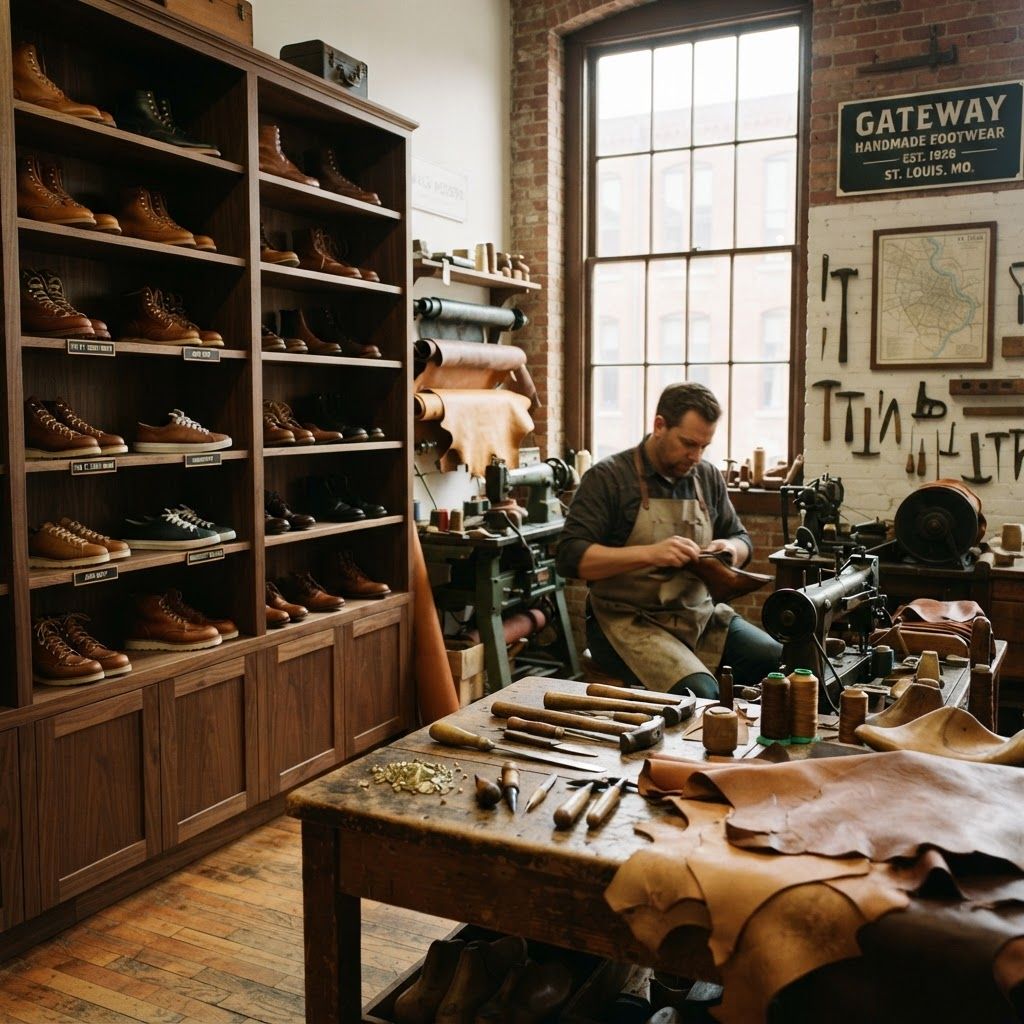
Few cities have as legitimate a claim to footwear history as St. Louis. For much of the twentieth century the city was among the largest shoe manufacturing centers in the United States, home to major companies whose brands were sold nationwide. That industry consolidated and moved offshore, but the institutional knowledge, the buildings and a lasting local appreciation for well-made shoes never entirely left.
Why St. Louis Footwear Matters
The practical inheritance is a population that understands shoe construction better than average. Locally, conversations about Goodyear welting, leather tannage and resoling happen in ordinary retail settings rather than only among enthusiasts. That knowledge base supports a footwear scene where quality is a real competitive dimension.
Climate reinforces it. Missouri delivers humid summers, genuinely cold winters, heavy rain and occasional ice, all of which punish inadequate footwear. Shoes that perform here need waterproofing, traction and construction capable of surviving repeated wet-dry cycles, which naturally favors serious makers over disposable ones.
The Top 10 Footwear Brands in St. Louis
1. Gateway Boot Company
Produces Goodyear-welted work and service boots designed for resoling rather than replacement. Full-grain leather, oil-tanned options for wet conditions and a genuine repair program make these boots a decade-long proposition.
2. Mound City Shoe Works
A custom and made-to-order operation producing dress shoes and boots fitted to individual measurements. Particularly valuable for customers with fit challenges — width extremes, volume differences between feet — that stock sizing cannot accommodate.
3. Cherokee Street Sneaker Lab
Focuses on limited-run sneakers with locally influenced design and better-than-typical material selection. Small production volumes and collaborations with local artists keep the offering distinct from mass market releases.
4. Delmar Loop Athletic Footwear
Specializes in running and training shoes with in-store gait analysis and fitting expertise. Emphasis on matching shoe geometry to individual mechanics rather than selling by cushioning claims alone.
5. Soulard Cobbler and Restoration
Rather than manufacturing, this operation resoles, rebuilds and restores quality footwear. In a market with many welted shoes in circulation, skilled repair extends the life of good shoes dramatically and is the most economical footwear decision available.
6. Forest Park Outdoor Footwear
Produces hiking boots, trail shoes and insulated winter footwear suited to regional conditions. Waterproof membrane construction and aggressive outsole patterns designed for mud, snow and ice.
7. Tower Grove Comfort Footwear
Concentrates on orthopedic and comfort-oriented shoes with removable footbeds and accommodative fits. Works with local podiatry referrals for customers requiring specific support characteristics.
8. Lafayette Square Children's Shoes
Focused on properly fitted children's footwear with measured sizing and flexible, foot-healthy construction. Trained fitting staff matter here because poorly fitted shoes during growth years have lasting consequences.
9. Grand Center Leather Accessories and Boots
Produces boots alongside belts and small leather goods using vegetable-tanned hides that develop patina. Appeals to customers who want footwear that visibly improves with age rather than simply degrading.
10. Riverfront Safety Footwear Supply
Serves industrial and construction workers with composite and steel toe protection, electrical hazard ratings and slip resistance. Compliance documentation and proper fitting for long shift wear are the core of the service.
How to Choose Footwear Well
Understand construction methods, because they determine repairability. Goodyear welted and Blake stitched shoes can be resoled repeatedly, potentially lasting decades. Cemented construction, where the sole is glued, generally cannot be economically resoled and is effectively disposable. For shoes you will wear frequently, welted construction is usually the cheaper long-term choice despite the higher purchase price.
Get measured properly, including width and volume. Most people wear shoes that are too narrow and too short, particularly as feet change with age. Measurement should happen late in the day when feet are largest, and both feet should be measured since asymmetry is common.
Match leather to conditions. Full-grain leather is durable and takes conditioning well. Oil-tanned and waxed leathers resist water better but look more rugged. Suede is comfortable but vulnerable to salt and moisture, which is a genuine issue during Missouri winters. Corrected-grain and bonded leathers are considerably less durable regardless of appearance.
Finally, rotate footwear and maintain it. Wearing the same pair daily prevents interior moisture from drying, which degrades both leather and lining. Two pairs alternated will outlast three worn consecutively, and regular conditioning and prompt resoling before the welt is damaged make the difference between a shoe that lasts five years and one that lasts twenty.
Trends in Footwear
Repairability has become a genuine purchasing criterion as buyers tire of replacing shoes annually. Resale and restoration markets for quality footwear have grown substantially. Material innovation continues around lower-impact tanning and recycled synthetics, though durability tradeoffs are still being worked out. Comfort features have migrated into dress and work categories, with cushioned midsoles appearing in traditionally rigid constructions. Direct-to-consumer selling has also allowed small makers to offer welted construction at prices that were previously restricted to established heritage brands.
Final Thoughts
St. Louis is an unusually good city in which to buy shoes, largely because its manufacturing history left behind both makers and repair expertise. Buy welted construction for anything you wear regularly, get properly measured including width, match leather to the weather you actually face, and use a good cobbler before damage becomes irreparable. Done consistently, that approach costs less and produces far better footwear than replacing cheap shoes indefinitely.