
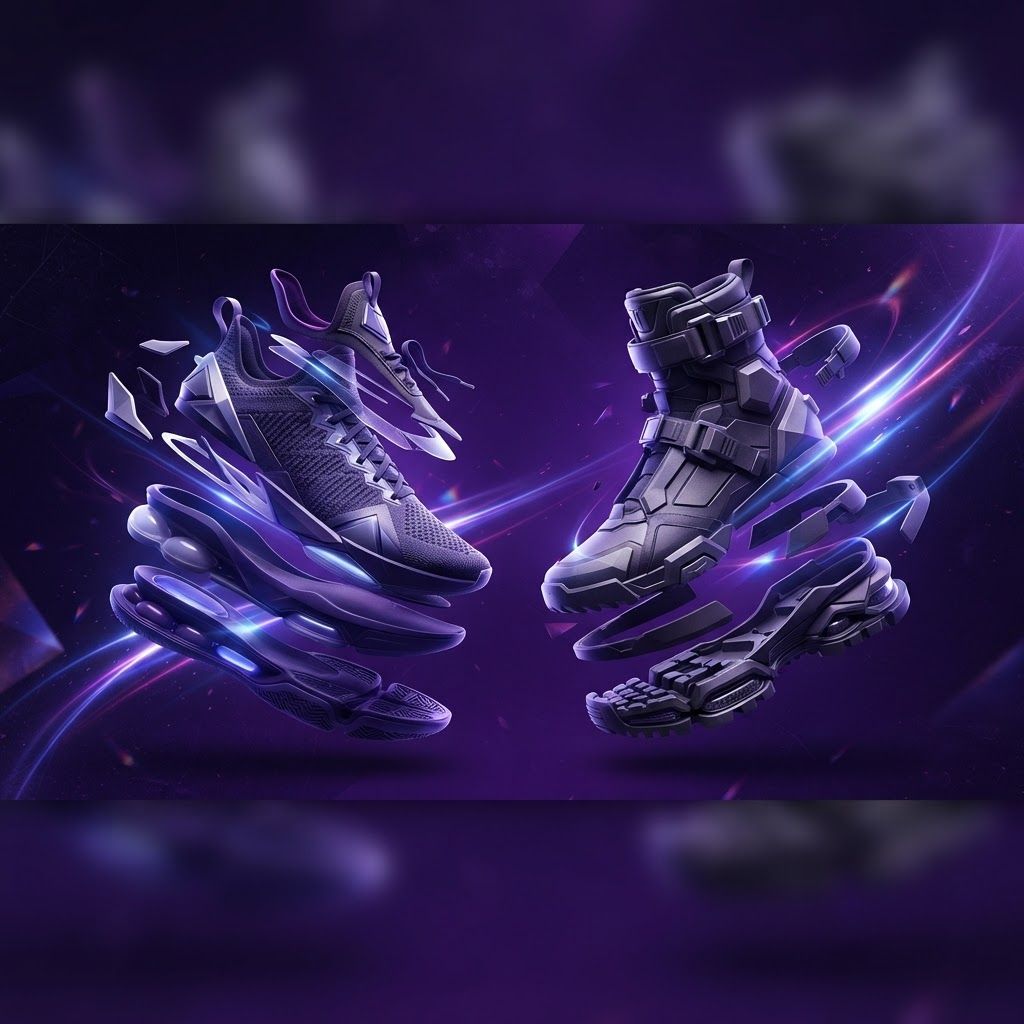
Footwear for an Active Inland Lifestyle
Rancho Cucamonga sits at the foot of the San Gabriel Mountains, and that geography shapes how people use their feet. Trailheads are minutes away, the paved trail network supports serious running and cycling, and the surrounding region offers everything from desert washes to alpine elevation within a short drive. At the same time, a large share of residents work in logistics, healthcare, retail and trades where standing and walking on hard surfaces all day is routine.
Those two realities create demand for footwear that is genuinely functional rather than merely fashionable. Heat compounds the requirement, since summer temperatures make breathability and moisture management practical concerns rather than marketing features.
Categories and What Distinguishes Them
Running shoes divide into road and trail construction, with differences in outsole grip, rock protection and stability that matter more than most buyers assume. Hiking footwear ranges from lightweight trail shoes suited to well-maintained paths to supportive boots for loose terrain and heavy packs.
Work footwear covers safety toe protection, slip resistance, electrical hazard rating and all-day cushioning, with requirements often dictated by employer or regulation. Casual and lifestyle footwear prioritizes appearance and comfort for daily wear. Athletic training shoes support lateral movement and lifting in ways running shoes deliberately do not. Recovery and comfort footwear addresses the needs of people on their feet for long shifts.
Ten Footwear Brands Available in Rancho Cucamonga
1. Foothill Trail Footwear. A regionally focused brand producing trail runners and light hikers designed for the decomposed granite and loose rock conditions typical of local mountain routes.
2. Summit Ridge Boots. Builds supportive hiking and backpacking boots with resoleable construction, appealing to hikers who log serious mileage and prefer repair over replacement.
3. Inland Runner Performance. Specializes in road running shoes across cushioning and stability categories, with fitting services that consider gait, arch structure and training volume.
4. Cucamonga Work Boot Company. Supplies safety toe, slip resistant and electrical hazard rated footwear for construction, warehouse and industrial workers throughout the logistics-heavy Inland Empire.
5. Vineyard Leather Goods. Produces handcrafted leather boots and casual shoes using traditional construction methods that allow resoling and improve in appearance with age.
6. Canyon Sandal Works. Focuses on technical sandals and warm-weather footwear with secure retention and durable outsoles suited to water crossings and hot desert conditions.
7. Route 66 Sneaker Collective. Curates lifestyle sneakers and limited releases, serving the strong local sneaker culture alongside everyday casual buyers.
8. Terra Step Sustainable Footwear. Uses recycled and plant-based materials with take-back recycling programs, targeting consumers who weigh environmental impact in purchasing decisions.
9. Pacific Comfort Footwear. Concentrates on all-day comfort and supportive footwear for healthcare, hospitality and retail workers, including options that accommodate custom orthotics.
10. Ember Kids Shoes. Produces durable children's footwear with proper fit measurement, flexible soles for developing feet and construction that withstands active play.
Getting the Fit Right
Proper fitting is the single most valuable thing a footwear retailer provides, and it is why local specialty shops remain relevant despite online convenience. Foot length, width, arch height and volume all vary independently, and a shoe that matches length alone will frequently fit poorly.
Measure both feet, since asymmetry is common, and fit to the larger one. Shop later in the day when feet have swelled slightly, and bring the socks and any orthotics you intend to use. For running and hiking, allow roughly a thumb width of space ahead of the longest toe, because feet slide forward on descents and swell over distance.
Gait analysis helps for running footwear, identifying pronation patterns that influence whether a neutral or stability shoe suits you. That said, current evidence suggests comfort is the strongest predictor of injury avoidance, so a shoe that feels right immediately usually is right.
Climate and Terrain Considerations
Breathability matters enormously in inland heat. Mesh uppers and moisture-wicking linings reduce the blisters and discomfort that trap heat and sweat produce. Waterproof membranes, while useful in wet conditions, reduce breathability significantly and are often the wrong choice for dry summer hiking here.
Outsole compound and lug pattern should match terrain. Softer rubber grips rock better but wears faster on pavement, while harder compounds last longer on mixed surfaces. For local trails combining hardpack, loose gravel and rock, a moderate lug depth with reliable rubber generally outperforms aggressive mud-oriented patterns.
Maintenance and Replacement
Rotating between two pairs extends the life of both by allowing midsole foam to decompress between wears, and it reduces repetitive stress by slightly varying mechanics. Cleaning shoes after dusty trail use prevents grit from abrading uppers and seams.
Running shoes typically lose meaningful cushioning somewhere between three and five hundred miles, though this varies with weight, gait and surface. The clearer signals are compression creasing in the midsole, outsole wear through to foam, and new aches appearing in feet, knees or hips. Work boots should be replaced when the safety toe has taken a significant impact or tread has worn smooth, since both failures are hazards.
Quality footwear that fits properly is one of the better returns available in daily comfort and injury prevention, and in a place where terrain and workdays both demand a lot from your feet, it is worth the attention.