
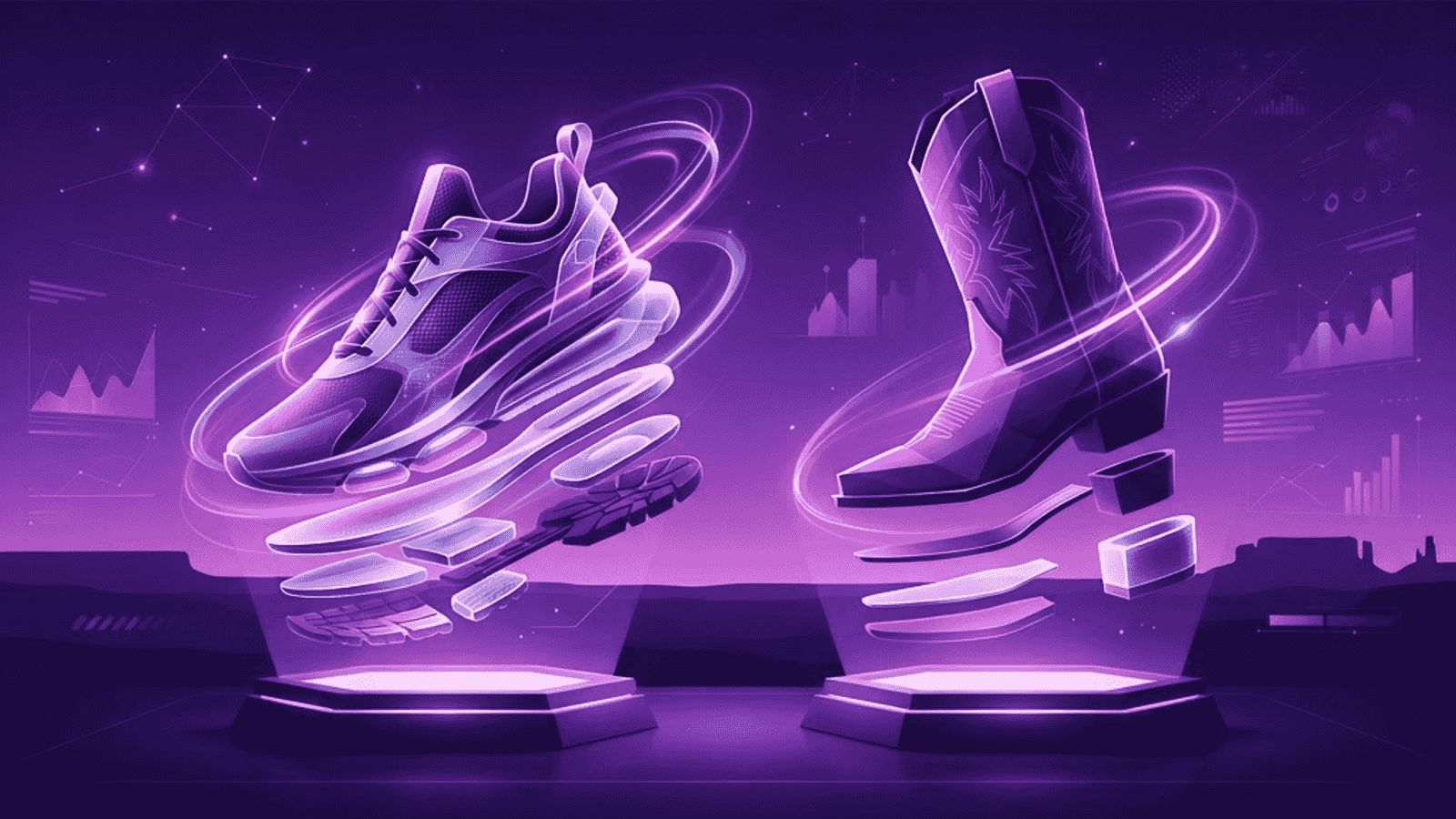
A City That Takes Footwear Seriously
Few mid-sized American cities support the range of footwear expertise found in Lubbock. The reason is occupational. A significant share of the local workforce spends long days standing on concrete, walking irrigated fields, working livestock, or moving across construction and energy sites. In those conditions footwear is safety equipment, and poor choices produce injuries rather than mere discomfort. That practical pressure has cultivated retailers who genuinely understand fit, last shape, sole construction, and resoling.
Layered on top of that working demand is a large and active university population, which sustains a serious athletic and lifestyle footwear market. The combination gives Lubbock shoppers access to both careful custom boot fitting and modern gait-based running shoe selection, often within a few miles of one another.
The Ten Leading Names
1. Cavender's Boot City
Cavender's is the reference point for western footwear across the South Plains. The boot wall carries an unusually broad matrix of widths and sizes, spanning work boots with safety toes, roper styles, exotic leathers, and dress boots. Staff are trained to fit boots properly across the instep rather than by length alone, a distinction that separates a boot worn for decades from one abandoned within a season.
2. Boot Barn
Boot Barn complements Cavender's with strong national brand coverage and a particularly deep work boot program. Flame-resistant, waterproof, metatarsal-guard, and composite-toe options serve customers whose employers specify protective standards. Its scale means unusual size requests can often be sourced quickly through the wider network.
3. The Running Zone
Specialty running retail is where technical fitting matters most, and The Running Zone approaches it methodically. Gait observation, arch and volume assessment, and rotation advice replace guesswork, and staff are candid when a popular model is wrong for a particular foot. Runners training on Lubbock's flat, wind-exposed routes benefit from that specificity, as do walkers and nurses seeking all-day cushioning.
4. Academy Sports and Outdoors
Academy delivers the widest athletic footwear assortment in the city at accessible price points, covering running, training, court sports, cleats, hiking, and hunting boots. Its youth and children's selection is especially valuable to families managing the constant resizing that comes with growing athletes.
5. Red Wing Shoes
Red Wing occupies the premium American work boot tier. Heritage leathers, welted construction, and genuine resole ability make its boots a long-horizon purchase rather than a seasonal one. For tradespeople and agricultural workers who calculate cost per year rather than cost per pair, the brand's repairability is the central argument.
6. Dillard's Shoe Salon
The Dillard's shoe department at South Plains Mall is the region's principal source for dress and occasion footwear. Formal men's oxfords, women's heels and flats, comfort-oriented European brands, and seasonal sandals are represented, alongside the fitting assistance that online purchasing cannot replicate.
7. Shoe Carnival
Shoe Carnival addresses the value end of the market with high-volume family footwear and frequent promotional pricing. It is a practical destination for school-season buying, casual sneakers, and situations where multiple pairs are needed at once without a premium outlay.
8. Journeys
Journeys serves the youth lifestyle and streetwear segment, tracking skate, casual sneaker, and boot trends closely. Its assortment moves quickly, which appeals to students who follow release calendars and want current styling rather than long-term durability.
9. Rack Room Shoes
Rack Room balances brand recognition with self-service convenience and steady promotional structure. Its mix of athletic, casual, and dress options in one open-floor format suits shoppers who prefer to browse and compare independently before deciding.
10. Local Custom Boot Makers
Lubbock's independent bootmakers and repair shops constitute a genuine regional asset. Custom lasts built from individual foot measurements, hand-lasted construction, and skilled resoling and reheeling work extend the life of quality footwear substantially. For customers with difficult fit requirements or a valued pair worth restoring, these craftspeople offer something no national chain can.
Industry Trends Worth Understanding
Three developments are reshaping the category. First, protective footwear standards continue to tighten, with composite and alloy safety toes displacing steel because they are lighter and do not conduct temperature as sharply. Second, comfort technology has migrated from athletic footwear into work and dress categories, so cushioned midsoles and contoured footbeds now appear in boots and loafers alike. Third, repair and resoling have regained economic logic as premium footwear prices rise, favoring welted construction over cemented soles.
Sustainability considerations are also filtering into the market, though more slowly here than in coastal cities. Interest centers less on marketing claims and more on longevity, since a boot that lasts a decade generates less waste than three that fail in eighteen months.
Practical Advice for Buying Footwear Locally
Shop late in the day, when feet have naturally swollen, and always try both feet since most people have measurably different sizes. Wear the socks you actually intend to use, particularly for work boots where sock thickness materially changes fit. For boots, confirm that the ball of the foot sits at the widest part of the sole and that the heel slips slightly on a new pair, which is normal before break-in.
For running shoes, resist buying by brand loyalty. Foot mechanics vary enough that the right model changes over time, and a fitting session at a specialty retailer is worth more than any online review. Finally, budget for rotation. Alternating two pairs allows foam and leather to recover between wears and typically extends the total life of both beyond what a single pair would deliver.
Final Thoughts
Lubbock's footwear market is stronger than its population would suggest because real occupational demand keeps expertise alive. Western specialists, technical running retailers, national value chains, and independent bootmakers each cover a distinct need. Matching the retailer to the purpose, rather than shopping on price alone, is the surest route to footwear that fits, performs, and lasts.